Mopar OAT Coolant MS-12106: Vehicle Requirements, Mixing, and Jeep Coolant Loss
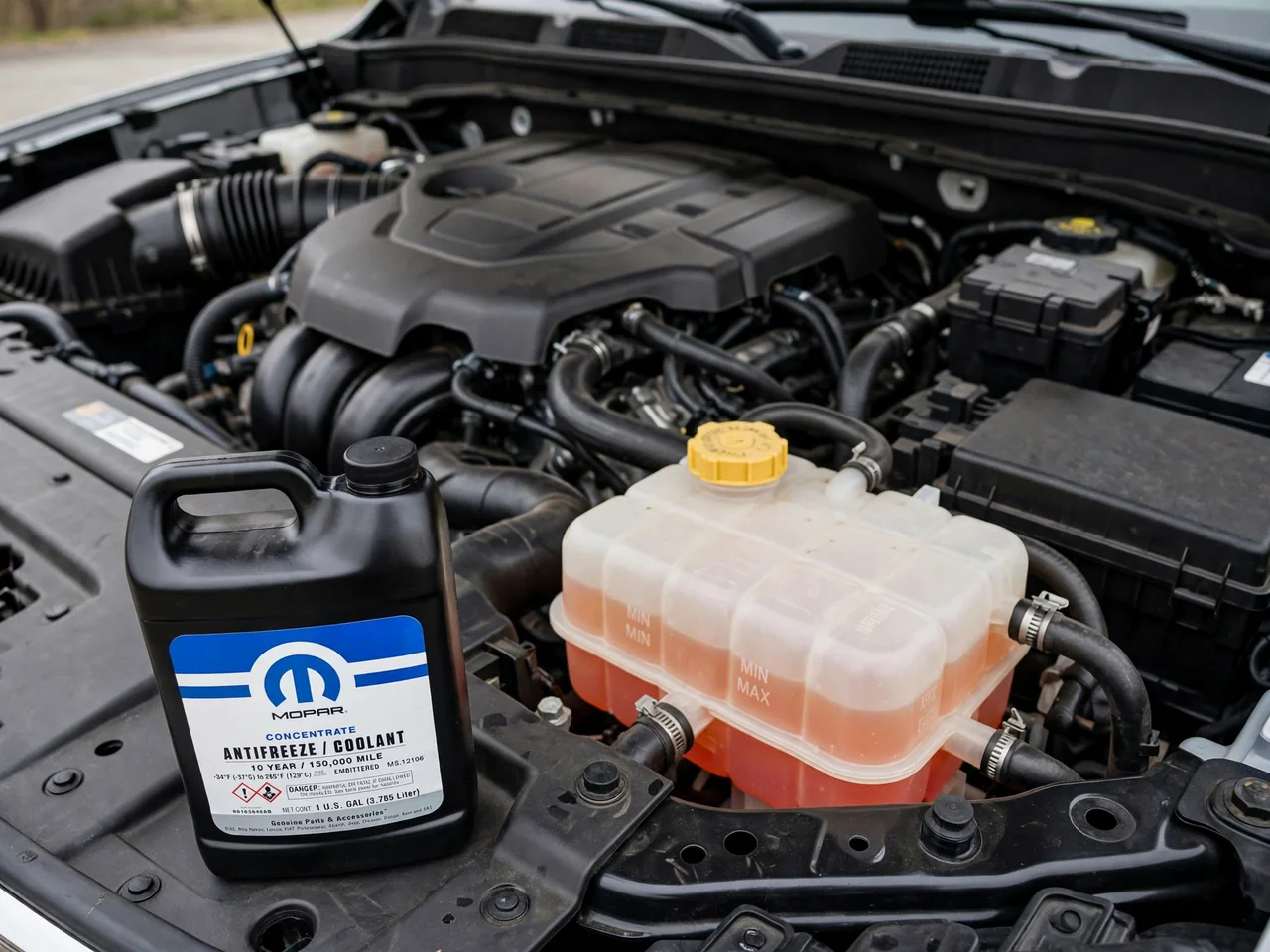
Mopar's organic acid technology coolant carries the MS-12106 specification and a long-life formula claim on its label. Even so, the bottle alone cannot tell you whether it belongs in your Chrysler, Dodge, Jeep, or Ram. This guide explains what the chemistry and specification mean and how to confirm your vehicle's requirement. It also covers why mixing coolants calls for caution and where Jeep owners should look when coolant keeps disappearing.
What Mopar OAT Coolant and MS-12106 Mean
OAT stands for organic acid technology. The term describes the corrosion-inhibitor package blended into the glycol base, not the antifreeze itself. Older conventional coolants relied heavily on inorganic inhibitors such as silicates and phosphates, which get used up as they coat metal surfaces. Organic acid inhibitors work differently: they protect surfaces where needed and generally last longer in service. MS-12106 is a Chrysler material standard, meaning a coolant specification that defines what a product must meet. It matters only when your vehicle's documentation calls for it.
Every coolant does several jobs at once. It carries heat from the engine to the radiator. It lowers the freezing point so the block and radiator aren't damaged in cold weather, and it raises the boiling point under pressure. Its inhibitors also protect aluminum, iron, solder, and gasket materials from corrosion and deposits. Because inhibitor chemistries differ, the Mopar name on a jug doesn't make it right for every Mopar vehicle, and the color is only dye. Two coolants can look identical and behave very differently inside an engine.
How to Confirm Which Chrysler, Dodge, Jeep, and Ram Vehicles Require It
Start with four facts: the model year, the model, the engine, and the coolant specification printed in the owner's manual for that exact combination. The fluids and capacities section usually names a specification or an approved product description, sometimes with a warning against substitutes. If your model came with more than one engine, or had a change partway through the year, make sure you're reading the right table. Once you have the manual's wording, compare it directly with the specification printed on the coolant container, not with a store's fitment chart.
A Chrysler, Dodge, Jeep, or Ram badge doesn't by itself mean the vehicle requires MS-12106. These brands have used more than one coolant chemistry across different years and powertrains, so a simple rule based on model year can steer someone to the wrong jug. The manual may be missing or unclear, or it may name a product that has since been replaced. In that case, a dealer parts department can look up the requirement using your VIN. Manufacturer service information is the other reliable way to settle the question.
Finding the Correct Coolant for a Jeep Wrangler
For a Wrangler, the correct coolant depends on the specific model year and engine, and the owner's manual for that vehicle is the first place to look. Find the fluids section and write down the named specification exactly, including any letters or suffixes. If you bought the Jeep used without a manual, the manufacturer's owner resources or a dealer with your VIN can confirm the requirement. Don't rely on advice written about a different Wrangler generation or engine, since cooling system requirements can change between them.
Looking into the coolant reservoir tells you the level, not the chemistry. A previous owner or shop may have topped it off with a universal product, and the color can't reveal which inhibitors are present or how old they are. Check the level only when the engine is fully cool, using the marks described in the manual. If the service history is unknown, the product label is unreadable, or you suspect the system holds a mix of coolants, ask a qualified technician before adding anything.
What the 10-Year/150,000-Mile Formula Label Tells You
The 10-year/150,000-mile wording on the bottle is part of how Mopar identifies this OAT product. It describes the formula's long-life design. It doesn't promise that every vehicle filled with it can go that long between coolant changes. Your actual replacement interval comes from your vehicle's maintenance schedule, which may set time, mileage, or severe-service conditions such as towing or off-road driving. If the schedule and the bottle label seem to disagree, follow the schedule written for your vehicle.
Adding fresh coolant doesn't reset the clock on the whole system. The rest of the fill keeps its original age, and a top-off only dilutes whatever condition that coolant was already in. Keep track of when the system was last fully serviced, not just when it was topped off. Long-life chemistry also doesn't make it safe to wait. A leak, an overheating episode, oil or sludge in the reservoir, or an unknown coolant mixture all need attention now, no matter what the label says about service life.
Compatibility, Mixing, and Reading the Bottle
Seeing OAT on a label tells you only the general inhibitor family. Many products use organic acid chemistry but meet different manufacturer specifications, so read the full back label for the specific standard your vehicle requires. Be skeptical of broad claims that a coolant works with all makes and models, because those statements don't replace a match to your owner's manual. Mixing unspecified chemistries can weaken corrosion protection. Judging compatibility by color invites mistakes because manufacturers don't follow a shared color standard.
Premixed coolant is already diluted with water and is meant to be added as sold. Concentrate must be diluted before use. Take the mixing ratio and the type of water from the product instructions and the vehicle manufacturer's guidance, since mineral-heavy tap water can leave deposits inside the system. If you don't know what coolant is in the system now, or you suspect an incompatible product was added, have a qualified shop evaluate it and recommend how to restore the correct fill.
Where to Look for Signs of Coolant Loss in a Jeep
Coolant can escape from many points, and no single location applies to every Jeep. Start with the coolant reservoir and its cap. Then follow the visible hose connections and clamps, the radiator end tanks and seams, the thermostat housing, and the area around the water pump. The heater hoses running to the firewall are worth checking too. Treat these as places to look for evidence, not as a list of parts that are likely bad, because layouts vary by model and engine.
With the Jeep parked and fully cooled, watch for a reservoir level that keeps dropping, wet spots under the front, crusty dried coolant residue, a sweet smell, or damp carpet or foggy glass inside. None of these proves where the leak is. Repeated coolant loss with no visible leak calls for professional testing, such as a cooling system pressure test and checks for internal leakage. If the temperature warning appears, steam rises, or coolant drops quickly, pull over safely, shut off the engine, and call for help. Never open a hot system or reach near the fan and belts.