Mitsubishi Pajero iO engine oil type
What oil the Pajero iO takes
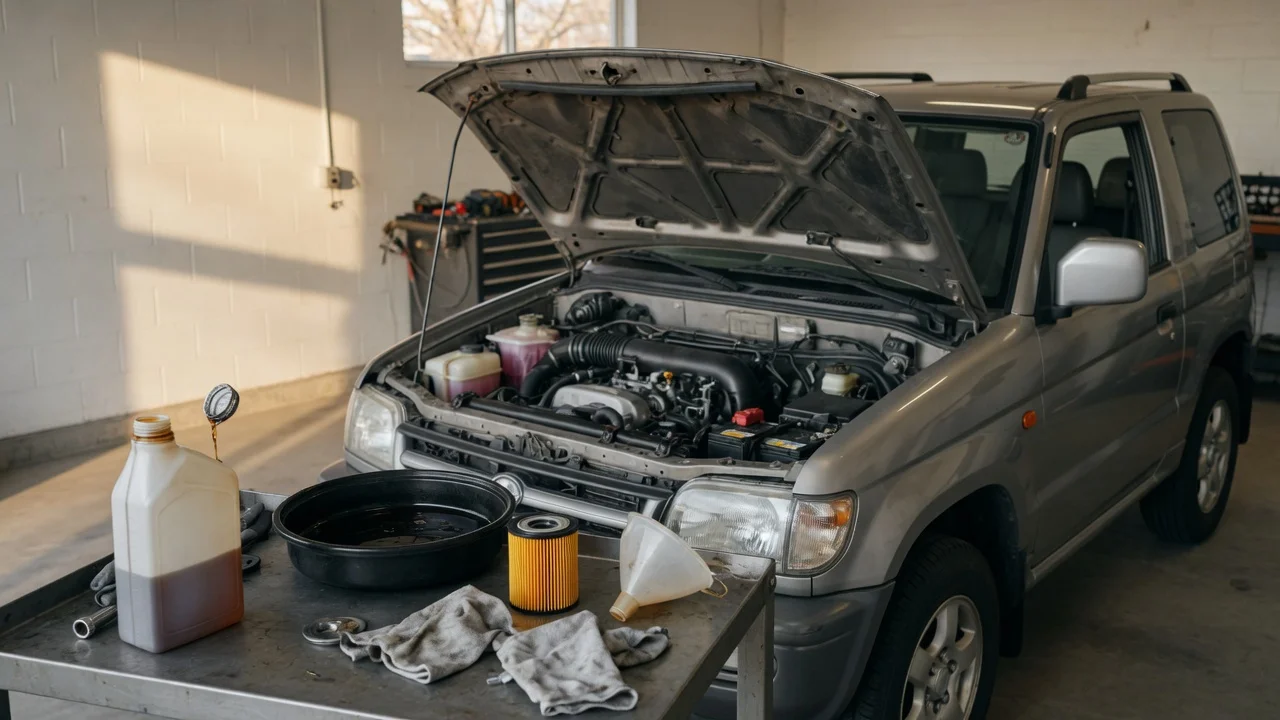
The Mitsubishi Pajero iO (also sold as Pajero Pinin, Montero iO or Shogun Pinin, roughly 1998–2007) is specified for a quality four-stroke engine oil that matches the engine family and the ambient temperature range in the owner’s manual viscosity chart. For the common petrol engines, that is typically an API SG or later petrol-engine oil, often in SAE 5W-30 or 10W-30 for temperate use, with thicker grades such as 10W-40 or 15W-40 used in hotter climates. Diesel versions need a diesel-rated oil, not a petrol-only product. Exact grade, specification and fill quantity are variant-dependent; the filler-cap marking and the vehicle’s handbook remain the authority for a given chassis.
Scope: which Pajero iO this covers
This guide covers the compact Pajero iO / Pinin generation, not the larger Pajero/Montero/Shogun. Engines in this family included 1.8-litre 4G93 petrol (including GDI in some markets), 2.0-litre 4G94 petrol, 2.0-litre 4G63 petrol in some trims, and a 2.0-litre diesel in selected export markets. Market, model year and whether the engine is petrol, GDI petrol or diesel all change the listed API/ACEA class and the viscosity window. Claims below are manufacturer-style specification guidance, not workshop measurements from a particular vehicle.
Petrol engines: grade and viscosity
Mitsubishi petrol engines of this era were listed for oils meeting API SG as a minimum, with later handbooks stepping up to SH, SJ or SL as those categories replaced older ones. ILSAC GF-series petrol oils that also meet the matching API petrol category are the usual modern equivalent. A current API SP or SN petrol oil that still carries the viscosity the handbook charts for your climate is the practical replacement where the original SG/SJ bottle is no longer sold, provided the oil is intended for petrol engines and is not a dedicated low-SAPS diesel-only blend that the handbook does not list.
Viscosity is chosen from the temperature chart, not from a single “correct” grade for every Pajero iO. SAE 10W-30 is the grade many Mitsubishi filler caps of the period highlight for moderate climates. SAE 5W-30 is the usual cold-climate choice for easier starts and faster oil pressure. SAE 10W-40 or 15W-40 appears on the same charts for high ambient temperatures. Using a winter-grade oil that is too thick for the lowest temperatures the vehicle sees, or a very thin oil outside the chart, is outside the documented specification.
Petrol Pajero iO oil choice, in order of what to match: • Specification: API SG or the later petrol API category printed in that year’s handbook (SH, SJ, SL or equivalent ILSAC GF oil). • Viscosity: the SAE grade on the handbook temperature chart for the lowest and highest temperatures the vehicle will see; 5W-30 or 10W-30 for most temperate use. • Engine type: conventional 4G93/4G94/4G63 petrol oils as above; GDI 4G93 examples need a quality oil that the handbook lists as suitable for that direct-injection petrol engine, because GDI hardware is less tolerant of poor oil quality and deposit-prone formulations. • Brand form: Mitsubishi genuine engine oil or another oil that states the same API/ILSAC category and SAE grade.
Diesel engines
Where a Pajero iO was sold with a diesel, the handbook specifies a diesel engine oil (historically API CD/CF-class or the ACEA light-diesel category listed for that market), not a petrol-only API S-series oil. Viscosity still follows the climate chart, commonly 10W-30, 10W-40 or 15W-40 depending on temperature. Confirm diesel versus petrol from the engine code, fuel filler and handbook before buying oil; mixing the two specification families is a common error on dual-fuel model lines.
What is not a substitute for the handbook
Oil capacity, drain-and-fill volume with a new filter, and the exact temperature breakpoints on the viscosity chart are not published here because they vary by engine code and market handbook, and those figures were not supplied as documented measurements for this article. Do not guess a litre quantity from a different Mitsubishi model. Read the dipstick after a fill; the safe band is the documented check, not a generic capacity table.
How to confirm the oil for a specific vehicle
1) Read the wording on the oil filler cap (API category and often a highlighted SAE grade). 2) Open the owner’s manual viscosity chart for that model year and market, and pick the SAE grade that covers the coldest and hottest temperatures the vehicle will operate in. 3) Identify the engine (petrol, GDI petrol or diesel) from the handbook, under-bonnet label or engine code, and buy oil in that family only. 4) Prefer an oil that states the API or ACEA category the handbook lists, or a later category that still covers petrol or diesel as required. 5) After a change, run the engine, shut it down, wait for oil to drain back, and set the level on the dipstick between the marks.
Ownership notes
Change interval is set by the maintenance schedule for that market and by operating severity (short trips, dusty roads, towing, high heat). The handbook interval is the documented figure; severe-service schedules are shorter. A Pajero iO that has been sitting, burning oil, or running with an unknown last change should be treated as needing a fresh fill and filter before any viscosity experiment. If the engine is a GDI petrol, stay with a reputable oil that meets the listed spec rather than the cheapest bottle that only matches the SAE number.
Next action: match filler-cap API wording and the handbook viscosity chart to a petrol or diesel oil of the correct SAE grade for your climate, then confirm level on the dipstick. If the handbook is missing, a dealer or a parts lookup by VIN or chassis code (H61W/H62W/H66W/H67W/H71W/H76W/H77W series and similar) is the way to recover the listed spec rather than copying another owner’s grade.