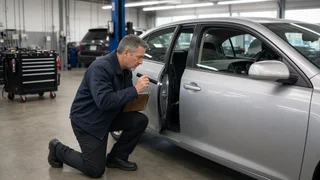
Missouri Highway Patrol Safety Inspection Requirements: What Applies Now
If you are researching the Missouri Highway Patrol safety inspection, the most important point is that the rules recently changed. For years, most Missouri passenger vehicles needed a periodic safety inspection before registration renewal. The program was supervised by the Missouri State Highway Patrol and carried out at licensed private inspection stations. In 2025, Missouri enacted legislation ending that periodic requirement for most privately owned, noncommercial vehicles starting in 2026. Some inspections still apply, including emissions testing in the St. Louis area and inspections for certain vehicle categories. Because the change is recent, check which requirements apply to your vehicle and county before you renew your registration.
What the Highway Patrol's Role Actually Is
Many drivers assume troopers inspect the vehicles themselves. Under the Missouri Vehicle Inspection Program, routine safety inspections were done by privately owned garages and service businesses licensed as official inspection stations. The Highway Patrol licenses the stations and certifies the inspectors. It also sets the inspection criteria, audits station records, and investigates improper or fraudulent inspections. The patrol performs some examinations directly, mainly vehicle identification checks on salvage and rebuilt vehicles.
How the 2026 Change Affects Drivers
The legislation removed the routine safety inspection as a condition of registration renewal for most personal cars, trucks and similar noncommercial vehicles. For a typical owner of a personal passenger vehicle, this means a safety inspection certificate is generally no longer needed to renew plates.
The change did not remove every inspection-related obligation. These requirements are separate from the routine safety inspection or were handled differently:
Emissions testing in the St. Louis region, which is a separate program with its own rules. School buses and certain other specialized or commercial vehicles, which have historically had their own inspection requirements. Vehicle identification and salvage examinations for rebuilt, reconstructed or salvage-titled vehicles. Owners renewing registration for a period that began before the new rules took effect, where transition timing may matter.
Exactly which categories still need a safety inspection depends on the final statute and how the Department of Revenue and Highway Patrol carry it out. Owners of commercial, specialized or unusually titled vehicles should confirm their own situation and not assume the general exemption covers them.
Safety Inspection, Emissions Test and VIN Examination Compared
Requirement | What it covers | Who performs it | Where it applies; Safety inspection | Mechanical and safety equipment such as brakes, lights, steering and tires | Licensed private inspection stations under Highway Patrol oversight | Largely eliminated for private passenger vehicles from 2026; may still apply to certain vehicle categories; Emissions test | Engine emissions, usually through the onboard diagnostic (OBD) system on newer vehicles | Licensed emissions stations in the program area | St. Louis City and surrounding counties covered by the program; Vehicle identification / salvage examination | Confirms the vehicle identification number (VIN) and checks that major parts are legitimately sourced | Highway Patrol personnel | Salvage, rebuilt and certain other vehicles before titling
What Inspectors Checked: The Inspection Criteria
Where a safety inspection still applies, the Highway Patrol's inspection criteria have traditionally covered the components that most directly affect safe operation. Inspectors look for parts that are missing, inoperative or damaged beyond set limits. Cosmetic wear alone is not grounds for failure.
Brakes: service brake performance, parking brake function, and the condition of visible components. Lighting: headlamps, including high and low beams and aim; tail lamps; stop lamps; turn signals; license plate lamp; and reflectors. Steering and suspension: excessive play, worn or loose components, and damaged parts. Tires and wheels: adequate tread depth, no exposed cords or significant damage, and secure wheel mounting. Windshield and windows: cracks or damage in the driver's view, functioning wipers, and window tint within legal limits. Mirrors and horn: required mirrors present, and an audible horn. Exhaust and fuel systems: no leaks or missing components that could admit fumes or create a fire risk. Seat belts, where originally equipped. Vehicle identification: a VIN that is present and matches the ownership documents.
The Emissions Test Is a Separate Requirement
Emissions testing in Missouri is often confused with the safety inspection, but it is a different program. It applies only in the designated St. Louis area and is administered with the state's Department of Natural Resources. For most modern gasoline vehicles, the test reads the onboard diagnostic system rather than measuring tailpipe gas directly. An illuminated check-engine light or unfinished diagnostic readiness monitors can cause a failure.
Ending the periodic safety inspection did not by itself end emissions testing. If your vehicle is registered in the emissions area, expect to need a passing emissions test at renewal unless your vehicle falls into an exempt category.
Test Certificates and Their Validity Window
When a vehicle passes an inspection, the station records the result and issues documentation that the Department of Revenue accepts at registration. Under the long-standing program, this test certificate was valid only for a limited period. Timing the inspection close to the renewal date avoided an expired certificate. If you still need an inspection or emissions test, ask the station how long the result stays valid for registration.
Failing an Inspection and Getting a Retest
A failed inspection is not a penalty. It identifies items that must be fixed before the vehicle qualifies. The inspector should list the specific failed items so you can repair them at the station or elsewhere.
Ask for the written list of failed items and keep it with your repair records. You are not required to have repairs done at the inspecting station. After repairs, return for a retest. Stations have commonly offered a reduced-cost or no-cost reinspection if you return to the same station within a set period. Ask about the policy before you leave. For emissions failures, there may be repair and waiver provisions. Ask the testing station what applies to your vehicle.
Vehicle Identification and Salvage Examinations
One Highway Patrol function that continues regardless of the safety inspection change is the examination of salvage and rebuilt vehicles. Before a vehicle with a salvage history can be retitled for road use, it typically must pass a patrol examination. The exam confirms the VIN and checks that major replacement parts came from legitimate sources. This is mainly an anti-theft and documentation check, not a mechanical safety test. If you are buying or rebuilding a salvage vehicle, plan for this step and keep receipts and documentation for major parts.
Practical Next Steps
Read your registration renewal notice carefully. It should indicate whether an inspection or emissions test is required. If you live in the St. Louis emissions area, assume an emissions test is still needed unless your vehicle is clearly exempt. If you own a commercial vehicle, school bus or other specialized vehicle, confirm the inspection rules for that category. If you are titling a salvage, rebuilt or unusual vehicle, plan for a vehicle identification examination. Even without a mandatory inspection, keep up with brake, tire and lighting maintenance. Missouri traffic law still requires required equipment to work properly.