Mishimoto Transmission Coolers: Choosing a Compatible Model
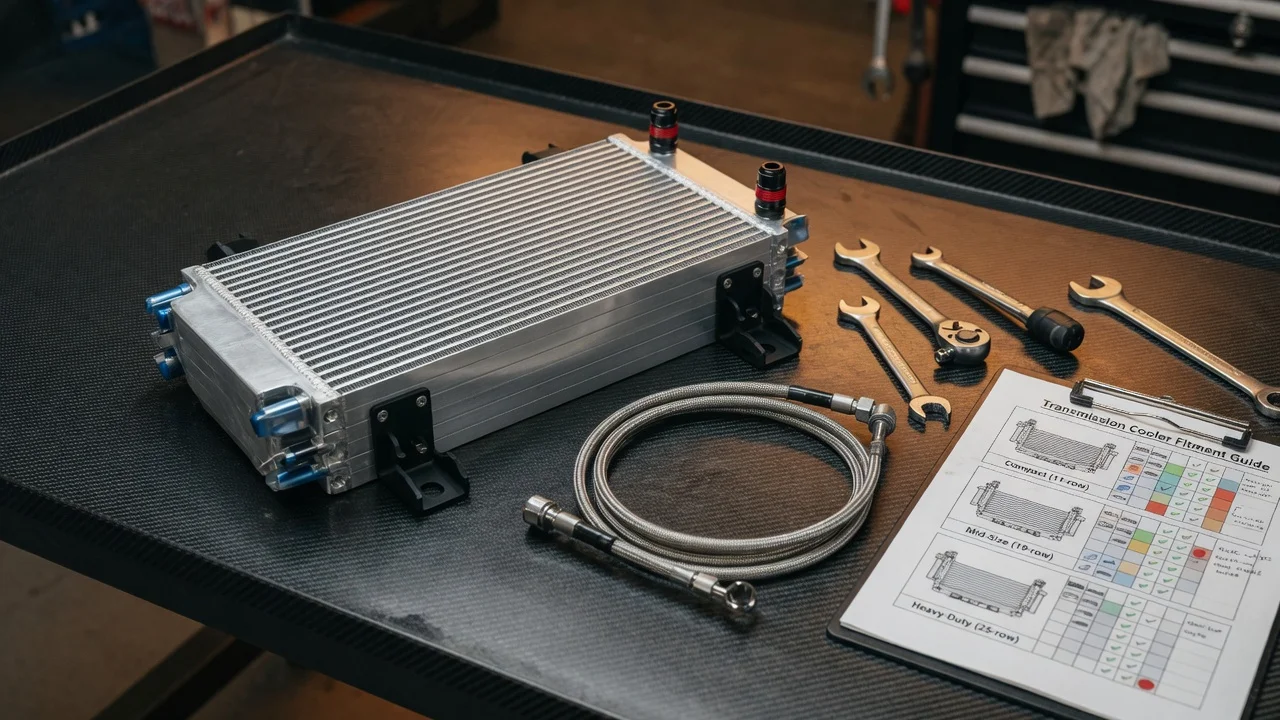
A Mishimoto transmission cooler can help an automatic transmission shed heat when towing, hauling or driving in hot conditions, but only if it suits the vehicle. Fitment, line connections, core construction and the factory cooling layout all matter, and an added cooler does not cure an existing fault. This guide explains how to match a cooler to your transmission type and configuration, read product features critically, and plan for installation and ownership costs.
Define the job the cooler must do
Start with how the vehicle is actually used. Sustained towing, heavy payloads, long grades, stop-and-go traffic in hot weather, slow off-road crawling and track days all push transmission fluid temperature up. Heat speeds up fluid breakdown and wear on clutch materials and seals. A truck that tows a camper a few times a year has different needs from one that pulls an equipment trailer every day. A vehicle that spends most of its life on short commutes in a cold climate may gain little from extra cooling.
Next, be honest about why you are shopping. If the goal is extra margin for planned use, an auxiliary cooler is a reasonable upgrade. If the transmission is already slipping, engaging harshly or late, shifting erratically or showing a temperature warning, treat that as a symptom to diagnose. It does not prove that the cooling system is the failed part. Low fluid, the wrong fluid, a clogged factory cooler, a sticking thermostatic valve, or solenoid and torque converter problems can all produce similar complaints. Before deciding a cooler is the right fix, check fluid level and condition using the correct procedure for your transmission, read any stored diagnostic codes and review the service history.
Check compatibility with your transmission and vehicle
First identify the exact transmission type: conventional automatic, CVT, dual-clutch or manual. Model year alone is not enough, because the same vehicle line may use different transmissions depending on engine, drivetrain and tow package. The owner's manual, a VIN decode or the transmission tag will narrow it down. Note the fluid specification as well. The cooler does not change what fluid the transmission requires, but its hoses and fittings must suit that fluid and the operating temperatures.
Then look at how the factory system is built. Many automatics route fluid through a cooler inside the radiator tank. Some vehicles already have an auxiliary air-to-oil cooler from a tow package. Many newer designs use a thermostatic bypass valve or a coolant-to-fluid heat exchanger to warm the fluid quickly. These layouts determine where an aftermarket cooler can be added, typically plumbed in series after the existing cooler. Some CVTs and dual-clutch units manage fluid temperature tightly, so confirm that an added cooler is appropriate for that design before buying.
Finally, check the physical interface. Mishimoto offers universal kits and, for certain trucks and SUVs, vehicle-specific kits. A direct-fit kit is designed around the factory line ends, mounting points and space in front of the condenser or radiator, which removes most of the guesswork. A universal kit leaves several things for you to confirm: line diameter, the connection type on your factory lines, available mounting space, and a hose route that stays clear of exhaust heat, moving parts and sharp edges. If a listing does not name your exact vehicle, transmission and configuration, treat fitment as unconfirmed.
Features that affect the choice
Core construction is the main functional difference between coolers. Stacked-plate and tube-and-fin cores are both common in the aftermarket. Plate designs generally pack more internal surface area into a given size, while simpler tube-and-fin designs tend to cost less. Check which type a listing describes rather than assuming. Larger is not automatically better. An oversized core can add flow restriction or overcool the fluid in winter, and any core without clean airflow will underperform regardless of size.
Look at what actually comes in the box: fittings, hose type and length, clamps, brackets and instructions. Threaded fittings and purpose-made adapters usually seal more reliably than barbed hose connections pushed over rigid lines. A thermostatic bypass, whether included or added separately, lets fluid skip the cooler until it reaches operating temperature, which matters in cold climates. An electric fan can help vehicles that spend long periods at low speed, but it adds wiring and another component to maintain.
Treat labels such as heavy-duty, maximum cooling or race-proven as marketing unless they come with stated conditions. Useful evidence is concrete: core dimensions, fitting sizes, the vehicles and transmissions the kit is listed for, and clear installation steps. A claimed temperature reduction means little unless it states the vehicle, load, ambient temperature and where the fluid temperature was measured.
Limitations and ownership costs
Installation means opening the transmission cooling circuit, so expect some fluid loss and plan to top up with the correct fluid. Many modern transmissions have no conventional dipstick and require a specific level-check procedure, sometimes at a set fluid temperature read with a scan tool. A wrong fill level can cause more trouble than the heat you set out to manage. After installation, check every connection for leaks, recheck the level after a drive, and make sure the hoses are secured away from heat and chafe points.
Ongoing care is simple but easy to forget. Inspect hoses and clamps during routine service, rinse debris and bugs out of the fins, and carefully straighten any bent fins. A front-mounted cooler is exposed to stone chips and trail damage. Total cost includes the kit, fluid, any adapters or extra fittings, and labor if a shop does the job. If you want to verify results, add a transmission temperature gauge or scan tool. If the vehicle is under warranty, ask the dealer how they treat aftermarket cooling modifications before installing.
A cooler cannot repair worn clutches, a failing torque converter, solenoid faults or damage from earlier overheating. It also cannot make up for low or incorrect fluid. If diagnostics point to an internal fault, compare repair options such as a fluid service, a valve body or solenoid repair, or a rebuild before spending money on cooling.
Build a practical shortlist
Before comparing specific Mishimoto kits, write down the essentials. List the vehicle year, make, model, engine and drivetrain, and the transmission model and fluid specification. Note whether a factory tow-package cooler or thermostatic bypass is present, and how you plan to use the vehicle. Then check whether a vehicle-specific kit exists for your exact configuration. If one does, it is usually the simplest route, because fitment and plumbing have already been worked out.
If you need a universal kit, compare candidates on the same points. Check core type and dimensions against the measured mounting space, and fitting type and size against your factory lines. Compare the included hardware, whether a thermostatic bypass is available, and whether your driving calls for a fan. Then add the costs of fluid, adapters, a temperature gauge and labor. Choose the kit that fits your space and plumbing cleanly and addresses the heat problem you identified, rather than the one with the most impressive label. If the diagnosis is still uncertain, resolve it before buying.