Minimum Legal Tire Tread Depth in the US: State Rules and Pennsylvania Inspection
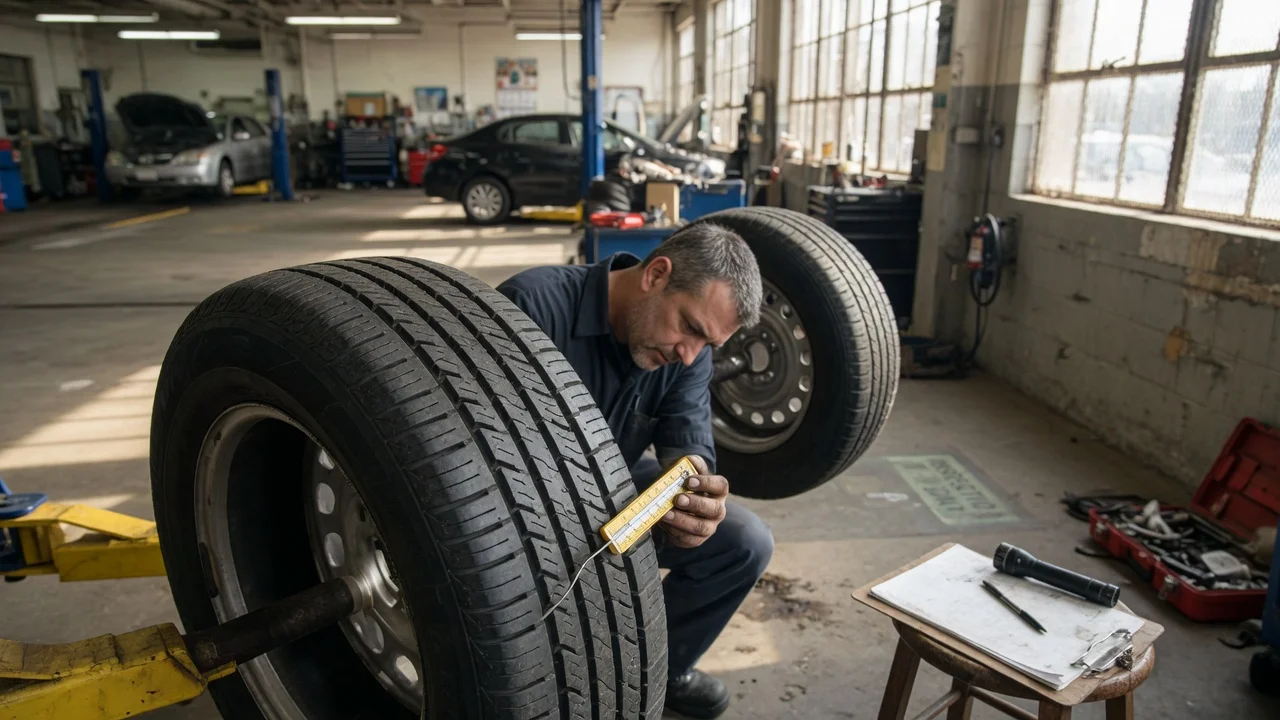
Check the measurement
Tread depth is measured from the bottom of a main tread groove to the top of the tread surface. A tread depth gauge is the most consistent tool: place the probe into the groove, press the base flat against the tread block and read the value. For reliable results, use the grooves specified for tread-depth readings rather than edge sipes or narrow decorative channels. Check each tire in several positions across its width and around its circumference, because tires rarely wear evenly.
Measure all four tires, not only the pair that looks most worn. The lowest reading is the one that matters for replacement decisions. Note any tire with one shallow groove but deeper tread elsewhere: that pattern can point to uneven wear from alignment, pressure or suspension problems rather than normal aging.
Explain the units
Passenger tire depth is commonly expressed in 32nds of an inch in the United States or in millimeters elsewhere. A new passenger tire often begins in the area of 10/32 to 11/32 inch, while 2/32 inch equals about 1.6 millimeters. These are useful conversion points for comparing gauge readings with legal or manufacturer references.
The scale is not exact across every tire: some models have less tread when new, or start with different groove depths. Treat the manufacturer specification for a specific tire as the better baseline. A conversion guide helps, but a reading that is legal in one unit is still legal in the other; the more important question is how that reading relates to the tire's actual condition.
Compare readings with actual requirements
Wear bars are raised strips molded across the main tread grooves. When tread wears until the surrounding surface becomes level with these bars, the tire has reached the 2/32-inch wear-out point used in many requirements. A gauge reading is still useful at that stage, but the wear bars give a direct visual reference built into the tire.
State inspection requirements can differ. For example, the Pennsylvania inspection standard for passenger vehicles uses 2/32 inch as the point where replacement is required in the inspected tread area. Other states may have their own specifications, and some tires or vehicle classes may have separate rules. A legal minimum is not the same as a safety recommendation: it identifies the point where the tire must be changed, not the level of grip available in every condition.
Manufacturer recommendations can be more conservative than the local legal requirement. Some tire makers or vehicle manufacturers suggest earlier replacement, and age can be a separate consideration even with tread remaining. A reading above the legal minimum should not automatically be treated as evidence that the tire behaves like a newer one.
Account for driving conditions
Tread grooves remove water from the contact patch. As depth decreases, wet grip can decline even before the tread reaches the legal wear limit. The exact loss depends on tire design, speed, road surface and water depth, so a reading above the minimum does not guarantee the same wet performance as deeper tread.
Winter driving is another example. Tires classed for winter use often need more tread to perform effectively in snow or slush than the universal 2/32-inch limit suggests. Owners who drive frequently in wet or cold conditions may want to replace earlier than the minimum requires. In dry conditions, shallow tread can still provide legal use, but condition and age should still be considered.
Make a replacement decision
Replacement should not be based on tread depth alone. The lowest reading across all measured points is the starting point, but damage such as cuts, bulges, exposed cords or sidewall cracking can require replacement regardless of remaining tread. Tire age also matters: rubber can degrade over time even when a tire has not covered many miles.
Uneven wear changes the decision as well. A tire with one severely worn groove may need replacement earlier than the average depth suggests, particularly if the pattern indicates a mechanical problem. Depth measurements alone cannot establish overall tire condition, so combine the lowest reading, wear bars, visible damage, age and any uneven wear pattern before deciding to replace.