Mini Cooper S Turbocharger Problems: Symptoms, Causes, and Replacement
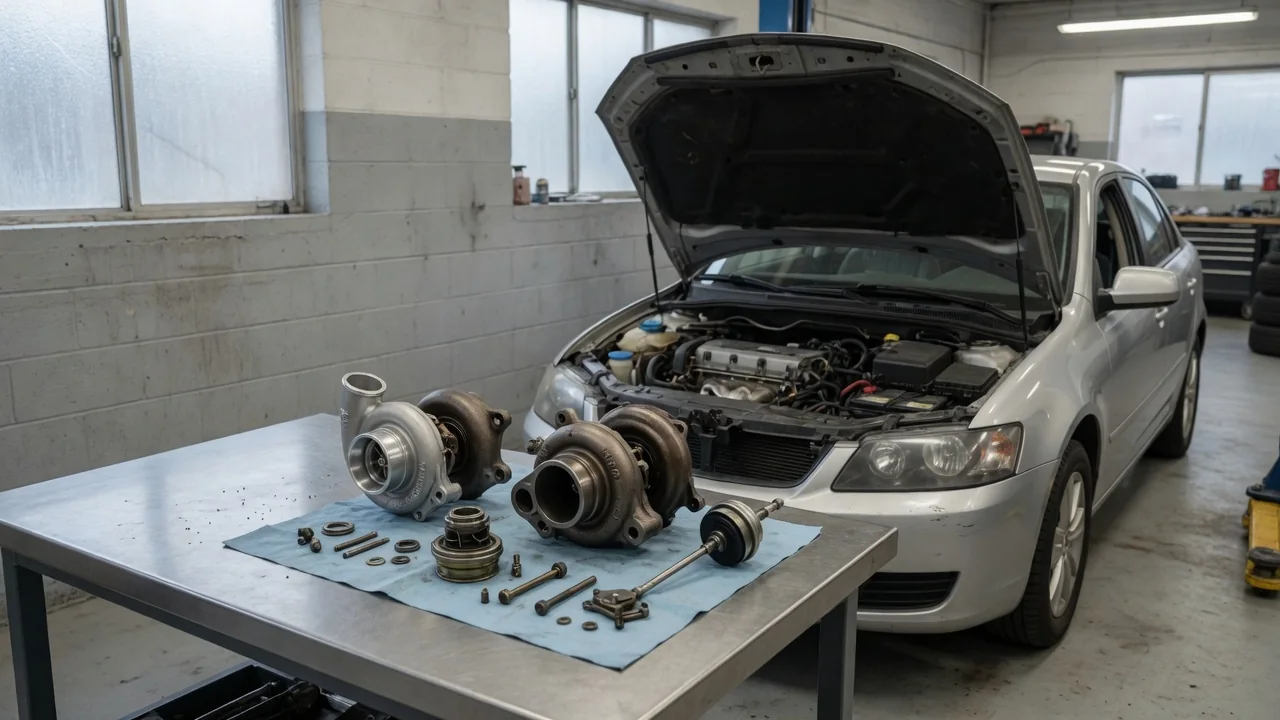
A Mini Cooper S turbocharger can lose boost, rattle, or smoke for reasons that start well before the cartridge fails. Confirming the engine and turbocharger application comes first, then the symptoms that justify inspection, and the oil supply, charge-air leaks, and wastegate issues that often sit behind lost power. Safe owner observations and professional checks follow, along with what to confirm before ordering a replacement turbocharger or a Mini Cooper turbocharger kit.
Confirm Your Cooper S Engine and Turbocharger Application
Before discussing any turbocharger for Mini Cooper fitment, record the model year, engine identification, market, and VIN. Cooper S badging has been applied across several generations and markets, and the badge alone does not prove which induction system is installed or which cartridge, housing, and actuator belong on that engine. Listings labeled only Mini Cooper often mix naturally aspirated and forced-induction parts, so they cannot establish the correct replacement assembly. Keep troubleshooting limited to turbocharged Cooper S applications once those identifiers confirm a turbocharger is actually fitted.
Engine identification matters because housings, oil feed and return ports, and wastegate actuator mounting can differ even among vehicles that share a Cooper S nameplate. A VIN-backed application check also shows whether the vehicle was built for a particular emissions market, which can change the turbocharger even when the engine family looks similar. Without that confirmation, a Mini Cooper S turbocharger that physically bolts on can still mismatch boost-control hardware or oil-line geometry. Treat engine codes and VIN-derived parts data as the starting point, not the badge or a generic catalog title.
Symptoms That Warrant a Turbo System Inspection
Reduced acceleration, inconsistent power delivery, unusual whistling or rattling, visible exhaust smoke, and warning messages are reasons to inspect the boost system on a turbocharged Cooper S. Loss of power under load, delayed response when boost pressure should rise, or a change in the usual turbo sound all belong in that inspection, not as proof that the cartridge has failed. Charge-air leaks, a sticking wastegate actuator, oil-related engine faults, and sensor issues can produce the same complaints. Treat the pattern as a prompt for diagnosis rather than a conclusion about the Mini Cooper S turbocharger itself.
Note whether the symptoms appear at startup, during ordinary acceleration, or only after the engine has warmed, and avoid deliberately provoking them. A brief whistle that tracks throttle can still be a hose or clamp, while a rattle that grows with speed may involve the rotating assembly or nearby shielding. Heavy exhaust smoke, sudden severe power loss, loud mechanical noise, or an oil-pressure warning is different: stop safely, shut the engine down, and arrange assistance. Continuing to drive can add heat and oil starvation on top of the original complaint.
Possible Causes Behind Lost Boost and Turbo Damage
Restricted oil supply, contaminated oil, or impaired drainage can damage a turbocharger because the bearings and seals rely on clean, pressurized oil and a clear return path. Coked or collapsed turbo oil lines, delayed oil pressure after a filter change, or sludge in the feed can starve the cartridge; that sequence is not claimed for every Cooper S. Charge-air leaks at the compressor outlet, intercooler, or intake tract can dump boost so the engine feels flat even when the turbo still spins. A wastegate actuator that sticks open, leaks, or is out of adjustment can prevent boost from developing.
Foreign-object damage at the compressor or turbine can follow a failed air filter, loose intake debris, or fragments from an upstream failure. Excessive heat can cook oil in the housing after shutdown or during restricted flow. Noise alone does not distinguish those mechanisms from a heat shield, actuator rod, or exhaust leak, so the wheels, housings, and oil need inspection rather than an assumption based on sound. Identifying the cause matters before fitting a replacement turbocharger, because a starved oil feed, leaking charge-air joint, or failed actuator will damage the next assembly the same way.
Safe Owner Observations and Professional Diagnostic Checks
Owner checks should stay limited to reviewing warning messages, documenting oil consumption, and looking at accessible hoses or fluid traces with the engine off and cool. Do not probe a hot turbocharger, pull oil lines, or inspect a running compressor housing. Stored diagnostic codes can guide the next steps, but a code is evidence to interpret, not proof a part has failed. Manufacturer-dependent definitions also vary, so vehicle-specific confirmation is required before a stored turbo or boost-related code is treated as a failed Mini Cooper turbocharger, a wastegate fault, or a sensor issue.
A professional evaluation should compare requested and actual boost pressure, then check charge-air integrity and boost-control operation, including wastegate actuator movement and related solenoid or vacuum hardware where fitted. Those tests help separate a leaking hose from a weak compressor, and a control fault from a seized cartridge. Oil supply and drainage checks, or direct turbocharger inspection, become appropriate when oil traces, consumption, or mechanical noise point at the bearings or seals. That work belongs in a shop; it does not require the owner to dismantle housings or watch the turbine with the engine running.
What to Confirm Before Ordering a Replacement Turbocharger
Order a replacement turbocharger only after VIN and engine-based application confirmation, supported by the relevant part number and any documented supersession. Catalog titles such as turbocharger for Mini Cooper are not enough, because housing orientation, oil and coolant ports, and actuator type can change across engines that share a similar name. The listing should disclose assembly condition, whether a wastegate actuator is included, warranty terms, and any core-return obligation. A remanufactured or new unit that omits those details leaves the installer guessing about calibration hardware and return costs after the old assembly is off the car.
Confirm actuator setup or calibration requirements for the specific application before the part is ordered, because some Cooper S turbochargers use an electronically controlled wastegate actuator that must be matched or adapted, while others use a pneumatic unit with a different rod and bracket. Mixing those designs, or fitting an actuator not set for that housing, can leave boost pressure uncontrolled even with a sound cartridge. A written diagnosis and itemized estimate then establish the assembly, supporting gaskets, turbo oil lines, installation hardware, labor, and the follow-up leak and boost checks the job still needs.
What a Mini Cooper Turbocharger Kit Should Include
A Mini Cooper turbocharger kit may describe a replacement installation package or a performance modification package, and those are not interchangeable. Read the listing as a contents claim: a repair-oriented kit should itemize the turbo assembly, seals, gaskets, installation hardware, and any supplied oil or coolant lines. A performance kit may add a larger compressor, different actuator, or extra piping, which changes calibration and supporting-system needs. Until that distinction is clear, suitability cannot be judged from the word kit alone, even when the title includes Mini Cooper S turbocharger language.
Kit contents do not establish which existing components are serviceable. Application-specific inspection still determines whether manifolds, remaining turbo oil lines, charge-air hoses, and the wastegate actuator can be reused. Performance packages also require professional assessment of calibration, supporting cooling and lubrication, and emissions compliance before they substitute for a stock replacement turbocharger. The repair plan should address the original failure cause and include professional checks for leaks and correct boost operation after installation, so the new assembly is not asked to survive the same oil restriction, leak, or control fault that damaged the last one.