MINI Cooper R53 Supercharger Bypass Valve: Identification and Checks
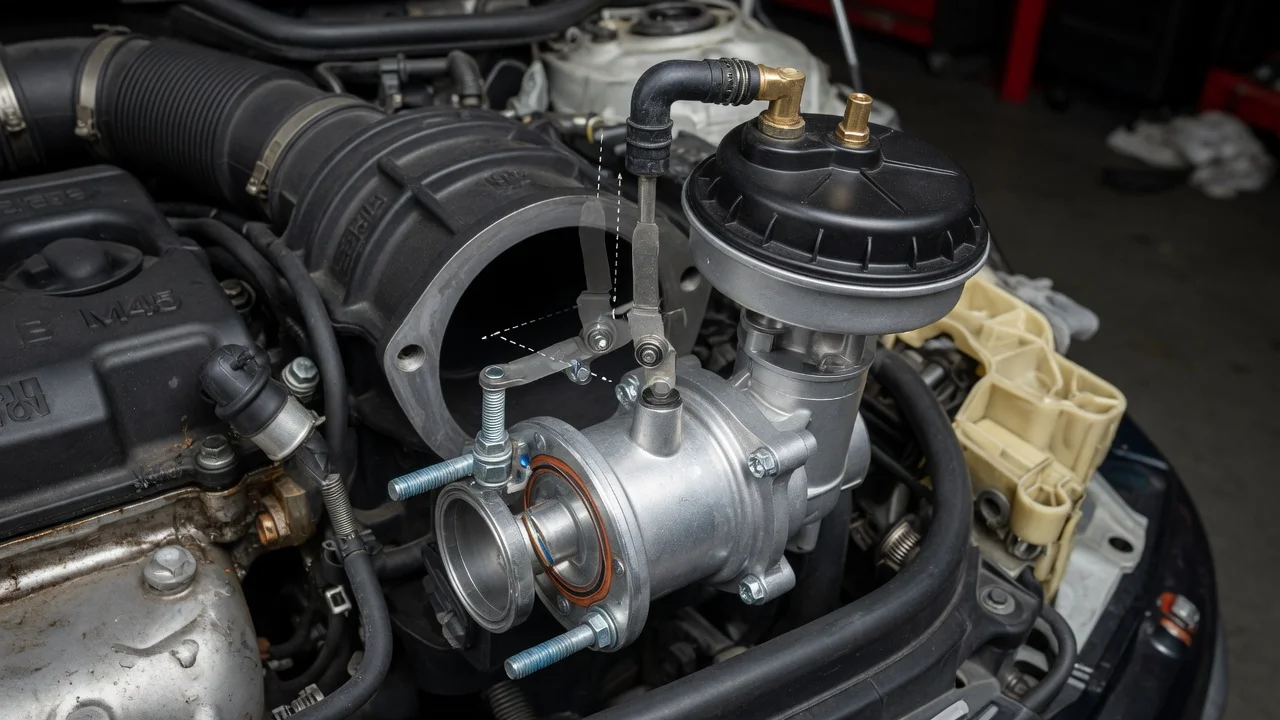
The supercharger bypass valve on an R53-generation MINI Cooper S decides when the supercharger builds boost and when it simply recirculates air. If the valve, its vacuum actuator or the hose feeding it misbehaves, the car can feel flat, idle unevenly or sound different. This guide explains how to confirm the vehicle configuration, describe symptoms precisely, separate the bypass valve from other likely causes and check it in a sensible order before buying parts.
Establish the symptoms
First confirm the car actually has this part. The bypass valve described here belongs to the supercharged 1.6-liter engine in the R53 Cooper S hatchback and the related R52 Cooper S convertible, including John Cooper Works versions. The non-S Cooper of that generation is naturally aspirated, and later MINIs use turbochargers with a different boost-control system, so advice for those cars does not transfer. On the R53, the valve is a butterfly in the supercharger housing, moved through a short linkage by a small vacuum actuator. At idle and light cruise, high manifold vacuum holds it open so air recirculates and the supercharger does little work. As the throttle opens and vacuum falls, the valve closes and boost builds.
Write down when the problem appears: cold or warm engine, idle, steady part-throttle cruising, hard acceleration or only after a certain load. Note associated signs such as a check engine light, stored codes, a change in supercharger whine, a hiss under the hood, hesitation, surging or a shift in fuel economy. Then list recent changes. Intake or intercooler removal, spark plug work, a supercharger pulley change or any job near the throttle body can disturb the actuator hose or linkage. Recording these operating conditions makes every later check easier to interpret.
Distinguish plausible causes
A bypass valve that stays partly or fully open under load lets boost escape back to the supercharger inlet. The typical result is weak acceleration and little sense of boost, while idle may seem normal. A valve that stays closed at idle and cruise makes the supercharger work against a closed path when it should be resting. That can show up as louder whine at idle, uneven part-throttle behavior, extra heat and poorer economy. A torn actuator diaphragm or a cracked vacuum hose adds a vacuum leak on top of the valve problem, which can cause unstable idle and lean-running fault codes.
Several other faults produce similar complaints. Other vacuum leaks, loose or split boost couplings around the intercooler, a slipping supercharger belt or weak tensioner, a restricted air filter, ignition misfires from worn plugs or coils, and throttle body problems can all reduce power or upset idle. A rattle at idle from the front of the supercharger often points to the drive isolator or coupler rather than the bypass. Evidence that favors the bypass: a hiss near the actuator, a symptom that changes with manifold vacuum rather than engine speed, or a rod that does not move. Evidence against it: misfire codes, belt squeal or glazing, or symptoms that are identical whatever the load.
Checks in a useful order
Start with the engine off and cool. Find the actuator on the supercharger and follow its vacuum hose. Look for cracks, hardened or swollen rubber, splits at the ends and a hose that has slipped off its fitting. Confirm the actuator rod is attached to the valve lever, any retaining clip is present and nothing obstructs the linkage. Inspect intake and intercooler couplings for loose clamps, tears or oily residue that suggests leakage. Read stored codes with an OBD-II scan tool and note any freeze-frame data, since codes help rank the possibilities before anything is unbolted.
The next tests need tools. A hand vacuum pump connected to the actuator should move the rod smoothly, and the diaphragm should hold vacuum without bleeding down. When vacuum is released, the rod and valve should return without sticking. A smoke test finds vacuum and boost leaks that are invisible by eye. Live data showing fuel trims and manifold pressure at idle and under load helps confirm whether boost and vacuum behave as expected. If you watch the rod with the engine running, use a helper and keep hands, tools and clothing well away from the belt and pulleys. Compare readings with manufacturer specifications from factory service information rather than numbers quoted from memory.
Leave supercharger removal, freeing a seized valve shaft, internal inspection and any work that requires torque values you do not have to a qualified technician.
Interpret the findings
A cracked or disconnected hose is an inexpensive find, but it does not clear the actuator or valve automatically. Replace it, recheck the actuator with a pump and confirm the original symptom is gone under the same conditions where it appeared. If the actuator will not hold vacuum, its diaphragm has failed. Before fitting a new actuator, move the valve lever by hand to make sure the shaft turns freely, because a new actuator cannot fix a binding butterfly.
If the actuator holds vacuum and the rod moves but the valve lever does not follow, the problem is the linkage or valve shaft. If the whole bypass assembly checks out mechanically and symptoms remain, return to the other causes: belt condition and tension, boost leaks, ignition and sensor data. Lean fuel trims with no visible leak call for a smoke test. Keep in mind that each test proves only the condition of the part tested. It does not prove that part caused the complaint until the fault is corrected and a repeat drive under the same operating conditions confirms the change.
Urgency and next action
A bypass fault on its own usually affects performance and drivability rather than immediate safety. Stop driving and arrange inspection, however, if the check engine light flashes, the supercharger or belt makes grinding, knocking or screeching noises, the belt looks frayed or is coming off, you smell burning, the temperature gauge climbs or the car loses power in a way that makes merging or keeping up with traffic unsafe. Nobody can promise how many more miles a car with an unconfirmed fault will cover without further damage.
Give the repair shop the VIN, model year, body style and mileage, along with service history covering the supercharger, belt and tensioner, and any modifications such as a smaller pulley or intake changes. Provide stored codes with freeze-frame data, the conditions under which the symptom appears, and every check already done with its result. There is no universal replacement interval for the bypass valve or actuator, so follow the maintenance schedule for your exact vehicle configuration and judge the part by inspection and test results.