Mini Catalytic Converters: Purpose, Compatibility and Legal Considerations
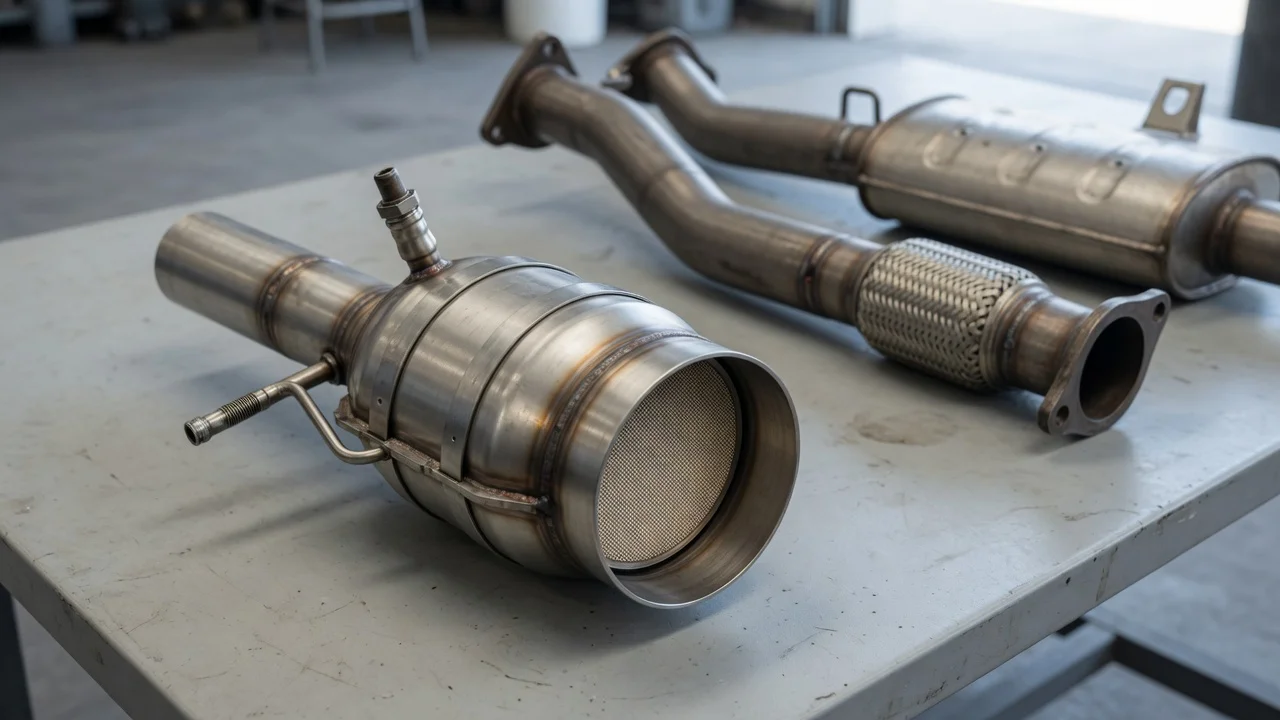
A mini catalytic converter is commonly marketed as a small emissions-control device intended to fit compact exhaust systems, limited spaces or specific vehicle applications. The term is not a universal industry category, so the exact dimensions, substrate size, inlet and outlet diameters, and mounting style can vary between products. Before considering one, treat the part as a vehicle-specific exhaust component rather than a generic upgrade.
Before you start
Check the product listing or manufacturer specification for the converter body length, overall length, inlet diameter, outlet diameter, oxygen sensor port location and intended vehicle coverage. Compare those measurements with the existing converter or the space available in the exhaust path. A physically smaller converter cannot automatically be substituted for the original part unless the dimensions, flow direction and connection points are compatible.
Confirm whether the procedure is reversible for your exhaust layout. On many vehicles, a converter is welded or clamped into the exhaust system, but replacement can require cutting, sleeve clamps, flanges or welding equipment. If the original converter is welded in place, installation is not a purely bolt-on task. Local emissions and vehicle regulations may also restrict converter replacement, so verify applicable requirements for the vehicle's registered use and location.
Step-by-step instructions
Use these steps as a general inspection sequence only. Always follow the vehicle service manual and the converter manufacturer's instructions for your specific model.
First, identify the original converter position, the direction of exhaust flow and any nearby oxygen sensors or mounting brackets. Compare the replacement's body shape and sensor port placement with the original before loosening anything.
Second, check the connection type at both ends. Some exhaust systems use flanged joints with gaskets, while others use slip-fit or welded connections. Match the replacement to the existing joint style instead of modifying the pipe solely to make a smaller converter fit.
Third, confirm the oxygen sensor requirement. If the original converter has a threaded sensor port, the replacement may need a matching port in a usable location. A missing sensor provision can prevent proper closed-loop fuel control or trigger a diagnostic trouble code.
Fourth, support the exhaust before removing the old converter, then remove fasteners in the order required by the service information. Keep reusable gaskets, clamps or mounting hardware only if they are confirmed suitable for reuse.
Fifth, test-fit the mini converter before final tightening. Check clearance around the body, wiring, heat shields, floor pan and suspension or steering components. If the converter is installed by welding, follow the required weld procedure and protect nearby wiring and plastic parts from heat.
Check the output
After installation, start the engine and listen for exhaust leaks at every joint while the system is still cool enough to inspect safely. Check for rattles or contact between the converter, heat shields and adjacent components. Then test-drive or run the vehicle through the conditions specified by the manufacturer and scan for diagnostic trouble codes if a scan tool is part of the normal verification procedure.
Do not treat the absence of a fault code as proof of legal compliance or emissions performance by itself. The relevant limitation is that a converter can only be considered suitable if it matches the vehicle's emission-control design and any applicable certification requirements in your jurisdiction.
Common problems and next steps
A common issue is ordering a converter that is physically shorter than the original but not compatible with the pipe diameter or joint type. If the connection differs, do not force the fit. Restore the original setup or select a part with matching connection dimensions.
Another issue is insufficient sensor coverage when the replacement lacks the expected oxygen sensor port. Check whether the replacement is designed for a pre-catalyst or post-catalyst sensor position before purchase.
For legality, the most useful correction is to treat a mini catalytic converter as an emissions-control replacement only where the product is explicitly identified as compliant for the specific vehicle, model year and engine. If compatibility or certification cannot be confirmed, the safer next step is to use the manufacturer-approved replacement path rather than relying on a small or universal-fit device.