Mini Brake Fluid Warning Light Reset: What to Check Before Clearing It
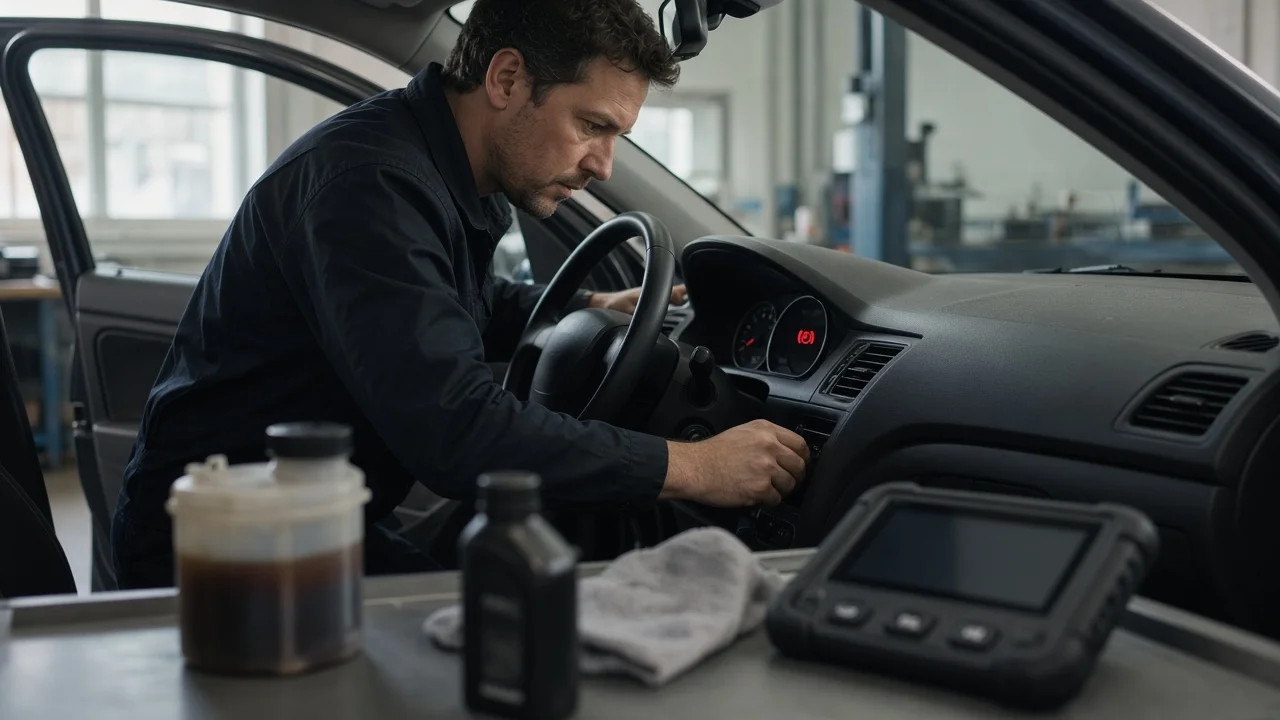
A brake fluid warning on a MINI can mean two very different things: a red alert that the fluid level in the reservoir has dropped, or a service reminder that the fluid is due for replacement. Only the reminder is designed to be reset by the owner. The red low-level warning goes out by itself once the cause is corrected, and forcing it off would hide a real problem. This guide helps you tell the two apart, check things in a sensible order and decide what to do next.
Establish the symptoms
Start by writing down exactly what the car shows. Note the color of the symbol, the wording of any text message and whether it appears in the service menu or as a standalone warning. A red brake symbol, often a circle with an exclamation mark, points to the brake system itself. A message listing brake fluid alongside a date in the service display is part of the condition-based service schedule and is about fluid age, not fluid level.
Next, record when it happens. Does the light come on at every start, only after braking hard, only in corners or on slopes, or does it flicker and go out? Check whether any other lights accompany it, such as the ABS, stability control or brake pad wear warning. Pay attention to how the pedal feels: firm and consistent, or softer, lower or slowly sinking under steady pressure. Finally, list recent changes, including new brake pads or rotors, a fluid change, a battery disconnection or any work near the wheels or under the hood.
Distinguish plausible causes
A due service reminder is the most harmless explanation. It is supported when the message appears at startup or in the service list, the pedal feels normal and the reservoir level is between MIN and MAX. It is weakened if the warning is red, comes and goes while driving or coincides with a change in pedal feel. A reminder that persists after a fluid replacement usually means the service item was never reset.
Normal pad wear is a common reason for a genuinely low level. As friction material wears away, the caliper pistons extend further and more fluid sits in the calipers, so the reservoir level falls slowly over many months. This cause is supported when pads are close to their wear limits and the light first flickers during braking or cornering, when the fluid moves in the reservoir. It is weakened if the pads are recent or thick. A leak becomes more likely when the level drops quickly, the pedal softens, or there is wet residue near a caliper, brake hose, line fitting or the master cylinder.
Less often, the level sensor, its connector or wiring is at fault, which is supported when the light stays on with the fluid clearly at MAX. The red brake symbol is also shared with other functions on many vehicles, such as an applied parking brake or a brake force distribution fault, which typically shows together with the ABS light.
Checks in a useful order
Begin with safe observations. Park on level ground, switch the engine off and let the car sit for a minute. Locate the brake fluid reservoir, usually toward the rear of the engine compartment and sometimes under a plastic cover, and read the level against the MIN and MAX marks without opening the cap if you can see through the plastic. Look around each wheel and on the ground beneath the car for damp patches. If the wheel design allows, look at the pad thickness through the spokes. Confirm the parking brake is fully released.
If the level is low, do not simply top up and carry on. Topping up masks the evidence of how fast fluid is being lost, and if the pads are worn, fitting new pads later will push fluid back into an already full reservoir. If you add fluid to reach a workshop, use only the specification printed on the reservoir cap or listed in the owner's manual, keep dirt out of the opening and avoid spilling fluid on paint.
Some checks need tools, specifications or a qualified technician. Measuring pad thickness and rotor thickness against the wear limits in the service information, testing the fluid for moisture content, reading stored fault codes and inspecting calipers and hoses on a lift all belong here. Bleeding the system may involve a diagnostic routine on cars with ABS and stability control. The service reminder itself can be reset on many MINI models from the instrument cluster: with the ignition on and engine off, hold the reset or trip button until service information appears, scroll to the brake fluid item, then hold the button again and confirm the reset. The sequence varies by generation, so follow the owner's manual for your model, or use a scan tool with MINI service functions.
Interpret the findings
If the only message is the service reminder, the level is correct and the pedal is normal, the fluid is due for replacement by date. Resetting the reminder without changing the fluid only moves the due date and leaves old, moisture-laden fluid in the system. The correct order is to replace the fluid, then reset the item. If the red light shows with the level clearly at MAX and no other symptoms, a sensor or wiring fault is likely, but a technician should confirm it rather than assuming the brakes are fine.
A low level combined with pads near their limit is consistent with wear, but it still needs a leak check before you accept that explanation. A low level with thick pads, a softer pedal or visible wetness points to a leak, and the car should not be driven until it is found. When parts are needed, confirm vehicle fitment using the exact model, year and brake package, because performance and standard brake setups use different pads, rotors and calipers. Measured rotor thickness, not appearance alone, decides whether rotors need replacing along with the pads.
Urgency and next action
Stop driving and arrange professional service if the red brake warning appears together with a soft, low or sinking pedal, longer stopping distances, the car pulling to one side, fluid below MIN, visible fluid leaking, or the ABS light at the same time. Grinding or metallic noise while braking also calls for immediate attention, as it can mean the friction material is gone. No remaining distance can be considered safe while any of these signs are present, so having the car transported is the cautious choice.
When you contact a workshop, give the model, year and VIN, the exact message text and symbol color, when the warning appears, the fluid level you observed, any other warning lights and recent brake or battery work. A photo of the instrument cluster helps. With that information, the technician can decide whether the job is a routine fluid change and service reset, a pad and rotor replacement, a sensor repair or a leak that needs urgent repair.