Mile Marker Locking Hub Selection: Fitment, Features and Ownership Trade-Offs
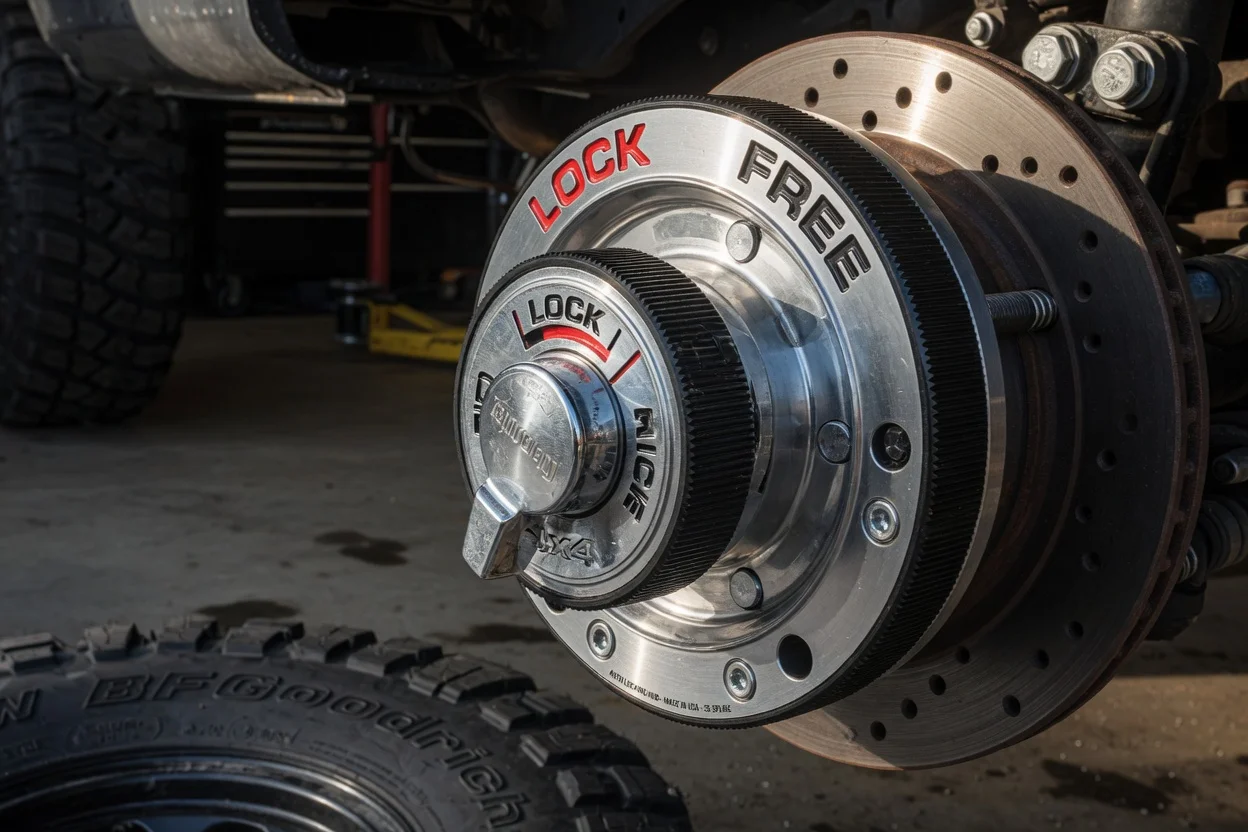
Choosing Mile Marker locking hubs starts with your truck, not the catalog. On a part-time four-wheel-drive system, a manual hub connects or disconnects each front wheel from its axle shaft, so less of the front driveline turns when you drive in two-wheel drive. The right set depends on your exact vehicle configuration, axle hardware and how you use the vehicle. This guide shows how to narrow the choice without guessing at specifications.
Define the job the product must do
Start by naming the reason you are shopping. Common situations include replacing worn or leaking factory manual hubs, converting from automatic hubs that engage unreliably, or setting up a work or trail truck that spends real time in four-wheel drive. Each points to different priorities. A daily driver that only needs four-wheel drive a few snowy mornings a year mainly needs hubs that disengage cleanly and stay sealed. A truck used for plowing, towing on loose surfaces or regular off-road driving puts more value on durable internals and easy engagement in mud, cold or after water crossings.
Then list your practical constraints. Manual hubs require you to stop and turn each dial by hand, so consider whether that is acceptable in your climate and driving routine. Think about your budget for the hubs themselves and for installation if you will not do the work. Finally, consider your operating conditions: road salt, deep water, dust and frequent shifting all affect how much attention the hubs will need over their life.
Check compatibility
Fitment is the deciding factor, and it depends on more than year, make and model. Confirm the drivetrain, the front axle model, and whether the truck came with manual hubs, automatic hubs or a system without serviceable hubs. Many independent front suspension vehicles use sealed unit bearing assemblies with no provision for a locking hub, and those cannot accept a bolt-on hub unless a conversion kit is offered for that exact application. Check the hub manufacturer's application listing for your configuration rather than relying on a generic chart or a forum post about a similar truck.
The interfaces that matter are the spline count on the outer end of the axle shaft, the number and pattern of bolts that attach the hub to the wheel hub, and any drive gear, spacer or retaining hardware the design uses. If you are unsure, remove the existing hub and count the splines before ordering. Service history matters too: a previous axle swap, replacement shafts or aftermarket conversion can mean the parts on your truck no longer match what the factory originally installed. When the listing and what you find on the vehicle disagree, resolve the difference before buying.
Features that affect the choice
The core trade-off is manual versus automatic engagement. Manual locking hubs are mechanically simple and engage positively when you turn the dial, which is why many owners convert from automatic hubs. The cost is convenience: you have to get out at each front wheel to lock and unlock them. If that is a dealbreaker, a manual hub may not be the right product for your use, regardless of brand.
Beyond that, look at features you can actually verify. Check what the listing states about the hub body and internal parts, how the dial and cap are sealed against water and dirt, and what installation hardware is included, such as gaskets, snap rings, bolts or spacers. Clear installation instructions and stated warranty terms are useful evidence. Labels like heavy duty, extreme or rugged are marketing language unless they are backed by stated materials, a specific fitment listing or warranty coverage. Treat a feature as meaningful only when it addresses a problem you identified when defining the job.
Limitations and ownership costs
Installation involves removing the old hub, cleaning the mating surfaces, checking the axle splines and reassembling with the correct snap rings, spacers and fasteners. Follow the instructions supplied with the hubs and the manufacturer specifications for your vehicle for torque values and bearing adjustment. If the wheel bearings, seals or spindle hardware need service, the hub job is a natural time to do it, but that adds parts and labor. Replace damaged or distorted snap rings and gaskets instead of reusing them.
Locking hubs also have clear limits. They do not add traction, cure wheel bearing play, repair worn axle shaft splines or fix a transfer case that will not engage. They do not convert a full-time system into a part-time one. Both hubs must be locked before the front axle can drive the wheels. Ownership costs include periodic inspection, cleaning and lubrication according to your maintenance schedule or the hub instructions, plus seals and internal parts that may eventually wear. There is no universal service interval; frequent water crossings, mud or salted roads justify checking more often than a dry-climate commuter would.
Build a practical shortlist
Narrow your options with a simple checklist instead of a ranking. First, confirm that the hub is listed for your exact vehicle configuration and axle, and that the spline count and bolt pattern match what is on your truck. Second, confirm that manual engagement suits how often you use four-wheel drive and where you drive. Third, compare what each option states about body material, sealing and included hardware, ignoring labels that are not backed by specifics.
Finally, compare the total cost rather than the price tag alone. Include installation labor if you will not do the work, any bearings or seals due for replacement, and the inspection time your operating conditions will demand. Keep the remaining candidates that pass every check, read their instructions and warranty terms, and choose the one that fits your truck and use with the fewest compromises. If fitment remains uncertain after inspection, have a mechanic confirm the axle hardware before you order.