Midsize SUVs With the Most Cargo Space
What is the answer to my immediate question?
The midsize SUV with the most cargo space is not a single guaranteed model for every shopper. The answer depends on whether you mean space behind the first row, behind the second row, or behind an optional third row. Maximum cargo volume is usually measured with the second and third rows folded flat, while everyday usability is better judged by space behind the second row. A model can lead in one measurement and fall mid-pack in another.
Because automakers report cargo volume according to their own methods and may revise figures for different model years, trims, or drivetrains, treat published numbers as comparison points rather than exact guarantees. Check the specifications for the specific model year, trim, and powertrain you are considering. Hybrid and plug-in hybrid versions may also lose some cargo volume because of underfloor battery packaging or raised load floors.
How cargo space is measured
Cargo volume is typically expressed in cubic feet. The largest number is the maximum cargo volume behind the first row, which requires folding the second row and, if equipped, the third row. Space behind the second row is the more useful figure for family errands, road trips, and carrying passengers at the same time. If a third row is included, space behind that row is often small and closer to what you would find in a compact crossover.
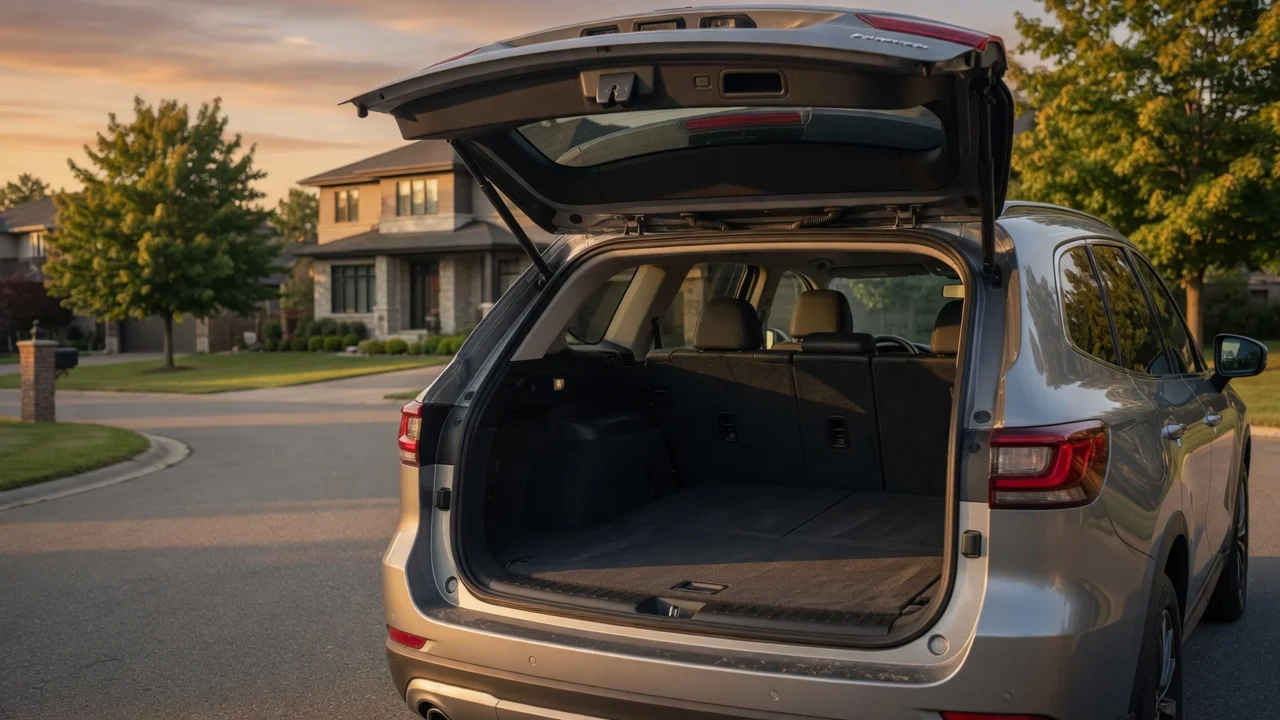
The shape of the cargo area matters as much as the volume on paper. A tall, boxy opening can accept bulky items that may not fit through a sleeker rear hatch. Features such as a flat load floor, low lift-over height, remote seat releases, and split-folding seatbacks affect how easily you can use the advertised space.
Configurations that change the result
Two-row midsize SUVs tend to offer the most consistent cargo volume behind the second row, while three-row models trade some everyday cargo depth for passenger capacity. Adding all-wheel drive can affect weight and packaging but does not always reduce cargo volume. Hybrid batteries are more likely to raise the load floor or reduce underfloor storage, especially in designs adapted from a gasoline-only platform.
• Check whether the headline figure requires folding all rear seats\n• Compare space behind the second row for normal use\n• Confirm whether a third row reduces behind-seat space when raised\n• Verify figures for the exact year, trim, and powertrain\n• Consider hatch opening shape and lift-over height, not just cubic feet
What the supplied evidence does not resolve
The available material does not include ranked cargo volumes for current model-year midsize SUVs. Without model-specific figures tied to exact model years and configurations, this article cannot responsibly name a single winner or provide a complete ranking. A gap remains for buyers who want a verified list of cubic-foot measurements across the current midsize segment.
How to choose with confidence
Start by identifying whether you need maximum volume with seats folded, usable volume with passengers aboard, or space behind a third row. Then compare only the same measurement across models. If a publication or manufacturer figure does not state the configuration, treat it as incomplete. A physical check is still valuable because paper volume does not show awkward intrusions, narrow openings, or tall load floors.
Focus on the cargo conditions that match how you actually use the vehicle. A large maximum figure is less helpful if the SUV cannot comfortably carry your regular load behind the second row. Likewise, a model with slightly less volume may be easier to load daily if it has a lower floor, square opening, and simpler folding mechanism.
Once you narrow the field to two or three models, verify the relevant cargo specifications for the exact trims you would buy. Compare the same powertrain and seating layout, and note whether accessories such as a spare tire, subwoofer, or battery packaging change the floor height or available space.