Microfiber Towels and Cloths for Car Cleaning: Types, Uses and Care
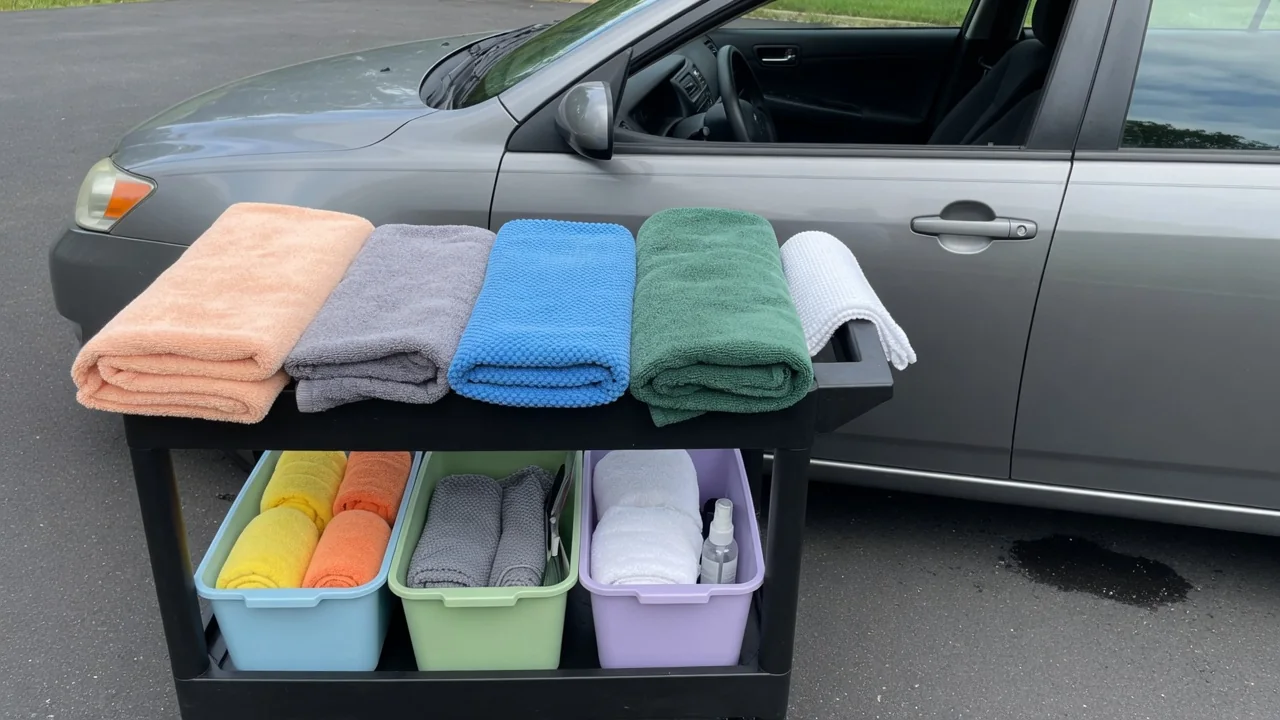
A microfiber towel for car cleaning is not a one-size-fits-all rag. Pile, GSM, weave, and edges change how a car cleaning microfiber cloth lifts dirt, holds water, and behaves on paint, glass, and interior surfaces. Matching cloths to the job, keeping them assigned, and washing them correctly matter as much as the product on the panel. The right car cloth cleaning habits protect finish quality between washes.
Understand Microfiber Grades, Weaves and Edges
Microfiber is a split synthetic fiber that creates a large surface area for trapping water, oils, and light soil. GSM is simply the fabric weight per unit area, not a paint-safety rating or a guarantee of softness. A heavier cloth can hold more liquid, yet a dense, short-pile face may still be the better choice for product removal. Towel pile length, weave, and towel absorbency should be matched to the task. Waffle weave glass cloths and twisted-loop drying towels behave differently from plush paint cloths, even at similar GSM.
Labels such as premium or professional do not prove a microfiber cloth for car cleaning is suitable for every surface. Lint, edge stitching, and tags can mar paint or leave fibers on glass even when the face feels plush. Before buying a microfiber car cleaning cloth, check the intended use, wash instructions, seam type, and any surface-specific restrictions on the package. Prefer folded or laser-cut edges for paint work when the label allows, and keep a separate construction for glass. A car cleaning cloth that sheds or has a hard hem belongs off clearcoat.
Choose Towels for Paint Cleaning, Drying and Product Removal
For drying washed paint, a high-absorbency microfiber towel, often a twisted-loop drying towel, lifts water with fewer passes than a thin all-purpose rag. For polish, wax, or sealant residue, a softer, lower-lint plush face helps lift product without dragging a wet film across the panel. Microfiber towels for car cleaning still cannot make wiping gritty or inadequately cleaned paint safe. Dirt left on the surface can cause paint marring no matter how gentle the cloth feels. Wash and decontaminate first, then dry or remove product.
Handle paint with light pressure and fold the cloth so a clean face is always on the panel. Replace a towel as soon as it is saturated, stained, or contaminated rather than flipping a dirty side back onto clearcoat. Follow the cleaning product's directions for dwell time and wipe-off method. Before each use, inspect the microfiber car cleaning cloths for grit, damaged edges, and embedded particles that can scratch. A micro fiber cloth for car cleaning that has been dropped or used on wheels should not return to paint duty.
Use Dedicated Cloths for Clear, Streak-Free Glass
Glass work favors a low-lint microfiber cloth for car cleaning, often a waffle weave or a tightly finished short pile that glides without leaving fibers. Use one cloth to distribute a suitable glass cleaner and a second, fully clean cloth for the final wipe so you are not spreading the same film. That two-cloth method keeps the last pass dry enough to reduce glass streaks. Keep these towels out of the paint and interior pile so dressings and polish oils never reach the glass.
Detergent residue left in a poorly rinsed towel, leftover wax or interior dressing, excess cleaner, and a dirty cloth can all contribute to glass streaks even when the glass itself was clean. Tint film and coated glass may require a product and cloth combination that the film or coating maker allows, so follow those care directions rather than assuming any glass spray is safe. Dedicated microfiber cloths for car cleaning, reserved for glass and stored dry, make streak control far more predictable.
Keep Interior Cloths Separate by Surface and Soil
Interior work still benefits from a microfiber car cleaning cloth, but the face should match the surface and the maker's care guidance. A slightly damp, medium-pile cloth can lift dust from dashboards and textured trim without flooding vents. Upholstery often needs a cleaner, dedicated towel so fabric soil does not migrate onto vinyl. Screens, instrument lenses, and glossy piano-black trim can haze or scratch if the cloth is abrasive, linty, or loaded with dressing, and some of those surfaces specify a particular cleaning cloth.
Cross-contamination is the interior kit's main risk. Cloths used with dressings, greasy residues, or heavily soiled floor and seat areas must stay out of the paint and glass towel supply. Microfiber alone does not make a chemical suitable for leather, fabric, displays, or coated surfaces; the product still has to be approved for that material. Assign interior towels by job so a dressing applicator never becomes the next wipe for a display. That separation protects both the cabin finish and the exterior cloths you rely on later.
Build a Towel Kit Around Your Cleaning Routine
A practical starter kit for microfiber towels for car cleaning is one or two drying towels, two glass cloths, two to four interior cloths, and two to four paint-product cloths. That count is a starting point, not a rule. Vehicle size, soil level, towel dimensions, and the number of tasks in a session determine how many you actually need. A large SUV with heavy dust will consume more faces than a compact car that only needs a light product wipe. Keep extras folded so you can retire a cloth mid-job.
Color coding or labeled bins keep paint, glass, interior, and wheel cloths assigned to their jobs so a brake-dust towel cannot wander onto clearcoat. Wheel and engine-bay cloths should live in their own bag. Keep clean spares within reach, and immediately set aside any towel dropped on the ground rather than shaking it off and continuing. Grit from pavement is a common source of paint marring. A labeled car cleaning microfiber cloth kit also makes it obvious when a category is running short before the next wash.
Wash, Dry and Inspect Cloths Before Reuse
Wash microfiber cloths for car cleaning by sorting them by use and contamination. Keep wheel, dressing, and heavily soiled interior towels out of the paint and glass load. Avoid washing them with lint-shedding cotton, which can clog the split fibers and leave debris on the next wipe. Use a detergent suitable for microfiber, skip fabric softener and dryer sheets, and follow the towel-label wash and drying settings. Softener coats fibers, cuts towel absorbency, and can put residue back onto paint and glass.
Rinse thoroughly so detergent does not stay in the pile, then dry completely before storing the towels in a closed, clean container. Damp storage invites odor and soil transfer. After washing, inspect each microfiber cloth for car cleaning. Persistent grit, stiffness, frayed edge stitching, or poor absorbency means the towel needs another clean cycle or should leave delicate-surface duty. Retired paint towels can still serve wheels or dirty interiors, but they should not return to clearcoat or glass. Regular inspection is how a car cloth cleaning kit stays safe.