Mazda Miata Brake Booster Check Valve: Choosing the Correct Part
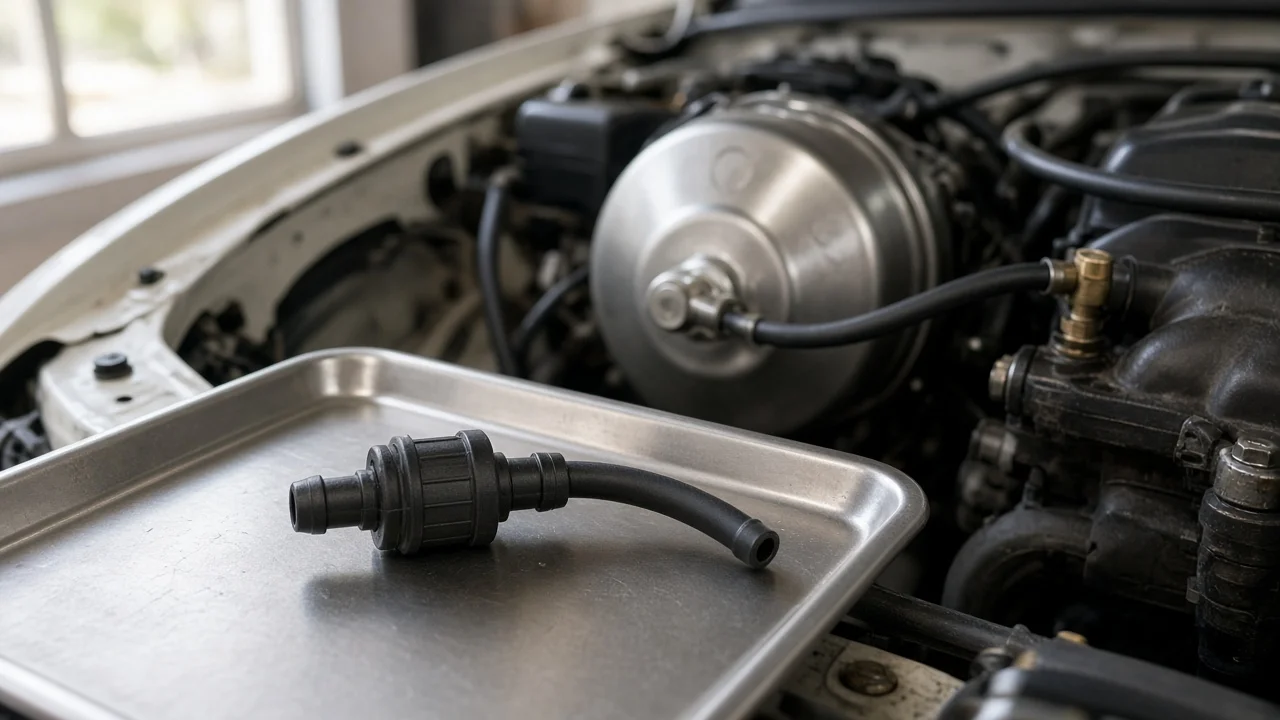
The Miata brake booster check valve is a small one-way valve, but it decides whether your car keeps power assist when engine vacuum drops. Buying the wrong one, or installing the right one backward, can leave you with a hard pedal or a vacuum leak. This guide explains how to confirm the valve is actually the problem, how to match a replacement to your car, and how to choose a part without guessing.
Define the job the product must do
The check valve sits in the vacuum line between the intake manifold and the brake booster. When the engine makes vacuum, air is drawn out of the booster through the valve. When vacuum falls, for example at wide-open throttle, after shutdown, or under boost on a turbocharged car, the valve closes and traps the reserve inside the booster so the next few stops still get assist. A failed valve typically shows up as a hard pedal after the engine has been off for a short time, assist that fades during spirited driving, or a hiss near the firewall. A leaking valve or hose can also upset the idle.
Before ordering, confirm the symptoms point here. With the engine off, pump the pedal several times to use up stored vacuum, hold light pressure, and start the engine; the pedal should sink slightly as assist arrives. Then let the engine idle, switch it off, wait a minute or two, and press the pedal; you should get at least one assisted application. If the reserve disappears quickly, test the valve itself with a hand vacuum pump. Vacuum applied to the booster-side port should hold steady, while vacuum applied to the manifold-side port should pass freely. A soft or sinking pedal is a different fault, usually hydraulic, involving brake fluid, a caliper or the master cylinder, and a new check valve will not fix it. Worn brake pads or brake rotors at their wear limits also change pedal feel and stopping distance, but they do not affect booster assist.
Check compatibility
Start with the exact car: model year, generation (NA, NB, NC or ND), engine and, where the parts catalog allows it, the VIN. Vacuum routing and the valve's mounting style are not the same across every Miata, so a listing that only says 'fits Miata' is not enough for reliable vehicle fitment. Some arrangements use an inline valve spliced into the hose with clamps; others integrate the valve into a hose assembly or seat it in a grommet at the booster. Look at your car before you shop and note which arrangement you have, because a valve made for one style will not install cleanly in another.
Three interfaces decide fit: the hose inside diameter on each side of the valve, which may differ; the barb length and shape that keeps the clamp secure; and the flow direction. Measure the existing hose rather than relying on a universal size chart, and check that the replacement carries a clear marking, usually an arrow or labels for the engine and booster sides, so it can be installed with air flowing from the booster toward the intake manifold. If the car has a different intake manifold, an aftermarket throttle body or added forced induction, the vacuum source may have moved, so verify the port sizes on the car itself rather than in a catalog.
Features that affect the choice
The main decision is between a factory-specified part, a direct-fit aftermarket replacement and a universal inline valve. A factory part matches the original barbs and orientation and is the lowest-risk choice for a stock car. Direct-fit aftermarket valves can work well when the listing names your generation and the photos show the same shape and port sizes as the original. Universal valves are inexpensive and widely sold, but they may need adapters or different hose, and every extra joint is another place for a leak.
Treat labels such as heavy duty, performance or upgraded with caution: a check valve either seals in one direction and flows in the other, or it does not. Useful evidence is a clear fitment listing by year and generation, stated port sizes, a visible direction marking and, for boosted cars, a statement that the valve is designed to seal against positive pressure. Material quality matters more than branding. The body should tolerate engine-bay heat and fuel vapor, and any rubber grommet should be supple rather than hard or cracked. On a turbocharged or supercharged Miata, factory or aftermarket, a valve that only seals reliably against vacuum can let boost pressure reach the booster, so confirm the design suits that use.
Limitations and ownership costs
The valve is one of the least expensive parts in the braking system, and replacement is usually simple: release the clamps, note the orientation, fit the new valve and secure it. Plan to inspect the hoses at the same time. Old vacuum hose often hardens, cracks at the ends or collapses under vacuum, and reusing it can make a new valve seem faulty. Replace tired hose and weak clamps together, and route the line away from hot exhaust parts and sharp edges. The valve is generally replaced when it fails a test rather than on a fixed schedule, so check it whenever you are working under the hood and follow Mazda service information for your car.
A check valve cannot repair a leaking booster diaphragm, a faulty master cylinder, contaminated brake fluid, a sticking caliper or friction material worn past its limits. If a new valve and sound hoses do not restore assist, the booster itself or the vacuum source may be at fault, and that needs proper diagnosis. Any loss of braking, a pedal that sinks toward the floor, a visible fluid leak or a lit brake warning light means you should stop driving the car and have it inspected by a qualified technician. Use the vehicle-specific service information for routing, torque values and wear limits rather than generic figures.
Build a practical shortlist
Narrow the options with a short checklist before buying. Confirm year, generation, engine and, if possible, VIN fitment in the seller's catalog. Match the mounting style you found on the car: inline, hose assembly or grommet. Compare port sizes with your measured hose and check that the direction marking is easy to read. For a boosted car, confirm the valve is intended to seal against pressure as well as vacuum. Decide whether to buy fresh hose and clamps at the same time, and favor a listing with clear photos and part identification over one that simply claims universal fit.
Once two or three candidates meet every point, choose on availability and return terms rather than on vague performance claims. Keep the old valve until the new one is installed and tested, so you can compare shape and orientation side by side. After installation, repeat the pedal tests: assist should arrive at startup, and the booster should hold enough reserve for at least one assisted stop after shutdown. If it does not, the check valve was not the whole story, and the rest of the vacuum and brake system needs a closer look.