Mercedes W211 Air Suspension Valve Block: Choosing the Correct Part
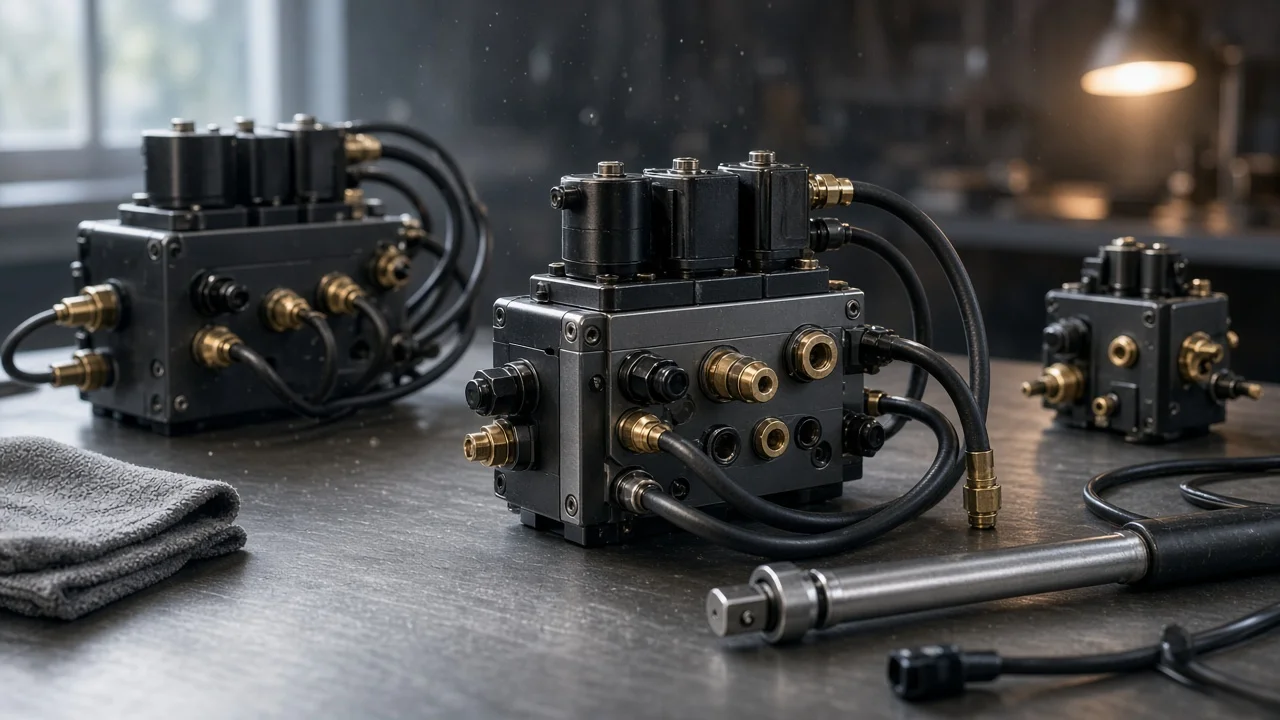
A Mercedes E-Class that sags after an overnight park is one of the most common reasons owners start shopping for a W211 air suspension valve block. The valve block is the distribution hub of the Airmatic system. It routes compressed air to each strut and holds that air while the car is parked. Buying the right unit means confirming that the block is actually at fault, matching it to your exact chassis, and knowing what a replacement can and cannot fix.
Define the job the valve block must do
On Airmatic-equipped W211 E-Class models, the compressor supplies air and the valve block decides where it goes. Solenoid valves inside the unit open and close to raise, lower or hold each strut, while the control module uses height sensor signals to command changes. When a valve or internal seal starts leaking, the usual symptom is a car that drops at one corner, one axle or all round after standing for hours, followed by a long compressor run on startup. Warnings on the instrument cluster and stored fault codes often appear later, once the compressor has been overworked.
Before ordering, confirm that the block really is the source of the leak. Struts, air lines, push-in fittings and the compressor's own valve can produce the same overnight sag. With the system pressurized, a soapy water solution brushed around the block's ports and the strut tops usually shows bubbles at the actual leak. A Mercedes-capable scan tool can read fault codes and live pressure or level data. Also be honest about practical constraints: whether the car is a daily driver or a project, what your budget is, and whether you have access to the diagnostic functions needed to vent the system and recalibrate ride height after the work.
Check compatibility with your exact car
The W211 sedan and the S211 estate do not all share the same air suspension layout. Many estates use rear axle level control rather than full four-corner Airmatic, and AMG and 4MATIC versions can carry different components again. Production changes during the model run also mean that two blocks that look almost identical may not be interchangeable. The most reliable approach is to read the part number from the label or housing of your original unit and confirm it with a VIN-based parts catalog lookup. If the original label is unreadable, the VIN lookup becomes the primary reference, and the seller should be able to confirm the cross-reference.
Beyond the part number, check the physical interfaces. Look at the number and position of air line ports, the type of push-in fittings, the electrical connector shape and pin count, and the mounting points, including the bracket and any rubber isolators. A block from another Mercedes chassis may look similar but differ in port count or connector. Fitting it would mean modified wiring or improvised line adapters, and both create new leak and fault risks.
Features that affect the choice
Replacement valve blocks generally fall into five groups: genuine Mercedes parts, units from original equipment suppliers sold in their own packaging, new aftermarket designs, remanufactured originals, and used parts from dismantled cars. Genuine and OE-supplier parts offer the most predictable fit and connector match, but they cost the most. New aftermarket blocks cost less, although quality and internal seal materials vary between brands. Remanufactured units can be good value if the rebuilder replaces solenoids and seals and pressure-tests every block. Used parts are the cheapest, but they carry the same age and wear as the part you are removing, and their leak history is unknown.
Treat listing labels such as OE quality, heavy duty or plug and play as claims rather than evidence. More useful signals include a clearly stated part number cross-reference, real photos of the connector and ports, a list of what is included in the box, and warranty terms written out in full. Check whether the warranty requires proof of professional installation or a healthy compressor, and whether the seller accepts returns if the part does not fit. For remanufactured units, ask which internal parts were replaced and how each block was tested.
Limitations and ownership costs
The system stores pressure, so do not disconnect any lines until the system has been vented according to the workshop procedure for your car. Venting can drop the body. Raise the car only at the correct lift or jack points and keep it on stands for vehicle support, and never work under a car held up by its air suspension. Keep dirt out of open ports, inspect line ends for cracks or hardening, and replace damaged fittings rather than reusing them. Tighten the bracket bolts to the fastener specification in the workshop documentation for your model instead of guessing. After installation, leak-test every connection. Where the procedure calls for it, run the level calibration with a suitable diagnostic tool and confirm that the ride height is correct.
A new block fixes leaks and valve faults inside the block itself. It cannot repair a leaking strut, a worn compressor, a failing compressor relay, a faulty height sensor or a damaged sensor linkage. A long-running leak often shortens compressor life, so check the compressor's run time and the relay before signing off the repair. Wheel alignment is not normally affected when ride height returns to its factory level. Have the alignment checked afterwards if the height was recalibrated, or if you found joint play in the control arms while the car was raised. On top of the part price, budget for replacement fittings, possibly a section of air line, and diagnostic time.
Build a practical shortlist
Before committing to a listing, run through a short comparison. First, confirm that the leak is at the valve block rather than a strut, a line or the compressor. Second, match the part number from your original unit and verify it with a VIN-based lookup. Third, compare the port count, fitting type, connector and bracket in real product photos. Fourth, check what is included, such as fittings, seals or mounting hardware. Fifth, read the warranty and return terms, including any conditions about installation or compressor condition. Sixth, decide whether a genuine, OE-supplier, aftermarket, remanufactured or used part suits your budget and how long you plan to keep the car.
Finally, compare total cost rather than part price alone. Add any fittings or line you are likely to need, the cost of diagnostic access for venting and calibration, and labor if you are not doing the job yourself. Narrowing the field to two or three listings that pass every check usually makes the final decision straightforward. It also reduces the chance of buying a second valve block to fix a problem the first one never caused.