Mercedes Glow Plug Control Module Selection
What you are actually replacing
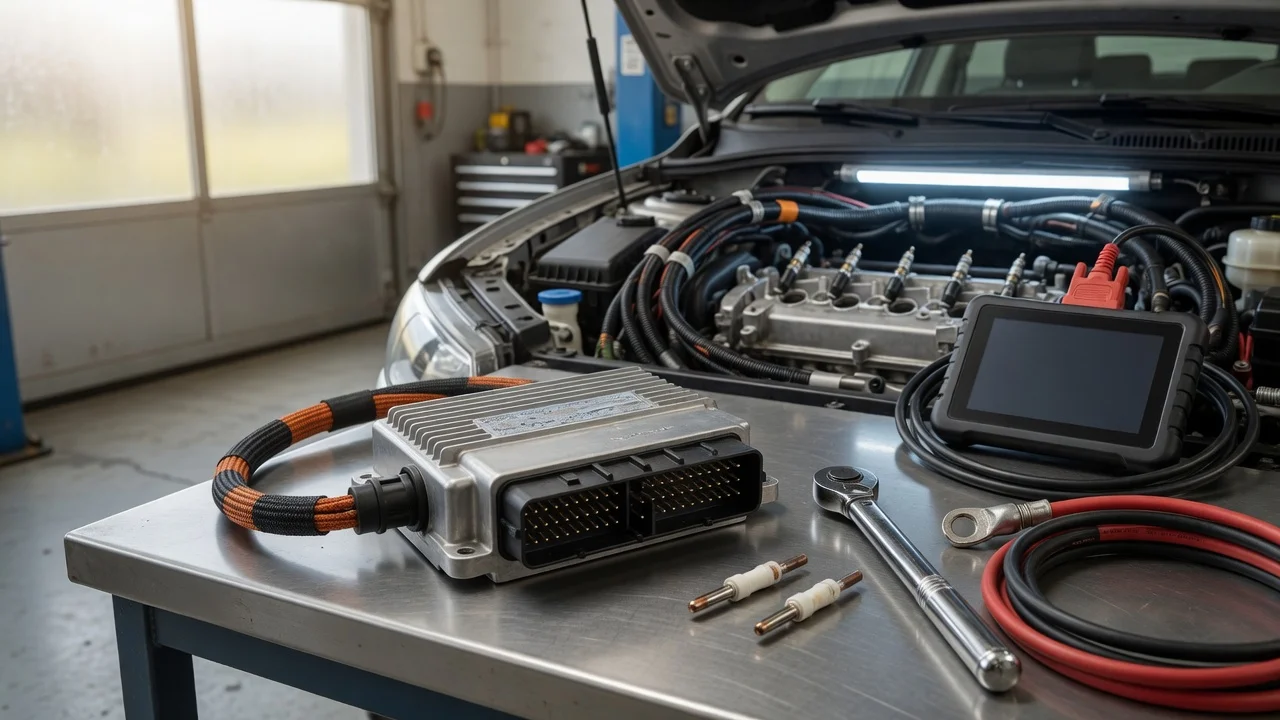
The glow plug control module is the electronic unit that switches current to the diesel engine's glow plugs. On modern Mercedes diesel engines it is usually no longer a simple relay. The module communicates with the engine control unit, monitors glow plug circuit resistance, stores faults, and can shut down individual glow plug outputs when a short or open circuit is detected.
The answer to whether you need a control module depends first on the stored fault and the vehicle's model year. A glow plug circuit code can point to a plug, a wiring fault, or the module itself. Do not replace the module until the specific fault code and glow plug condition have been checked.
Common symptoms and fault codes
Typical symptoms include an illuminated preglow or check engine light, difficult cold starts, and fault codes for glow plug circuit malfunction. Codes may identify a single cylinder output or the module's internal electronics. Some control modules fail after repeated short circuits from a defective glow plug, especially if replacement has been delayed.
A module-specific internal fault code, with glow plugs that test within specification and intact wiring, supports replacing the control module. A cylinder-specific circuit code more often indicates a bad glow plug or damaged connector first.
Compatibility depends on the exact engine and part number
There is no single glow plug control module for all Mercedes diesels. Selection must be based on the engine code, model year, and the original part number on the fitted unit. Visually identical modules can have different internal mapping and connector pin assignments.
Before ordering, record the Mercedes-Benz part number from the existing module and confirm the engine designation for the vehicle, such as the OM651 or OM642 family where applicable. The supplied material does not include a complete model-by-model compatibility list, so any cross-reference must be checked against the vehicle's build data and the seller's application data for that exact part number.
New, remanufactured, or used
New OEM or quality aftermarket: best predictable lifespan, but usually the highest cost. Remanufactured: can be acceptable if sold with a clear warranty and the original part number matches. Used: lowest cost, but more variable condition and often no useful recourse if it fails. A used module should still carry the correct matching number.
No specific prices or availability figures are supplied here, so cost should be compared from current listings after the correct part number is known.
Do this before installing
Confirm the stored fault codes and whether the code specifically identifies the module. Test each glow plug's resistance or current draw, and inspect connector terminals for corrosion. Compare the replacement module's part number and connector orientation with the original. Clear faults after replacement and perform the preglow cycle to verify no immediate return.
Installation location varies. The module may be mounted on the engine, near the battery, or in an underhood electronics box depending on the platform. Getting the part number from the existing unit avoids the most common ordering mistake.
Known gaps in this guidance
The supplied data does not cover every Mercedes diesel engine, control module part number, update, or model year change. Vehicles with software updates or superseded modules may require programming or a revised part. Confirm those requirements from the vehicle wiring diagram and the replacement part's application notes before purchase.