Mercedes GL450 Air Suspension Compressor Relay Location
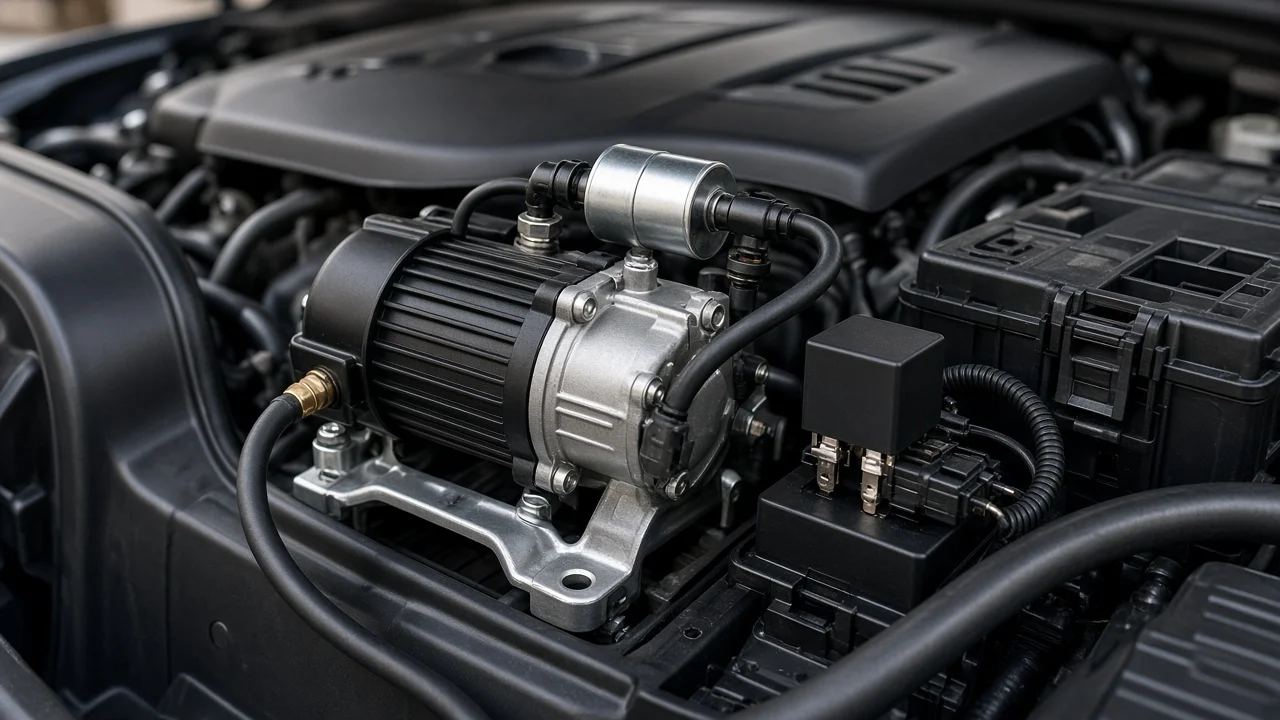
When a GL450 sits low, shows a suspension warning, or the air pump runs when it should not, the compressor relay is one of the first parts to check. It is inexpensive and usually easy to reach, but its exact slot depends on the model generation and build. This guide explains where to look, how to confirm the right relay, and how to tell a relay fault from a compressor or leak problem.
Where the compressor relay is on a GL450
On the GL450, the air suspension compressor relay is normally in a fuse and relay box under the hood, not next to the compressor. The compressor is mounted low at the front of the vehicle. The relay that switches its power sits with other high-current relays in the engine-compartment electrical box, away from road spray and heat.
The exact slot is not the same on every vehicle, so do not rely on a general description alone. Confirm it with the fuse and relay chart for your specific vehicle. That chart may be printed inside the box cover, included in the owner's literature, or available from a Mercedes-Benz dealer using your VIN. The chart labels the relay by function, usually as the level control or Airmatic compressor relay. Matching that label to the printed position is the reliable way to find the right part.
How the relay and compressor work together
The Airmatic system holds ride height by adding or releasing air from the suspension struts. The compressor draws a lot of current, more than the suspension control module can switch on its own. The module therefore sends a small signal to the relay coil, and the relay closes heavy contacts that feed battery power to the compressor motor. When the system reaches its target pressure or height, the module drops the signal and the relay opens.
That arrangement explains the two common relay failures. If the contacts stick closed, the compressor keeps running even after it should stop. This can overheat the pump, wear it out early, and drain the battery overnight. If the coil or contacts fail open, the compressor never starts. The vehicle then settles as air is used and sets a warning. Because a stuck relay can destroy a compressor, many technicians replace the relay whenever they replace the compressor.
What changes the answer
Generation matters most. The first-generation GL450 (X164, roughly 2007 to 2012) and the second-generation model (X166, roughly 2013 to 2016) use different electrical layouts and relay box designs. Directions from one generation often do not match the other. A mid-cycle update or market-specific wiring can also move a relay to a different slot within the same box.
Equipment and market also play a part. Right-hand-drive vehicles can mirror parts of the under-hood layout. Some vehicles have optional adaptive damping in addition to air springs, which adds components but not necessarily a second compressor relay. Previous repairs matter as well. A vehicle that has had a wiring repair, an aftermarket compressor, or a conversion kit may have a relay mounted somewhere non-standard. On any vehicle with an unknown history, trace the compressor's power feed rather than assuming the factory position.
What the owner can do
Start with simple observations. Notice whether the compressor runs constantly, never runs, or runs for a long time before the vehicle rises. Check whether the vehicle drops overnight at one corner or evenly. A single corner settling after parking usually points to a strut or line leak rather than the relay. A compressor that keeps humming with the ignition off, or a relay that stays hot to the touch, points toward a stuck relay. If nothing happens and there is no relay click when the system should be filling, check the fuse and the relay before blaming the compressor.
A practical test is to swap the suspected relay with an identical one from the same box. It must have the same part number and pin layout, and should come from a circuit you can live without briefly. Do this with the ignition off. Pull relays straight out without rocking them hard, and reinstall each in its original orientation. If the symptom moves with the relay, replace it with a quality part of the correct specification. Inspect the relay socket for heat discoloration or melted plastic, because a damaged socket can cause the same symptoms again.
If the diagnosis leads to the compressor itself or anything under the vehicle, use proper vehicle support. Lift only at the manufacturer's designated mounting points and rest the vehicle on stands rated for its weight. Never rely on the air suspension or a jack alone. Check the owner's manual for any lifting or jacking procedure that applies to the level control system, so the vehicle does not try to re-level while it is raised. When refitting brackets or electrical connections, follow the published fastener specification instead of guessing.
Limitations and next step
This article cannot give a slot number that is guaranteed for your vehicle. Relay positions vary by generation, build date and market, and only the VIN-specific chart confirms them. A good relay also does not rule out other faults. Strut leaks, a worn compressor, a leaking valve block, height sensor problems and control module faults can all produce similar warnings. Some can only be identified with a diagnostic tool that reads suspension fault codes and live pressure or height data.
If replacing the fuse and relay does not restore normal operation, have a qualified technician scan the suspension system before buying a compressor. The same applies if the vehicle sits at an abnormal ride height, leans to one side, or shows a warning to stop or drive carefully. Limit driving until it is checked, because handling and ground clearance can be affected. After any suspension repair that changes ride height or involves disturbed components, ask the shop whether a height calibration or a wheel alignment check is needed.