Mercedes-Benz W211 Sway Bar Bushings: Fitment Guide
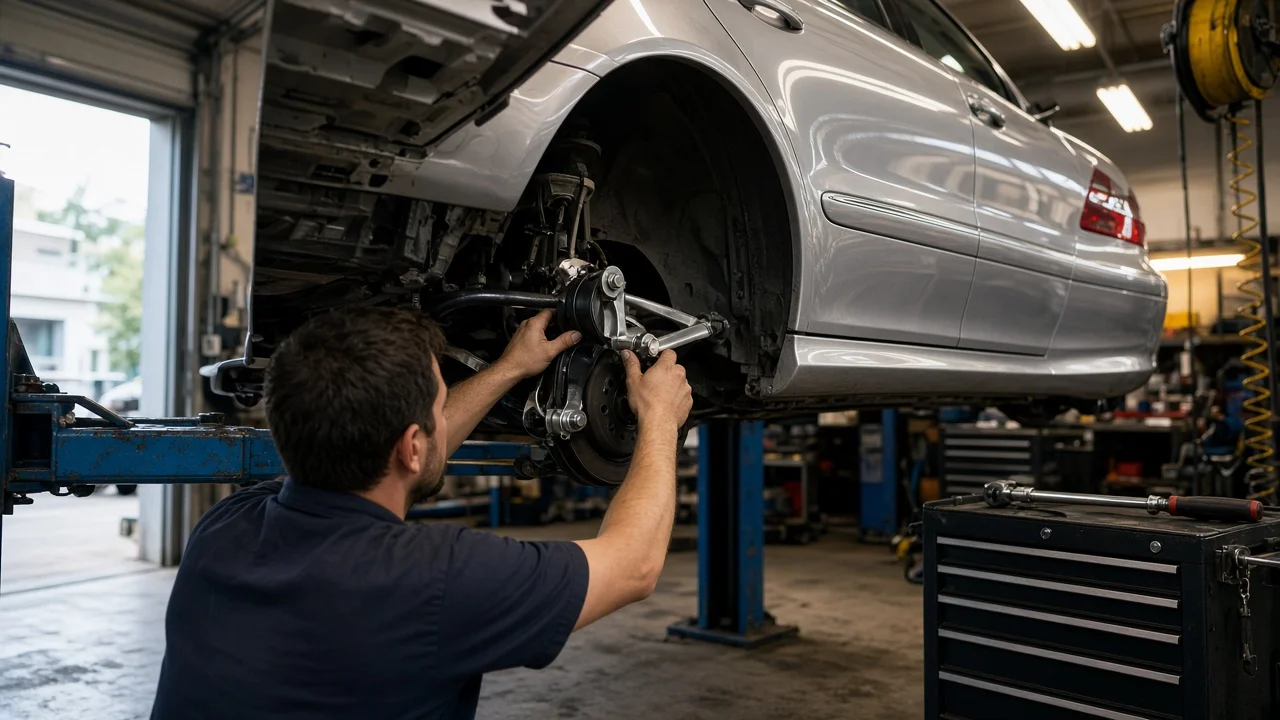
Sway bar bushings on the Mercedes-Benz W211 E-Class are inexpensive rubber parts, but it is easy to order the wrong ones because the car was built in many configurations. This guide explains how to match front and rear stabilizer bushings to your car, why bar diameter and axle position matter more than the model badge, how to confirm the bushings are actually the problem, and when to use a vehicle-specific lookup or a shop.
Short answer: match the bushing to the bar, not the badge
No single W211 sway bar bushing fits every car. The inner bore of the bushing must match the diameter of the stabilizer bar it clamps, and that diameter can differ with engine, drivetrain, body style, suspension type and trim. Front and rear bushings are also different parts. The reliable way to buy the correct set is to identify the car by VIN, look up the front or rear stabilizer bushing in Mercedes-Benz parts data or a supplier catalog that filters by VIN, and then confirm the result by measuring the bar on the car.
Listings that claim to fit every E-Class from a given range of years are a starting point, not proof. A bushing with the wrong inner diameter can let the bar shift and knock, or it can bind and squeak, so a few minutes of verification before ordering usually saves a second order and a second installation.
How stabilizer bar bushings work
The stabilizer bar, also called a sway bar or anti-roll bar, is a torsion spring that ties the left and right suspension together. When the car leans in a turn, one side compresses while the other extends, and the bar twists to resist that body roll. Its ends connect to the suspension through end links, while its center section is held to the subframe or body by two rubber bushings clamped in metal brackets.
Those bushings let the bar rotate as the suspension moves while keeping it located. Over time the rubber can harden, crack, take a set or wear an oversized bore, and heat, road salt, oil contamination and rough roads speed that up. Once clearance develops between bar and bushing, the bar moves inside its mount, which typically shows up as a clunk over bumps or a squeak at low speed. The end links are separate components with their own joints. They cause similar noises and are often replaced at the same time, but they are not interchangeable with the bushings.
What changes the correct part
Several details of the vehicle configuration can change which bushing fits. Drivetrain matters: 4MATIC cars use a different front axle layout from rear-wheel-drive cars, so front stabilizer parts should not be assumed to match. Suspension type matters: some W211 models use Airmatic air suspension while others use steel coil springs, and the suspension package can affect the bar that was specified. Engine and trim matter as well, since six-cylinder, eight-cylinder, diesel and AMG versions were not necessarily equipped with the same bars. Body style is another variable, because the sedan and the S211 wagon may not share every rear suspension part.
Production changes during the model run, including the facelift that reached the US around the 2007 model year, can also affect parts. Equipment varied by market, so a car imported from another region should be checked by VIN rather than by model name. Finally, a previous owner may have fitted an aftermarket or different bar. That is why the service history and a physical measurement are worth checking: if the bar on the car is not the original specification, a lookup based on the VIN alone will point to the wrong bushing.
What the owner can do
Start with an inspection to confirm the bushings are the cause. With the car safely supported on ramps or stands, look for cracks, missing pieces, rubber squeezed out of the bracket or a visible gap around the bar. Have a helper rock the car, or apply gentle pry pressure to the bar near each bracket. Movement of the bar inside the bushing points to bushing wear, while play at the ends points to the end links. Also check the brackets and fasteners, because a loose clamp can sound exactly like a worn bushing.
Before ordering, note the VIN, model, engine, drivetrain and suspension type, and measure the bar with calipers on a clean section next to the existing bushing. Compare that measurement with the listing; if a listing gives no inner diameter and cannot be filtered by VIN, choose one that does. Replace bushings in pairs on the same axle, and consider new brackets or hardware if the old ones are corroded.
During installation, clean the bar where the bushings sit and use only a lubricant the bushing manufacturer approves, since some rubber compounds are damaged by petroleum products. Tighten brackets and end links to the manufacturer specifications for your car, and follow the service information on whether fasteners should be tightened at normal ride height rather than with the wheels hanging. On cars with Airmatic, use the correct procedure for lifting and supporting an air-suspension vehicle so the system does not try to adjust ride height while you work.
Limitations and next step
This guide cannot confirm a part number for a particular car; only a VIN-based lookup combined with a check of what is actually installed can do that. There is also no universal replacement interval for these bushings. Their life depends on operating conditions, climate, road quality and mileage, so replace them based on inspection and symptoms rather than a fixed figure. If your maintenance schedule or an earlier inspection noted suspension wear, treat that as a reason to look, not as a deadline.
Suspension noises on the W211 can come from many sources, including control arm bushings, strut or air-strut mounts, end links and loose heat shields, so a knock that remains after new bushings needs wider diagnosis. If the car has Airmatic faults, uneven ride height, accident damage or seized fasteners, or if you cannot support the vehicle safely and torque fasteners correctly, have an independent Mercedes-Benz specialist or a dealer inspect it, and ask them to confirm the bushing part against the VIN before ordering.