Mercedes-Benz W204 Parking Brake Shoes: Fitment and Selection
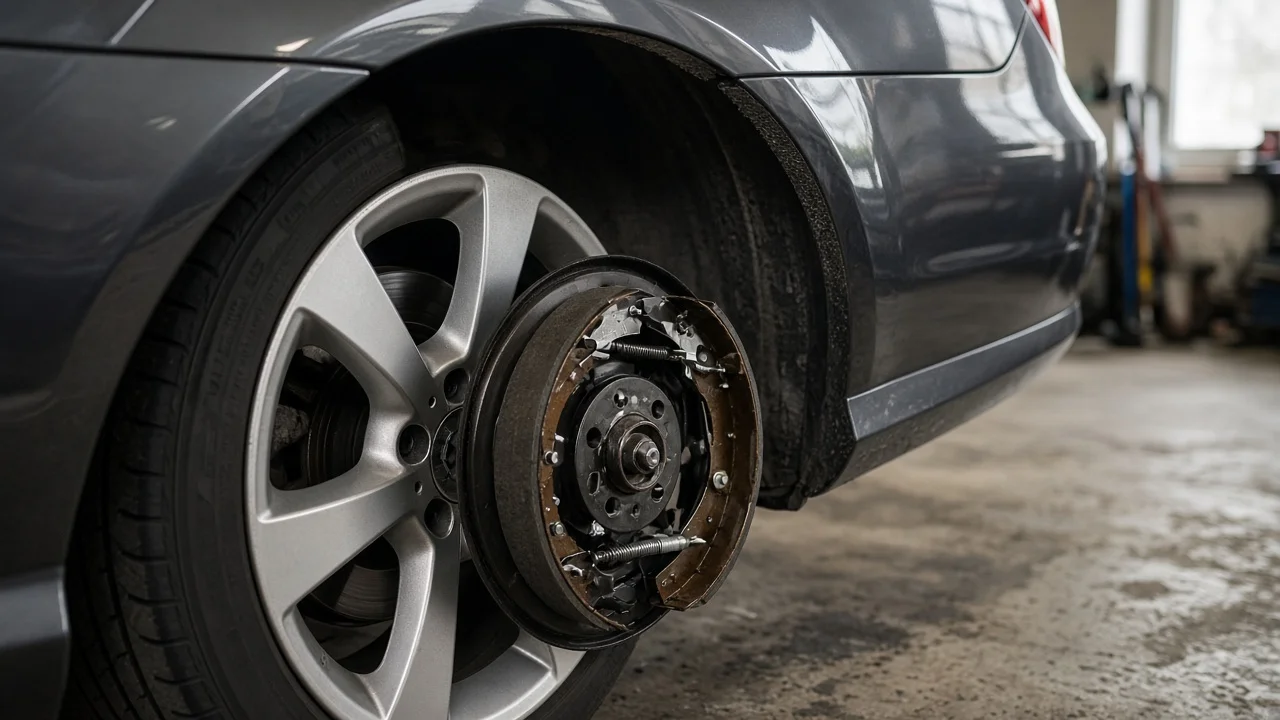
On a Mercedes-Benz C-Class from the W204 generation, the parking brake does not clamp the rear pads. It uses a small pair of shoes on each side that expand against a drum surface inside the hat of the rear rotor. Choosing replacement W204 parking brake shoes means matching that drum, the backing-plate hardware and the cable system, not ordering any rear brake part labeled for the model.
Define the job the product must do
Parking brake shoes hold a stationary car. In normal use they see little friction work, so they rarely wear out the way brake pads do. Owners usually start looking for them for specific reasons: the car creeps on a slope with the parking brake fully applied, pedal or lever travel has grown, a scraping noise comes from the rear wheels, or a rotor job revealed cracked lining, separated friction material or broken springs. Because the rear rotor must come off to reach the shoes, many owners replace them when rear rotors are already due.
Before buying, be clear about what is causing the weak hold. A stretched or seized cable, a corroded adjuster or a sticking release mechanism can produce the same symptom as worn shoes, and new shoes alone will not cure those faults. Also consider your practical constraints: the job involves removing the caliper and rotor, so it suits owners with the tools and service information for that work. If the car will not hold reliably, or any brake warning appears, stop relying on it and have the system inspected by a professional.
Check compatibility
The W204 name covers the sedan, the estate and the closely related coupe, across several engines, rear-wheel-drive and 4MATIC versions, and AMG models. Rear brake sizes are not identical across that range, and the drum diameter inside the rotor hat follows the rotor fitted to the car. A shoe that suits a base sedan may not suit a car with a larger rear brake package. The most reliable route to correct vehicle fitment is a lookup by VIN, then a match of the Mercedes-Benz part number or a cross-reference that the seller states explicitly.
If a listing gives dimensions, compare shoe diameter and lining width with the original parts or with the specification for your rotor. Then check the interfaces: the shape of the steel web, the anchor and adjuster contact points, the location of the actuating lever for the cable, and the hold-down spring holes. Adjusters and some hardware can be side-specific, so photograph each side before disassembly and keep left and right parts separate. A shoe that needs filing or forcing to fit is the wrong part.
Features that affect the choice
For a static brake, the quality of the bond between lining and steel web matters more than any claimed friction formula. Labels such as performance, ceramic or high-friction tell you little about how a parking brake shoe will hold a parked car. More useful evidence is a stated OE reference number, published dimensions, a corrosion-resistant coating on the steel web, chamfered lining edges and a clear indication of whether the product is sold as a full axle set. Shoes should always be replaced in pairs across the axle so both sides hold evenly.
Hardware is the other real differentiator. Return springs, hold-down pins and adjusters live behind the rotor in a damp, dirty space, and they corrode and lose tension over time. A kit that includes new springs and pins removes a common reason for poor hold after a repair. A new adjuster is worth considering when the original is seized or its threads are rough. If you choose shoes without hardware, inspect the old parts closely before deciding to reuse them.
Limitations and ownership costs
Fitting the shoes requires removing the rear caliper and its carrier, supporting the caliper so it does not hang on the brake hose, and removing the rotor. The hydraulic system normally stays sealed, so brake fluid is not part of the job unless a line or hose is disturbed. Follow the vehicle service information for torque values, spring positions and the adjustment sequence. Shoes are typically adjusted through an access hole in the rotor, then backed off by the specified amount before any cable adjustment. Many procedures also call for a short bedding-in of the parking brake shoes so the lining conforms to the drum.
The drum surface inside the rotor hat has its own wear limits, specified as a maximum inner diameter. If it is beyond that limit, deeply scored or badly rusted, new shoes will not seat properly and the rotor should be replaced. That is where most of the ownership cost comes from: the shoes themselves are usually a modest expense, but rotors, brake pads, hardware, a cable or shop labor can add considerably to the bill. Inspect the pads, rotor faces and caliper slides while everything is apart, since this is the cheapest moment to address them.
Know what new shoes cannot do. They will not repair a frayed or seized cable, a worn pedal or lever mechanism, or a release that does not return. They also cannot compensate for oil or grease contamination; if the old lining was soaked, find and fix the source of the leak before fitting new parts.
Build a practical shortlist
Narrow your options with a short set of checks rather than brand rankings. First, confirm fitment by VIN and match the part number or a stated cross-reference. Second, check that the listed diameter and width suit your rear rotor. Third, prefer a full axle set, and decide whether you need a hardware kit and new adjusters based on the condition of the old parts. Fourth, look for evidence of build quality, such as a coated web and a clearly identified manufacturer, rather than marketing terms. Fifth, check the seller's return policy in case the parts do not match on the bench.
Before ordering, plan the rest of the job: measure the drum surface against its wear limit, check the rear rotors and pads, and assess the cable for free movement. After installation, confirm that the parking brake holds the car on a slope with normal application effort. If it still does not hold, or the shoes drag and heat the rear rotors while driving, the remaining fault lies elsewhere in the system and needs professional diagnosis.