Mercedes-Benz Timing Chain Problems, Lifespan and Replacement Cost
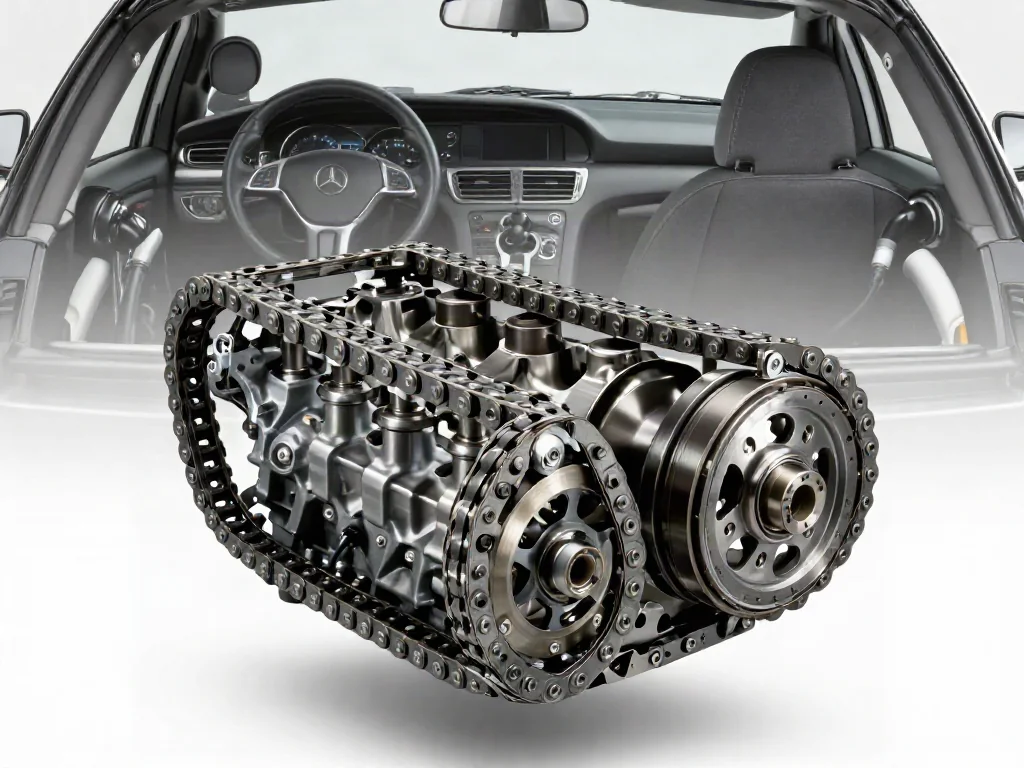
A Mercedes-Benz timing chain keeps the crankshaft and camshafts in step so valves open and close at the right moments. How long a benz timing chain lasts, whether an engine has tensioner or guide concerns, and what Mercedes-Benz timing chain replacement costs depend on the engine, oil history, and confirmed condition rather than the badge alone. Understanding those variables helps owners interpret symptoms and why Mercedes-Benz timing chain replacement cost varies so widely.
What the Timing Chain Does in a Mercedes-Benz Engine
Inside a Mercedes-Benz engine, the Mercedes timing chain coordinates crankshaft rotation with camshaft timing through a metal link assembly. As the crankshaft turns, the chain drives the camshafts so intake and exhaust valves open and close with piston travel. If that relationship slips, combustion suffers, valve-to-piston clearance can shrink, and the engine may run poorly or stop. Even modest stretch can throw camshaft timing off relative to the crank.
The chain does not run unsupported. Timing chain guides keep it on its path, and a timing chain tensioner takes up slack so the links stay seated on the sprockets. Engine oil feeds that tensioner and lubricates the chain, so lubrication history matters as much as the chain itself. A delayed oil-pressure rise on a cold start can leave the chain momentarily loose. Layout and service access follow the engine family, not the nameplate, so two cars with the same badge can use different chain counts and guide materials.
Timing Chain Lifespan and When Inspection Makes Sense
There is no single mileage at which every Mercedes Benz timing chain is due. Chain life varies with engine design, oil specification, change intervals actually followed, heat, idle time, and short-trip use that never fully warms the oil. Timing chain wear can stay quiet for a long stretch, then show as slack, noise, or a correlation fault. Assuming a universal replacement interval for a mercedes-benz timing chain overstates what the hardware shares. Owners should read the maintenance information for their exact vehicle and engine code rather than treating a neighbor’s mileage as a schedule.
Inspection timing is a judgment call built from records, not a calendar promise. A complete lubrication history, including overdue changes, the wrong viscosity, or repeated low-oil warnings, is more useful than odometer reading alone. New noise, a running change, or a diagnostic finding can justify looking at the timing system even if no factory interval exists. A high-mileage engine with clean oil service and no symptoms is not automatically due for mercedes benz timing chain replacement. Shops combine history, present condition, and measured timing data before recommending a swap on mileage alone.
Identifying Engines With Documented Chain or Tensioner Concerns
When people ask which Mercedes-Benz engines have timing issues, the useful first step is identifying the engine code, model year, and production details from the vehicle’s records, a door sticker, or a qualified shop’s lookup. Campaigns, technical notes, and revised tensioner or guide parts are written against those identifiers, not against the brand as a whole. A documented concern applies only where the engine family and production scope can be confirmed. Broad lists of affected models without that matching work overstate the problem and can send an owner toward parts that do not apply.
Even within a family that has a known history, chain wear, guide damage, and tensioner malfunction are separate faults. Plastic guides can crack or shed while the chain still measures within spec. A weak tensioner can allow slack that sounds like a stretched chain. Timing chain wear itself shows as elongation and a change in sprocket engagement. A technical note does not prove an individual car has failed or that every engine in that family will. Diagnosis of the vehicle still decides whether mercedes-benz timing chain replacement is warranted.
Warning Signs and What Professional Diagnosis Must Confirm
A cold-start rattle from the front of a Mercedes engine is a common clue, not a diagnosis. Startup rattling, a persistent mechanical knock, rough running, and a check-engine or drivability warning can come from a loose chain, a tired tensioner, oil that has not yet filled the tensioner, or unrelated valvetrain, injector, or mount problems. Owners help most by noting when the noise occurs and capturing warning messages, including first start, after a short stop, and hot or cold. Repeated starts meant to reproduce a suspected serious timing fault add stress without proving the cause.
Professional diagnosis should interpret stored faults against that exact engine, because manufacturer-dependent codes need vehicle-specific confirmation. A camshaft-to-crankshaft correlation code shows the control unit saw a timing mismatch; it does not prove the chain has failed. A shop typically checks oil condition and pressure behavior, compares camshaft timing to crankshaft correlation data, and inspects accessible timing-system components. If the engine produces severe mechanical noise, stalls, or shows an oil-pressure warning, stop safely, shut it down, and arrange recovery rather than driving on, because continued running can add valve or piston damage.
What a Timing Chain Replacement Should Include
Mercedes-Benz timing chain replacement is not a one-kit job for every engine. The work follows confirmed damage, the condition of related parts, and the procedure written for that engine. An estimate may list timing chain guides, a timing chain tensioner, sprockets, seals, gaskets, fasteners, and fresh oil because those items are disturbed or specified with the chain. Including them on a quote does not mean every piece is worn. A shop should explain which parts failed, which are being replaced as a matched set, and which remain optional until inspection during the job.
Parts selection starts with the engine code. A generic listing sold as a timing chain for Mercedes Benz engines cannot establish fit or guide geometry, and the wrong set will not time the engine correctly. After installation, professional timing setup aligns the crankshaft and camshafts to the marks for that engine. The shop should also look for why the chain, guides, or tensioner suffered—oil starvation, delayed changes, or a failed tensioner feed—so the same condition is not rebuilt. A running check after repair confirms quiet operation, correct correlation, and no new leaks.
Understanding Mercedes-Benz Timing Chain Replacement Costs
Mercedes-Benz timing chain replacement cost is not a single number, and figures for Mercedes timing chain replacement cost shared online rarely match the engine in the bay. A useful estimate needs the engine family, local labor rate, access required, and confirmed repair scope. Diagnostic labor is often billed separately from the repair. The itemized repair estimate should split diagnosis, parts, labor hours, fluids, taxes, and extra work that needs its own authorization. Without those lines, a headline Mercedes-Benz timing chain replacement cost cannot be compared shop to shop.
Access drives labor more than the chain’s list price. Some Mercedes engines place the chain behind covers that come off with modest strip-down; others require front-end or accessory disassembly before the chain is reachable. If guides have shed debris, valves contacted pistons, or oiling was the root cause, the total rises because extra work sits outside a basic chain job. Owners should ask for diagnostic findings, included components, labor scope, warranty terms, and a written limit on added work. That paperwork lets an owner compare timing chain replacement cost Mercedes quotes from shop to shop.