Mercedes-Benz Spark Plug Replacement: Intervals, Types, and Access
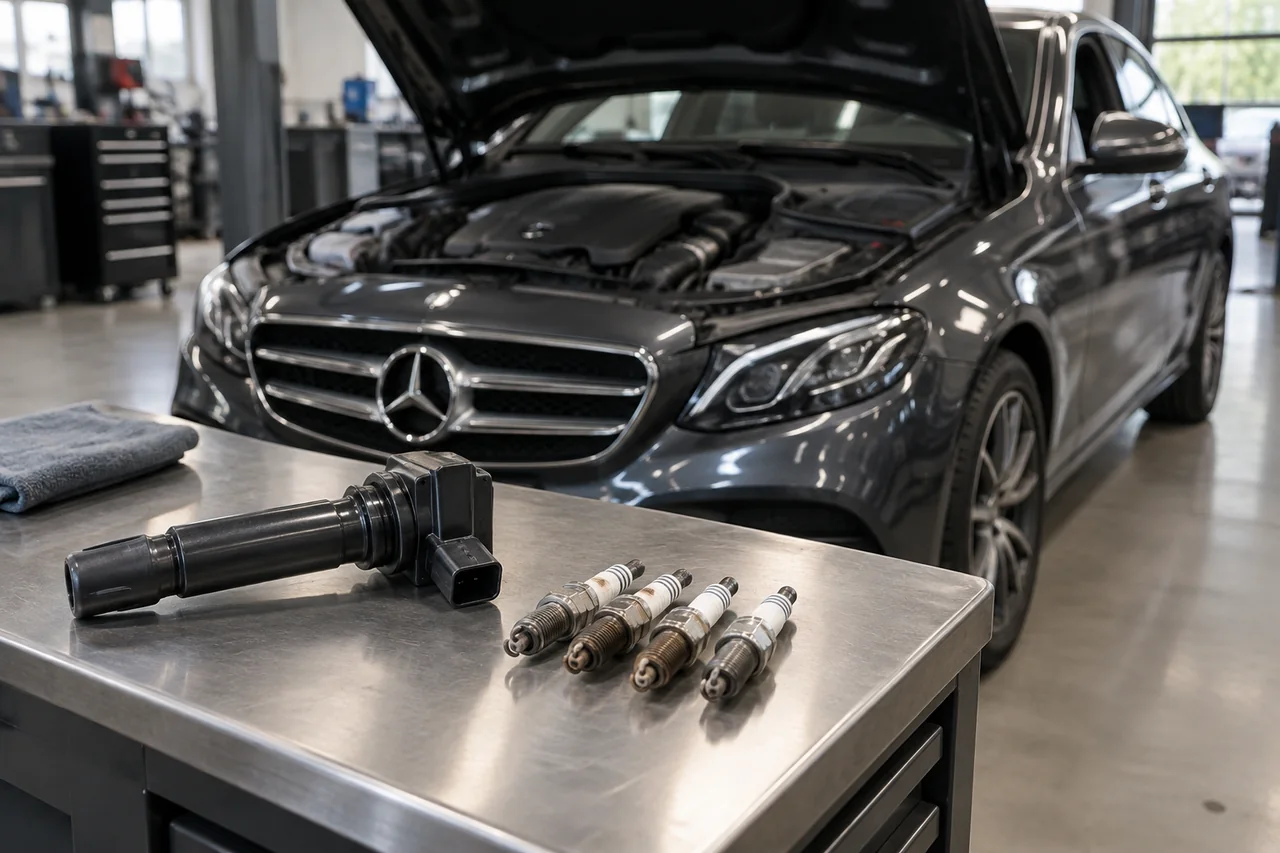
Mercedes-Benz spark plugs are specified by engine family, not by a model name on the trunk. Confirm the year, VIN, and engine code so the spark plug specification, interval, and access notes match the car in front of you. Use the maintenance booklet and any spark plug service history before choosing parts or scheduling work, because Mercedes Benz spark plugs still follow the identified engine rather than a shared badge.
Identify the Mercedes-Benz Engine Before Planning Service
The correct Mercedes Benz spark plugs for a given car come from the model year, VIN, and engine identification, not from a trim badge. Those identifiers tell a shop which engine code is fitted, which ignition coil layout applies, and which spark plug specification the manufacturer published for that build. Two cars that look alike can carry different engines after a mid-cycle change, a market variation, or an undocumented swap, so the VIN decode and the engine stamp or label are the reliable starting points.
A model badge alone does not establish the engine configuration or the replacement procedure. Displacement, cylinder count, and even the presence of a hybrid or performance variant can share a similar exterior while using different plug lengths, heat ranges, or coil designs. Before choosing plugs or booking a bay, compare the identified engine with the vehicle-specific maintenance information and any spark plug service history in the maintenance booklet or shop records so the planned parts and labor match that engine.
Find the Applicable Spark Plug Replacement Interval
Once the engine is identified, open the maintenance schedule that matches the vehicle's year, engine, and market. The spark plug entry usually sits with scheduled ignition or engine service items in the maintenance booklet or the dealer's equivalent time-and-distance chart. Do not borrow an interval from a similar model or from a general Mercedes-Benz list, because turbocharged, naturally aspirated, and later-generation engines can carry different published intervals even when they share a chassis family.
When the applicable schedule lists both mileage and elapsed time, replace the plugs at whichever limit arrives first for that vehicle. A low-mileage car that sits for long periods still ages the electrodes and the insulating surfaces, while a high-mileage driver may reach the distance limit first. If spark plug service history is missing, confirm any documented replacement you can find, then ask a qualified shop to set an appropriate maintenance plan from the identified engine and the remaining evidence rather than guessing a universal interval.
Confirm the Correct Spark Plug Type and Specification
Electrode material, heat range, thread reach, seat type, and hex size must match the engine's documented spark plug specification. A plug that threads in but runs too hot, sits too deep, or uses the wrong electrode design can disturb combustion and damage the ignition coil or the cylinder head. Verified application information for that engine code is required before anyone names a plug type, part number, or quantity; catalog guesses from a model name are not enough for Mercedes-Benz spark plugs.
Gap requirements and whether the gap may be adjusted depend on the specified plug and the service guidance for that engine. Some plugs are supplied ready to install and should not be bent to a generic figure, while other designs may allow a measured check against the published value for that application. Without that data, there is no universal gap recommendation that is safe to apply across Mercedes-Benz engines, so hold the parts order until the documented specification is confirmed.
Understand Engine Access and the Scope of Replacement
Access is part of the job, not an afterthought. Engine covers, ignition coils, wiring looms, and nearby intake or charge-air hardware can sit over the plugs, and the labor to reach them varies with the identified engine rather than with the body style. No removal path should be assumed from a photograph or from another Mercedes-Benz of similar size. A preliminary access assessment on the actual vehicle shows what must be unfastened before a socket can even reach a plug, and that inspection belongs in the estimate.
Visible coils on top of the engine do not establish the full labor required. Rear-bank plugs, tight well depths, and surrounding equipment can add time that is not obvious from an open hood. Fragile connectors, cracked coil boots, damaged plug wells, or plugs that resist turning call for professional assessment rather than improvised force. Those conditions can strip threads or break a porcelain insulator, so stop and have a qualified technician evaluate the engine before the job continues.
Recognize Symptoms Without Assuming the Plugs Are at Fault
Rough running, difficult starting, and hesitation can be ignition-related, yet they do not independently confirm worn spark plugs. A misfire diagnosis may point to an ignition coil, a fuel injector, a vacuum leak, or a mechanical issue in a cylinder as readily as it points to a plug. A stored misfire fault is evidence to interpret, not proof that a part has failed, and manufacturer-dependent codes still need vehicle-specific confirmation on the identified engine before any parts decision.
Record when the symptoms occur, under what load or temperature, and which warning messages appear. That timeline helps a technician decide whether to inspect plugs, test ignition and fuel delivery, or look at mechanical condition first. A flashing check-engine light or severe shaking is a reason to stop safely and arrange assistance rather than continue driving, because ongoing misfire can overheat a catalytic converter. Do not authorize plug replacement on those symptoms alone when ignition, fuel delivery, and mechanical condition have not been tested.
Review the Service Estimate and Document the Work
A useful estimate names the engine application, the specified plugs, the verified quantity, the access labor, and any separate diagnostic work. Those lines show whether the shop decoded the VIN and engine code, ordered the documented spark plug specification, and priced the covers and ignition hardware that must be moved. Diagnostic time for a misfire complaint should appear separately from the replacement itself, because testing ignition, fuel, and mechanical condition is not the same job as installing plugs on a scheduled interval.
Ignition coils and related parts need their own condition assessment rather than automatic replacement with the plugs. A coil can be serviceable when the plugs are due, and a failing coil can be the actual source of a misfire that was blamed on the plugs. After the work, keep the installed part details, the service date, and the mileage with the maintenance booklet so the next spark plug service history is complete. If rough running or a misfire returns, seek follow-up diagnosis instead of repeating the same parts change.