Mercedes-Benz Serpentine Belt Replacement and E350 Routing
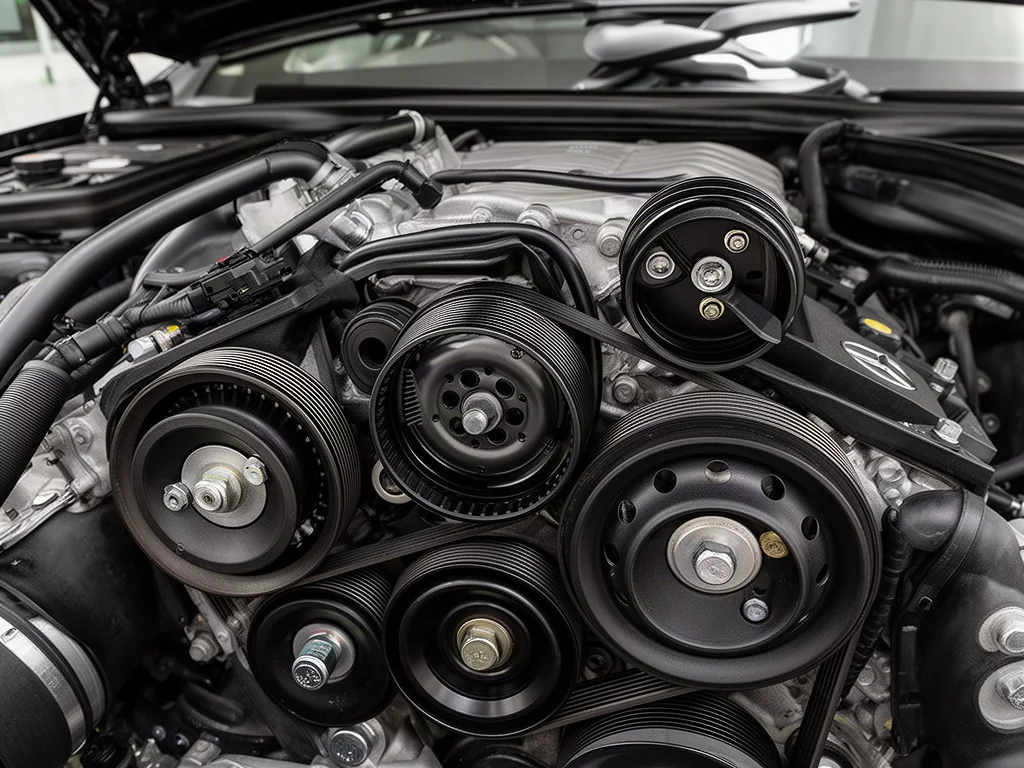
A Mercedes-Benz serpentine belt, also called an accessory drive belt, turns pulleys that run charging, cooling, and other equipment. Routing, length, and which accessories sit on that path change with engine identification and options, so an E350 badge is not enough to choose a belt or a Mercedes E350 serpentine belt diagram. Confirm model year, engine, and VIN-based fitment before using any routing illustration or replacement part.
Identify the Engine Before Choosing a Mercedes-Benz Belt
The accessory drive belt on a Mercedes-Benz engine wraps a path of pulleys so one belt can spin several accessories at once. Which devices sit on that path, including charging, cooling, power steering, and climate components, depends on the engine family and the equipment actually fitted. The serpentine belt Mercedes-Benz engines use is not interchangeable from one V6 to another simply because both cars wear similar badges. Ribbed pulleys need the grooved face of the belt, while a smooth idler pulley typically contacts the back of the belt, so the travel path is engine-specific.
Selecting a Mercedes benz serpentine belt starts with engine identification, not with the model name on the trunk. Record the model year, the engine designation from underhood identification or service data, and then confirm the part against VIN-based fitment so optional pumps and extra idlers are not missed. Common Mercedes-Benz engines, including many E350 V6 applications, can share a family look while using different belt lengths and pulley counts. An E350 badge alone does not establish the belt layout; only a verified configuration should be used when choosing the belt or its diagram.
Find and Read the Correct E350 Serpentine Belt Diagram
A Mercedes E350 serpentine belt diagram is useful only when it matches that car's model year, engine, and accessory configuration. Use vehicle-specific service information, or an intact underhood belt routing diagram if the factory label is still present and readable. Illustrations copied from a similar chassis, a different displacement, or an extra-equipment package can send the belt around the wrong pulley or omit an idler entirely. Confirm that the published routing names the exact application so the drawing is not treated as a generic E-Class template.
A verified diagram shows pulley positions, the direction of belt travel, and whether the ribbed or smooth surface contacts each pulley. The grooved face should seat in a ribbed pulley, while the flat back typically rides a smooth idler pulley or the back of a tensioner wheel, depending on the layout. Any published routing illustration should label pulley functions so the crank, tensioner, idlers, and driven accessories are not confused. A photograph of the existing belt is only a supporting reference, because the installed routing may already be incorrect after a previous repair or a jumped rib.
Recognize Belt Wear and Symptoms That Need Attention
Wear on a Mercedes-Benz serpentine belt often shows as fraying, missing ribs, cracked or torn edges, a glazed shiny face, or staining from oil or coolant. Belt contamination from a nearby leak can soften the rubber and polish the ribs until they no longer grip. Those appearances are clues, not a complete diagnosis: similar damage can come from age, pulley alignment problems, a failing belt tensioner, or debris. Compare both faces of the belt and the edges against the pulley grooves rather than judging from a single scuff.
Squealing, chirping, or visible belt damage can involve tension, pulley alignment, a worn pulley, or contamination, and none of those sounds prove the belt alone is faulty. A glazed belt may slip on a ribbed pulley even when the length is still correct, while a misaligned idler can chew one edge. Limit owner observation to an engine that is off and cool, with the key kept away from the start position. Do not reach near a moving belt or run the engine for a close look; a spinning accessory drive can pull in clothing or hands.
Check What Caused the Belt to Deteriorate
When a serpentine belt Mercedes benz layout shows early wear, a technician should look past the rubber and assess belt tensioner movement, idler condition, pulley alignment, and extra drag from an accessory that is hard to turn. A weak or sticking tensioner lets the belt flutter, polish, and walk off a pulley. A seized or noisy idler can heat one spot on the belt until ribs tear. Oil or coolant on the path must be traced to the leak; a new belt left in the same fluid will glaze and fail in the same pattern.
Visual inspection cannot establish bearing condition inside a pulley, whether the tensioner still applies the intended force, or whether an accessory has internal damage that loads the belt. Limited access around many Mercedes-Benz engines also hides the back of a smooth idler pulley until covers or other components are moved. Recurring noise after a recent belt change, repeated edge damage, or a belt that walks despite looking seated are reasons for professional testing rather than another guess at length. Those checks belong with service information and measured inspection, not with a flashlight glance from above.
Understand the Scope of Belt Replacement
Replacement of a Mercedes-Benz serpentine belt is more than stretching a new loop onto the pulleys. Confirm fitment and routing against the correct diagram, correct related faults such as leaks or a damaged idler, then install the belt specified for that engine and accessory set. After the belt is on, seating on every ribbed pulley and tracking on each smooth surface still need to be verified, along with quiet, stable operation once the engine is started under controlled conditions. Skipping those steps can leave a correctly numbered belt running in the wrong path.
Access requirements, tensioner procedures, tools, and specifications must come from service information for the exact engine; they are not interchangeable across Mercedes-Benz V6 layouts. Many tensioners store energy, and the belt often sits in a confined space where a slipped tool can damage a pulley or injure a hand. Those are reasons to leave tensioner manipulation and belt removal to a qualified technician rather than improvising leverage. After installation, the belt must engage every pulley correctly, and tracking should be professionally verified before the vehicle is returned to regular use.
Respond Safely to Belt Failure and Plan Follow-Up
A broken or displaced Mercedes-Benz serpentine belt can stop essential accessories at once, but the effects depend on which components that particular engine drives with the accessory belt. Loss of charging, coolant circulation, or power assist are possible outcomes on some layouts, while others may keep selected devices on a second belt. If the belt is missing, an overheating warning appears, steering suddenly becomes heavy, or a charging warning arrives with belt-failure symptoms, stop safely and arrange assistance rather than continuing to drive. Do not attempt to re-seat a hot, moving belt at the roadside.
After a replacement, returning squeal or chirp, new edge damage, fresh belt contamination, or warning lights for charging or temperature are reasons to have the drive reassessed instead of waiting for another failure. Pulley alignment that was not corrected, a leaking seal, or a tired tensioner can ruin a new belt quickly. Plan follow-up from the vehicle's applicable maintenance schedule and from the belt's observed condition. There is no single replacement interval that covers every Mercedes benz serpentine belt application, because load, leaks, and pulley condition change how long the rubber remains serviceable.