Mercedes-Benz AIRMATIC Compressor: Choosing the Correct Part
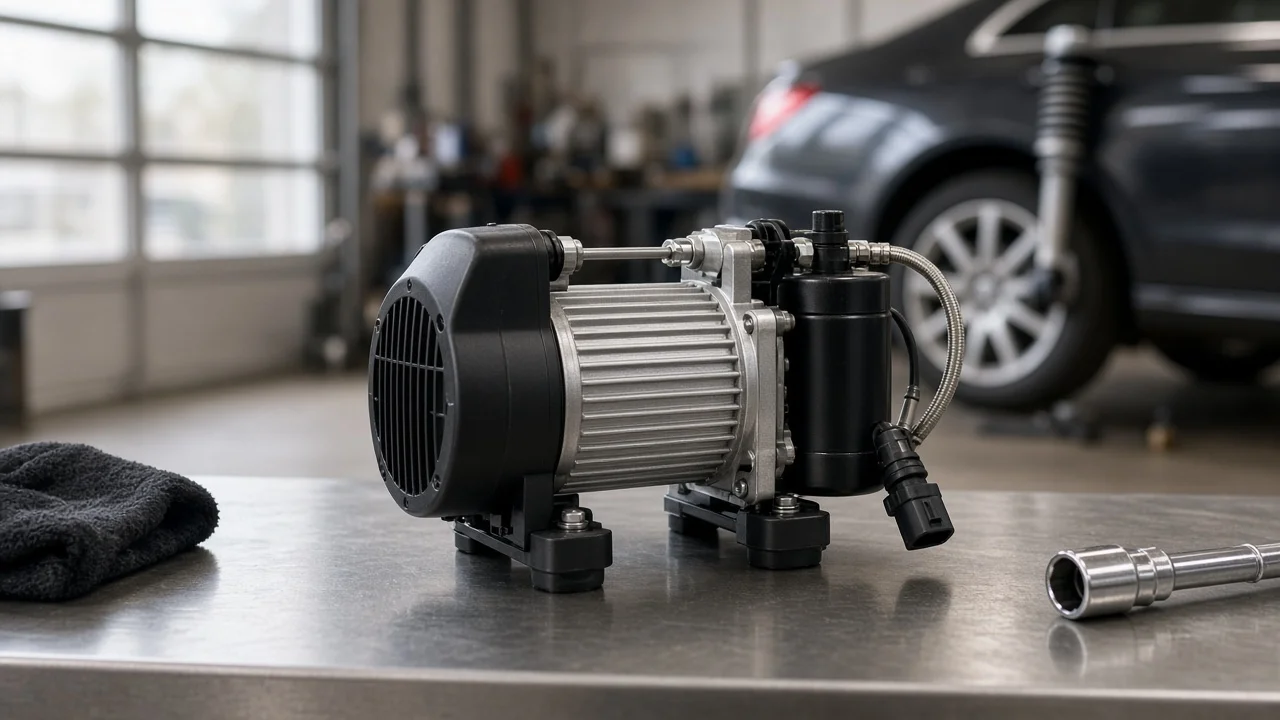
A Mercedes-Benz air suspension compressor supplies the pressure that keeps an AIRMATIC car at the correct ride height. Buying the wrong part, or fitting the right part to a system that leaks, usually leads to a second repair bill. This guide covers how to confirm what your vehicle actually needs, how to judge genuine, original-supplier and remanufactured units on evidence rather than labels, and what the job involves beyond bolting in a pump.
Define the job the product must do
First, confirm that the compressor is the part that failed. On AIRMATIC models the compressor fills the system, but the air springs or struts, the valve block, the lines, the level sensors and the compressor relay all affect whether the car holds its height. A car that sags overnight at one corner usually has a leak. A compressor that runs for a long time, overheats or never switches on can point to pump wear, a stuck relay, a blown fuse or a wiring fault. Read the stored fault codes with a scan tool that supports your model's suspension control unit, and leak-test the springs and fittings. Doing both keeps you from buying a part that will not solve the problem.
Next, consider how the car is used. A daily driver that often carries passengers, tows within the factory rating or sees cold winters makes the compressor work harder than a weekend car in a mild climate does. Note your practical constraints too: whether you will fit the part yourself or pay a shop, how long the car can be off the road, and whether the rest of the system is original and aging. A new compressor feeding a leaking strut will run too long and can fail early, so set aside budget to fix any leak you find.
Check compatibility
Mercedes-Benz used AIRMATIC across several generations of the S-Class, E-Class, CLS, M-Class, GL, R-Class and later SUV lines, and the AIRMATIC air suspension compressors for these cars are not interchangeable. Even within one model line, the unit can differ by chassis code, engine, body style, 4MATIC drivetrain and production date. Some cars use a different system altogether, such as Active Body Control or rear-only self-leveling. The most reliable approach is to decode the VIN through a parts catalog or a dealer parts counter and match the Mercedes-Benz part number, including any superseded number. A model name and year alone are not enough.
Compare the physical interfaces before you order. Check that the electrical connector, the pneumatic outlet fitting and line size, the mounting bracket with its rubber isolators, and the intake hose or filter arrangement all match your original. Find out whether the listing includes the air dryer, because on some applications the dryer is built in and on others it is serviced separately. Also check whether the bracket comes with the unit or only the pump and motor. Mounting points and compressor location differ between models, so a unit that looks similar in a photo may not seat correctly or may strain its lines.
If a seller cross-references several part numbers to one unit, ask which numbers it officially replaces. A matching number on the label is stronger evidence than a generic fitment list.
Features that affect the choice
The main choice is between three kinds of unit: a genuine Mercedes-Benz part, a new unit from an original-equipment supplier or reputable aftermarket brand, and a remanufactured compressor. Genuine and original-supplier parts give the most confidence on fit and performance but usually cost the most. A remanufactured unit can be good value when the rebuilder says exactly what was replaced, such as piston seals, cylinder, dryer media or motor brushes, and backs the work with a written warranty. Treat labels such as heavy duty, upgraded or OEM quality as marketing unless the seller explains what was changed and why.
Useful evidence includes the exact part numbers replaced, a clear list of included components, and the warranty length and conditions. Check whether the warranty requires a new relay or proof that the system is leak-free. Many shops replace the compressor relay at the same time, because a relay that sticks closed can run the compressor until it overheats. Some kits include a new relay, dryer or fittings, which adds value only if those parts suit your vehicle. Fill time and noise vary between designs, but without consistent published testing, don't let seller claims about speed or quietness decide your purchase.
Limitations and ownership costs
A new compressor will not fix a leaking air spring, a faulty valve block, a cracked line, a failed level sensor or a control-unit fault. It also will not correct a ride height that is wrong because of a sensor or calibration problem. Budget for diagnostics, any relay, fuse or dryer service, and the labor to reach the unit. On some models that means removing trim, wheel-arch liners or bumper parts. After installation, the system may need its level checked or adjusted with a capable diagnostic tool, following the procedure for your model.
Proper vehicle support is critical on air suspension. Before lifting, use the factory procedure to turn off automatic leveling or enable jack mode. Support the car on stands at the specified lift points, and never work under a vehicle held up only by its air springs or a jack. Tighten mounts and line fittings to the fastener specification in the service information rather than guessing. A compressor swap does not normally change wheel alignment. If you replace a strut or control arm or change the ride-height setting in the same job, check alignment afterward and inspect joint play while the wheels are off the ground. Over time, keep the intake filter clean where it can be serviced and repair leaks promptly, since long run times are a common cause of early compressor wear.
Build a practical shortlist
Use a short checklist to compare candidates. For each one, record the Mercedes-Benz part number it replaces and confirm it against your VIN. Note whether it is genuine, original-supplier, new aftermarket or remanufactured, and what is included, such as dryer, bracket, relay and fittings. Record the warranty length, who honors it and any installation conditions, along with the return policy for unused parts and any core charge. Finally, add up the total cost, including labor and any related parts you already know you need.
Keep two or three candidates that pass every compatibility check, then choose based on documented warranty, completeness and total cost rather than the lowest advertised price. If the diagnosis is still uncertain, confirm the fault before you buy. The right Mercedes air suspension compressor is one that matches your car's part number and goes into a system that holds pressure.