Mercedes Air Suspension Valve Block Selection Guide
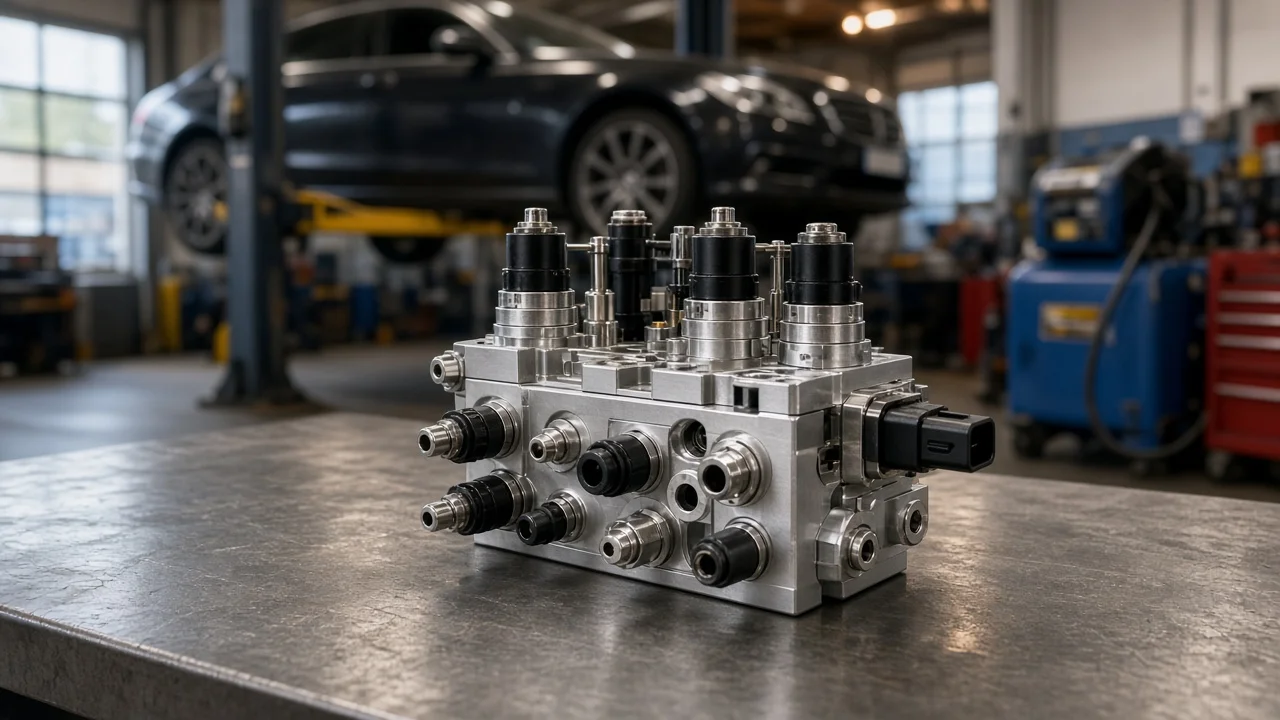
A valve block is the switching center of a Mercedes air suspension system. It routes air from the compressor to each strut or spring, holds pressure while the car is parked and releases air when the system lowers the body. When it leaks or sticks, the car may sag, sit unevenly or run the compressor far more than it should. This guide explains how to choose a replacement valve block that matches your vehicle, and how to avoid paying for a part that will not solve the actual problem.
Define the job the product must do
Before shopping, confirm that the valve block is really the failing component. Air suspension faults often look alike. A car that drops overnight can have a leaking strut, a cracked air line, a loose fitting, a reservoir leak or an internal valve leak. A common approach is to note which corners settle and how quickly. Then spray soapy water on the strut tops, lines and valve block fittings while the system is pressurized, and read stored fault codes with a scan tool that supports the suspension module. If all corners drop evenly, or a corner drops while its strut and line show no external leak, an internal valve block leak becomes more likely. A shop test that isolates individual lines gives a firmer answer. Buying a valve block on symptoms alone is one of the most common ways owners spend money without fixing the car.
Next, define your practical constraints. A daily driver that must be dependable through winter justifies a different part than a weekend car kept on a tight budget. Consider three questions: will you install the block yourself or pay a shop, do you have a diagnostic tool that can perform any required level calibration, and how long can the car sit while parts arrive? Also check the condition of the compressor. A valve block that has leaked for months may have forced the compressor to run long cycles, and a weak compressor or a failed relay can make a new valve block appear faulty.
Check compatibility
Mercedes used different valve blocks across chassis generations and suspension variants, and similar-looking units are not always interchangeable. The most reliable starting point is the part number printed or stamped on your existing valve block. Cross-check it against your VIN in an electronic parts catalog or at a dealer parts counter. Model name and year alone are not enough, because the same model can be built with full air suspension, rear-only level control or different option packages, and parts can be superseded during production. If a seller lists a long range of compatible models, confirm that your original part number or its official supersession appears in the listing.
Then compare the physical interfaces. Count the air ports and note where each line goes. A block that serves four corners will have a different layout from one that serves only the rear axle or one that also connects to a pressure reservoir. Check the line diameter and fitting style for each port, the electrical connector shape and pin count, and whether a pressure sensor is built into the block or mounted separately. Finally, compare the mounting points and bracket design. A block that fits electrically but needs a modified bracket, or sits differently in an area exposed to road spray, invites vibration damage, chafed lines and water getting into the connector.
Features that affect the choice
Replacement valve blocks generally fall into three groups: genuine Mercedes parts, parts from the original equipment supplier sold under its own brand, and new or remanufactured aftermarket units. Genuine and original-supplier parts cost more but have the clearest fitment record. Aftermarket units vary widely. Some are well made, while others differ internally in seals, solenoid coils or sensor accuracy in ways a listing photo cannot show. A remanufactured unit can be a reasonable choice when the rebuilder states what was replaced and tested, rather than simply cleaning the housing.
Separate useful evidence from marketing labels. Phrases such as OE quality, heavy duty or premium describe nothing you can verify. More useful information includes an exact part number cross-reference, a clear statement that the unit is new or remanufactured, the warranty length and claim process, and whether new O-rings, fitting collets or a connector seal are included. Clear photos of the ports and connector that you can match against your original are also valuable. A seller who answers fitment questions using your VIN or part number is giving you more than a star rating can.
Limitations and ownership costs
A valve block cannot fix a leaking strut or air spring, a cracked line, a worn compressor, a faulty ride height sensor or damaged wiring. If one of those is the real cause, a new block will only change where the problem shows up. Installation also has its own requirements. Depressurize the system according to the model-specific procedure before opening any line, because stored air pressure can eject fittings with force. Never work under a car held up only by its air suspension. Lift it at the approved points and use rated stands for vehicle support. Use the fastener specification and line reconnection procedure from the service information for your car rather than guessing.
After installation, many Mercedes air suspension systems need fault codes cleared and ride height checked or calibrated with a compatible diagnostic tool. If the car sat low or uneven for a long period, verify ride height before judging how it handles. If the height had to be corrected, have the wheel alignment checked as well, since alignment is only meaningful at the specified height. While the car is raised, inspect control arm and tie rod joint play, because sagging and uneven support can mask worn components. Ownership costs include seals and fittings, possible line repairs, calibration labor and sometimes a compressor relay or compressor that the original leak overworked.
Build a practical shortlist
Compare each candidate part against the same short checklist. First, the listing must match your original part number or a confirmed supersession for your VIN. Second, the port count, line sizes, fitting type, connector and pressure sensor arrangement must match what you see on the car. Third, the mounting points and bracket must line up without modification. Fourth, the seller should state clearly whether the unit is new, remanufactured or used, and which seals and fittings are included.
Then weigh the practical factors: warranty length and how claims are handled, return terms if the part does not fit, whether you can perform any calibration your car needs, and the total installed cost including labor and consumables. A cheaper block can be the right answer for an older car on a modest budget. A genuine or original-supplier part makes more sense for a daily driver, or when you are paying a shop for labor. Whichever you choose, success depends on a confirmed diagnosis, an exact fitment match and an installation that follows the model-specific procedure.