Mazda MX-30 EV Range: Why It's Short and What the Rotary Range Extender Changes
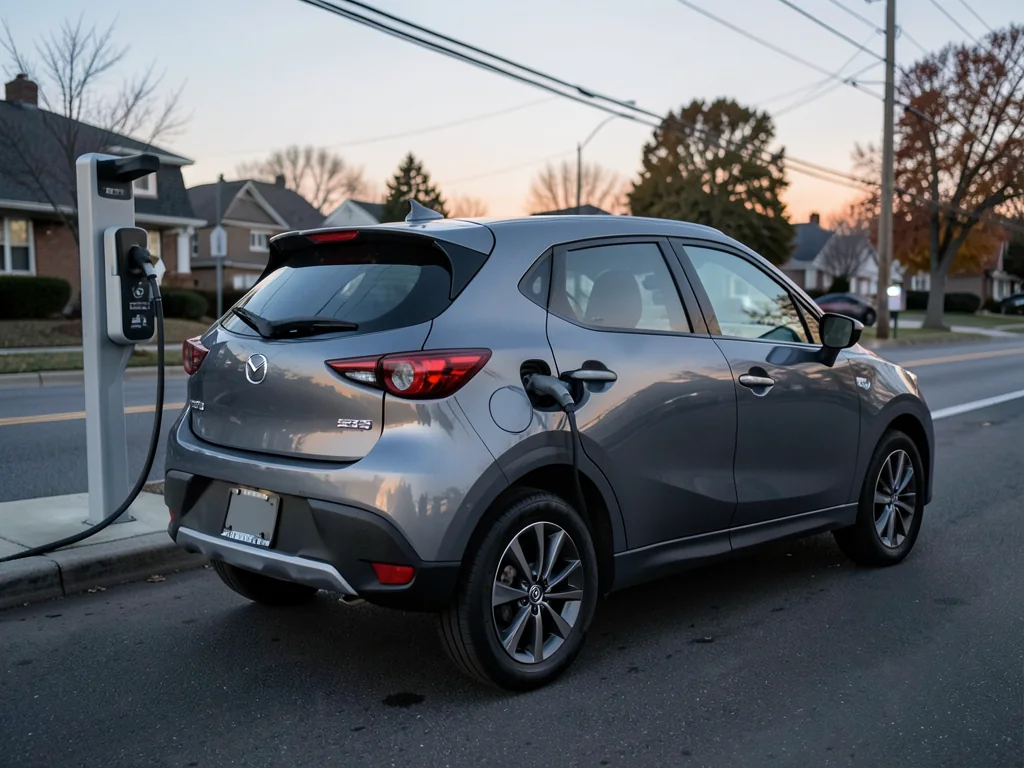
The Mazda MX-30 EV range is shorter than most electric crossovers, a deliberate choice that trades miles for a lighter battery and lower production impact. Its EPA estimate shapes how owners use it, while the rotary range extender version changes the ownership math entirely.
How Far the Mazda MX-30 EV Goes on a Full Charge
The US-market Mazda MX-30 EV carries an official EPA-estimated range of 100 miles from a 35.5 kWh battery pack, of which about 30 kWh is usable. That figure comes directly from Mazda and EPA documentation for the electric model. This means the car is intended for predictable daily loops rather than open-ended touring, because the usable capacity limits how far you can go before recharging.
The EPA number is a standardized laboratory estimate, not a guarantee for every trip. Real-world range shifts with highway speed, cold temperatures, cabin heating or cooling, hills, and payload. Owners who mostly drive in urban traffic and recharge at home each night may see close to the rated figure in mild weather, but a long 70 mph highway run will cut it significantly. The small pack simply leaves less buffer.
Why Mazda Gave the MX-30 a Small Battery
Mazda has stated that the small battery was chosen to reduce vehicle weight, lower the battery's lifecycle carbon footprint, and allow quicker full charges. The company's position is that a modest pack matches how many drivers actually use a second car, while avoiding the environmental cost of manufacturing a large battery that is rarely fully used. Those are design intentions, not independent proof of real-world benefit.
The practical trade-off is straightforward: less weight and a smaller, less resource-intensive battery in exchange for fewer miles between charges. A smaller pack also shortens charging time at a given power level. On a DC fast charger, the MX-30 EV accepts up to 50 kW, so a 20-80% charge is brief compared to a large-battery EV. Overnight Level 2 charging at home easily fills the pack, but the compromise is that long trips require more frequent stops.
2022 Mazda MX-30 EV Range and What Applied That Model Year
For the 2022 model year, the Mazda MX-30 EV was rated at the same 100 miles of EPA range, and no later US model year changed that figure because the electric MX-30 was not offered again in this market after 2022. The 2022 model was initially sold only in California, a limited rollout that reflected Mazda's compliance-focused strategy for the EV.
Battery capacity and the drive unit set range, not styling or equipment updates. A used 2022 model will have the same rated range regardless of paint color, interior trim, or infotainment version, unless the battery has degraded. Shoppers should confirm the model year and trim from the VIN and the original window sticker, not from a seller's listing description, because listings can mislabel trims or omit the EV-specific details.
Does the 2022 MX-30 Premium Plus Get Different Range?
The 2022 Mazda MX-30 EV Premium Plus package carries the same official EPA range rating as the base 2022 MX-30 EV: 100 miles. The package added convenience and driver-assistance equipment, but it did not change the battery capacity or the drive motor. Therefore, the rated range is identical for both trim levels.
The Premium Plus package typically includes features such as a heated steering wheel, a 360-degree camera, and upgraded upholstery, but none of those alter the EPA test results. In real-world driving, heavier optional equipment, larger wheel-and-tire combinations, or heavy use of heating and air conditioning can reduce range, but Mazda did not publish a separate lower figure for the Premium Plus. To verify a specific car, check the Monroney sticker or the official EPA listing for that VIN.
How the Rotary Range Extender Version Works
The MX-30 R-EV uses a small rotary engine strictly as a generator to charge the battery; it never drives the wheels directly. This series plug-in hybrid approach gives the car a larger total driving range than the battery-only MX-30 EV because the engine can replenish the pack during longer trips. In markets where it was sold, the R-EV offered an electric-only range shorter than the pure EV, but a total range closer to that of a conventional hybrid.
In practice, the R-EV means fewer charging stops on long journeys, but it introduces gasoline refueling and some engine upkeep, such as oil changes and spark plug replacement for the rotary unit. The R-EV was not offered in the US market, so American buyers rely on the battery-only MX-30 EV. Official range figures for the R-EV vary by market because different test cycles, such as WLTP and EPA, produce different numbers; always check the specific market's rating.
Getting the Most Real-World Range From an MX-30 EV
To get the most real-world range from an MX-30 EV, keep highway speeds moderate, precondition the cabin while plugged in, maintain correct tire pressure, and use regenerative braking smoothly. These habits reduce energy demand and recover energy that would otherwise be lost as heat. Because the battery is small, even a 10% improvement can make a meaningful difference in daily usability.
Cold weather and heavy climate-control use can cut range noticeably, so planning a margin is essential. Use the car's range estimate and charging-station apps to route trips with buffers, and treat the dashboard figure as an educated guess that changes with conditions. For used cars, a dealer or EV-qualified technician can perform a battery state-of-health check, which is more reliable than drawing conclusions from the range estimate alone.