Mazda FL22 Coolant: Requirements, Compatible Alternatives, and Service
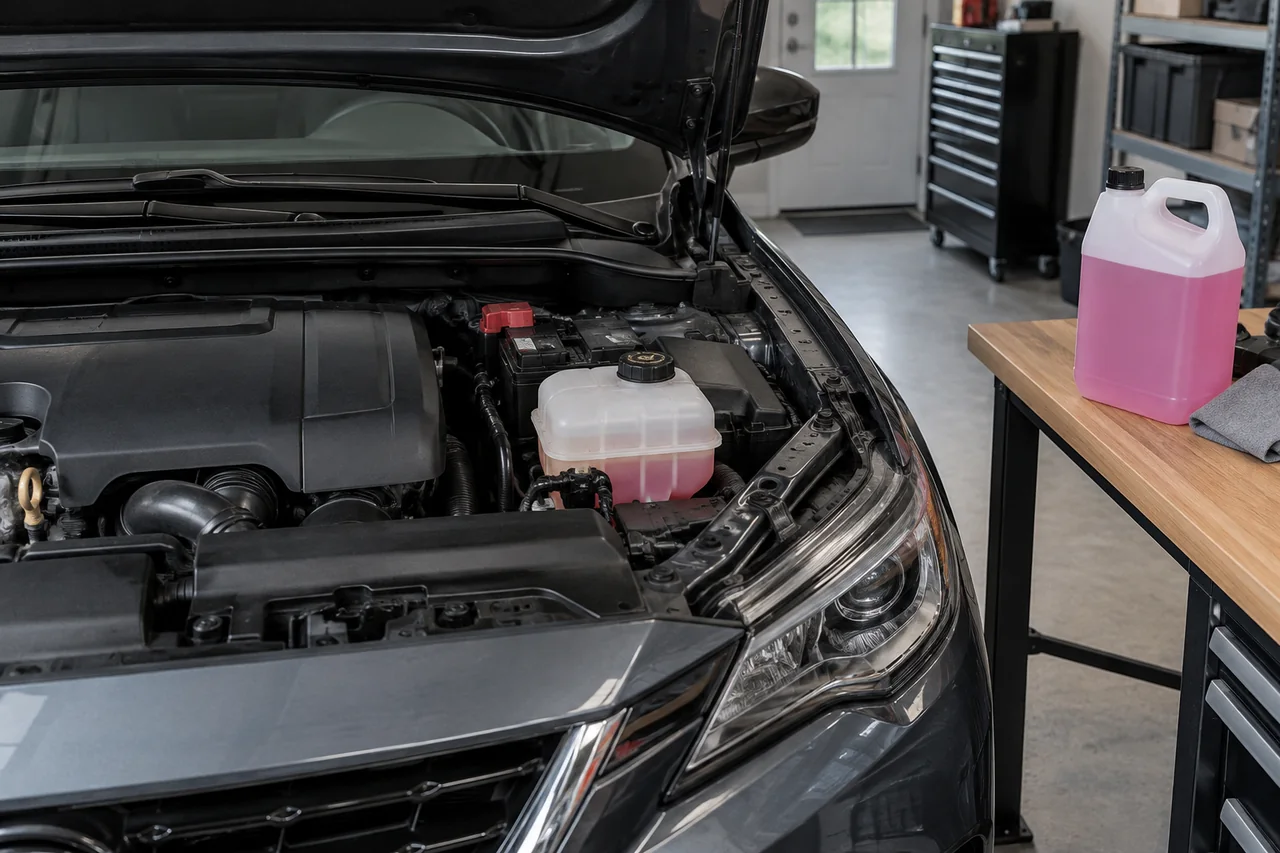
Mazda FL22 coolant is an engine coolant designation used in Mazda specifications. Using the right fluid helps protect the radiator, water pump, heater core and engine passages from overheating, freezing and corrosion. Owners can avoid expensive cooling system mistakes by understanding a few things: what the FL22 name means, how to confirm their vehicle's requirement, what makes an alternative compatible, how premixed coolant differs from concentrate and how to follow the correct replacement schedule.
What Mazda FL22 Coolant Means
FL22 is a Mazda coolant specification. It does not describe a color or a general type of chemistry. When a Mazda owner's manual or service document calls for FL22 engine coolant, it names a fluid whose additives were chosen to work with the metals, gaskets, hoses and seals in that cooling system. The specified coolant matters because additives that suit one design may not protect another as well against corrosion. Damage from the wrong fluid often builds slowly before any symptom appears.
Engine coolant does several jobs at once. It carries heat from the cylinder head and block to the radiator, raises the boiling point under pressure and lowers the freezing point in cold weather. It also carries additives that slow corrosion, scale and deposits inside the cooling passages. People search for the name in many ways, including FL22, FL-22 and FL 22, sometimes with Mazda before or after it. These spacing and hyphen differences all refer to the same Mazda coolant designation, not to different products.
How to Confirm Your Mazda’s Coolant Requirement
The most reliable place to start is the owner's manual and the maintenance information for your exact model year and market, because coolant specifications can differ by region and production period. Look for the section on engine coolant or recommended fluids, which should name the required type. Some vehicles also show an FL22 marking on the radiator cap, the reservoir cap or a nearby label, which can help confirm the requirement. However, a replacement cap may have been fitted later, so it does not prove what the vehicle originally required.
Coolant color is not a reliable guide. Brands dye similar coolants in different colors, and coolants with different chemistry can look the same, so the shade in the expansion reservoir says little about the specification. The fluid you see also cannot tell you what a previous owner or shop added, or when. If the manual, cap markings and maintenance records disagree, or if records are missing, ask a Mazda dealer or qualified technician to confirm the requirement using the vehicle identification number before you buy coolant.
What Establishes Compatibility for an FL22 Alternative
For any FL22 alternative, read the current product label and the maker's technical data sheet. Look for a clear statement that the coolant is meant for Mazda vehicles that require FL22. A coolant maker saying a product is compatible is different from Mazda formally approving it. A maker may state that a product meets or suits the FL22 requirement without Mazda approval. Not every suitable product has formal approval, so judge how clear and specific the claim is. Vague wording deserves more caution than a precise statement.
Broad marketing phrases do not settle the question. A bottle labeled universal, all makes or Asian vehicle coolant may suit many vehicles, but that label alone does not confirm it meets the FL22 specification for your Mazda. Judge each product separately, because one brand may sell several coolants with different chemistry for different vehicles. One product's FL22 statement does not apply to the rest of the brand's range. Formulas and labels can also change over time, so check the exact version you are buying against its current documentation.
Premix, Concentration, and Mixing Questions
Coolant is sold in two main forms. Ready-to-use, or premixed, coolant is already diluted with water, while concentrate must be diluted before it goes into the cooling system. Labels are not always clear, so confirm the product's strength before using it. Adding water to a ready-to-use product changes its intended strength, which can reduce freeze protection, boil-over protection and corrosion protection. Follow the dilution instructions for the specific concentrate and your vehicle rather than relying on a single ratio that supposedly works for everything.
Mixing coolants raises a separate concern. A coolant documented as suitable for FL22 vehicles is not automatically safe to mix with an unknown coolant already in the engine. Combining different chemistries can weaken the additives that protect the system. If you do not know what coolant is in the system now, or a different coolant has already been added, have a Mazda dealer or cooling system specialist assess it and recommend next steps. The right fix depends on what is actually in the system, so avoid guessing.
Finding the Correct FL22 Replacement Schedule
Replacement intervals should come from the Mazda maintenance schedule for your model, model year and market, not from a general rule or a forum post. The schedule may treat the coolant filled at the factory differently from later refills, so check both entries separately. The first interval may count from when the vehicle was new and can differ from the interval that applies after the coolant has been changed. The coolant used in a refill can also affect which interval applies, so read the notes attached to each entry.
When the schedule gives both a time limit and a mileage limit with the phrase whichever occurs first, the coolant is due at the earlier of the two. A car that is driven little can reach its time limit well before its mileage limit. Missing service records create uncertainty, because an unknown history does not tell you when the next change is due. A coolant maker's claims about how long its product lasts do not replace the vehicle's schedule either. When the history is unclear, a technician can help you decide on a reasonable starting point.
Safe Level Checks and Signs That Need Professional Attention
Check the coolant level at the expansion reservoir with the vehicle parked on level ground and the engine fully cold. Follow the owner's manual for where to look and which markings apply. Never open the radiator cap or reservoir cap on a hot system, because pressurized coolant can escape suddenly and cause serious burns. Store coolant where children and animals cannot reach it and clean up spills promptly. Coolant is typically toxic if swallowed, and its sweet taste can attract pets.
Coolant that keeps running low, crusty residue around hoses or the reservoir, or fluid that looks oily, rusty or cloudy all need investigating, but none of these signs identifies a failed part by itself. If you see steam from under the hood or an overheating warning comes on, stop safely as soon as you can, follow the owner's manual guidance for overheating and arrange assistance instead of driving on. If coolant keeps disappearing, have a professional carry out leak detection and a cooling system pressure test to find the cause before further damage occurs.