Mazda CX-9 Torque Converter Shudder Diagnosis
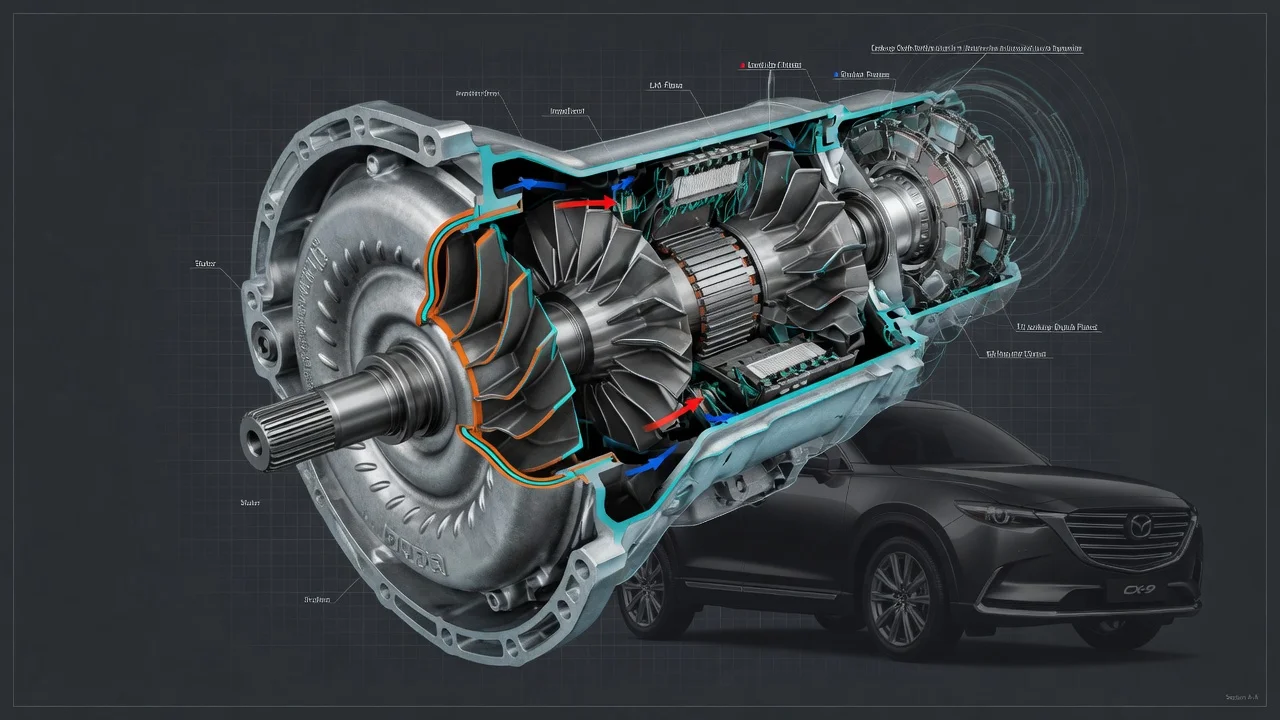
A Mazda CX-9 that shudders at steady, light-throttle cruising can feel like it is driving over rumble strips. Owners often blame the torque converter. Sometimes that is right, but engine misfires, worn mounts and driveline vibrations can feel very similar. This guide covers how to describe the symptom accurately, which causes fit which observations, and which checks to do in what order. It also lists what a transmission technician needs to see before anyone replaces a torque converter or the transmission itself.
Identify your CX-9 and its transmission
Diagnosis starts with the exact vehicle. First-generation CX-9 models, sold from 2007 through 2015, use a V6 engine with a six-speed automatic. The second generation, sold from 2016 through 2023, uses a turbocharged 2.5-liter four-cylinder with Mazda's Skyactiv-Drive six-speed automatic. That transmission is designed to lock the torque converter clutch over a wide range of speeds and gears. Both generations were offered with front-wheel drive or all-wheel drive. These differences matter because the transmission type determines several things: the fluid specification, the fluid level procedure, the available diagnostic data, and any service bulletins or software updates that may apply. Use the VIN, model year and drivetrain to confirm fitment for any fluid, part or calibration before acting on general advice, including this guide.
Establish the symptoms
Torque converter clutch shudder usually feels like a rapid, low-frequency vibration or a rumble-strip sensation through the floor and seat. It tends to appear at light, steady throttle while the converter clutch is applying or holding lockup, often at moderate cruising speeds. It may fade if you press harder on the accelerator, lift off, or lightly touch the brake pedal, because those actions typically change or release lockup. Watch the tachometer as well. A small, unexplained rise and fall in engine speed during cruise can accompany converter slip.
Write down exactly when the shudder happens: road speed, gear if known, throttle position, engine temperature, and whether you were climbing a grade. Also note whether it began after a fluid service, battery disconnection, software update, new tires or another repair. Record any associated signs, such as a steady or flashing check engine light, harsh or delayed shifts, flare between gears, unusual noises or a burning smell. A clear record of shift behavior and driving conditions is far more useful to a technician than a single description of vibration.
Distinguish plausible causes
Several faults can produce or imitate converter shudder. The converter clutch itself may be worn or glazed, or its friction surfaces may be affected by degraded, incorrect or contaminated fluid. Control problems can also produce a similar feel without a mechanically damaged converter. Examples include a lockup solenoid or valve body circuit that applies the clutch unevenly, or outdated transmission software. A converter clutch explanation is supported when the shudder appears in a consistent speed band and changes with a light brake touch or a change in throttle.
An engine misfire under load is the most common impostor. Misfires often feel worse uphill or at low rpm with the converter locked, because the engine is working hard at low speed. Ignition coils and spark plugs are typical suspects, and so are intake valve deposits on direct-injected engines. Stored misfire codes or rising misfire counts point toward the engine rather than the transmission. Worn engine or transmission mounts can amplify normal vibration when the converter locks. Driveline faults usually vary with road speed rather than throttle load, and they do not disappear with a light brake tap. These include CV joints and wheel and tire balance, plus the power transfer unit, rear driveshaft and rear differential on all-wheel-drive models.
Checks in a useful order
Begin with observations that need no tools. Confirm that the shudder can be reproduced on a safe road, and record the conditions described above. Check the service history for fluid changes and whether the correct fluid was used. Look underneath for leaks or wetness around the transmission, power transfer unit and cooler lines, and inspect the tires for uneven wear or damage. Note whether the vibration changes with throttle at the same road speed. That one observation separates load-dependent problems from speed-dependent ones.
Next, read the diagnostic codes with a scan tool, including pending codes and freeze-frame data. Generic codes such as P0741, which covers converter clutch performance or a stuck-off condition, and P0300-series misfire codes are especially relevant. Manufacturer-specific transmission codes may require a more capable scan tool. Live data recorded during a road test is very informative, particularly commanded lockup, converter slip, engine and turbine speeds, and misfire counts. Check fluid level and condition using the procedure for your transmission. Many models have no conventional dipstick and require a specific temperature window, a level plug and lift access. Pressure testing, solenoid testing, mount inspection under load and checking for software updates are best left to a qualified technician with Mazda service information.
Interpret the findings
No single result proves the torque converter has failed. A P0741 code confirms that the control module saw converter clutch performance outside its limits. The cause could still be fluid condition, a solenoid or valve body issue, wiring, or the converter itself. A converter clutch problem is strongly supported when three things line up: live data shows slip fluctuating exactly when the shudder occurs, no misfires are recorded, and the vibration disappears when lockup is released. If misfire counts climb during the event, the next checks should be ignition, fuel and engine mechanical condition, before any transmission work.
Dark, burnt-smelling fluid or friction debris suggests internal wear. Even so, a fluid change alone neither confirms nor rules out converter damage. Some technicians use a fluid exchange or software update as a test step when the evidence fits, but further diagnosis is still needed if the shudder returns. Before approving a converter or transmission replacement, ask for the evidence that excludes engine, mount and driveline causes. Also confirm that the replacement part matches your vehicle's transmission and calibration.
Urgency and next action
Reduce driving and arrange an inspection promptly if any of these apply: the shudder is getting worse, engine speed flares or the vehicle slips, shifts become harsh or delayed, fluid is leaking, you smell burning, or a transmission warning appears. A flashing check engine light indicates a severe misfire that can damage the catalytic converter. Stop driving as soon as it is safe and have it diagnosed. Continued driving with a slipping converter clutch generates heat, which can degrade the fluid and damage other transmission parts. There is no reliable way to predict how many miles remain.
Bring the technician the VIN, model year, engine, drivetrain and mileage. Include the full service history with fluid types and dates, any stored codes with freeze-frame data, and your notes on when the shudder occurs. Repair options can range from fluid service and software updates to valve body or solenoid repair, converter replacement or a transmission overhaul. The choice should rest on confirmed findings rather than on the symptom alone.