Mazda CX-5 Timing Chain Replacement: Service Needs and Cost
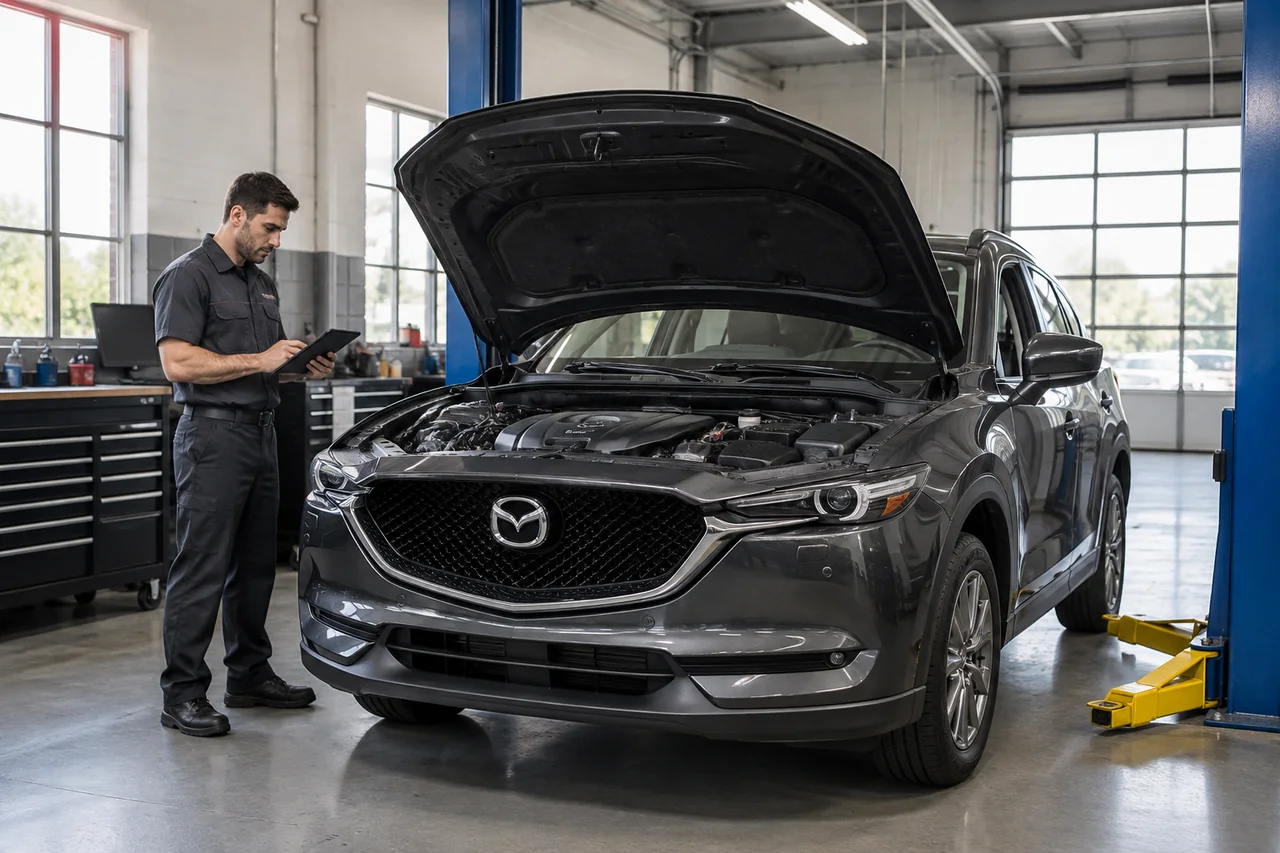
Timing chain replacement in a Mazda CX-5 is sometimes suggested after a cold-start rattle or high-mileage teardown, but the Skyactiv engine is not on a simple fixed-interval schedule. The chain links the crankshaft to the camshafts so valve events stay synchronized with piston travel under all driving conditions. Before approving any estimate, owners should understand what actually drives the repair: confirmed wear or damage in the chain, tensioner, or guides, not age alone.
Establish Timing Chain Service Needs for Your CX-5
Establishing service needs begins with identifying the specific CX-5: model year, market, engine designation, and odometer reading. Different Skyactiv variants and vehicle configurations affect parts access and labor, so a one-size-fits-all mileage interval cannot be stated as fact. Mazda maintenance information for the applicable vehicle must be checked before any scheduled replacement requirement is claimed. The timing chain's job is precise: it connects the crankshaft to the camshafts so intake and exhaust valves open and close at the correct crankshaft angle.
Mileage alone does not create a replacement need. A chain may remain serviceable well beyond typical ownership periods when oil pressure, tensioner function, and guide wear stay within design limits. Conversely, contamination, oil starvation, or mechanical damage can shorten chain life. Service writers and owners should treat the chain as a condition-based component, evaluated only when symptoms appear or when the timing cover is already removed for another confirmed repair. The goal is to avoid replacing a healthy chain based on an arbitrary number.
Recognize Symptoms That Need an Engine Inspection
Unusual startup rattling for a second or two, persistent engine noise at hot idle, rough running, or an illuminated malfunction indicator lamp are reasons for inspection, not proof of chain failure. A timing chain tensioner may lose oil pressure after shutdown and produce a brief cold-start rattle, while other noise sources include drive belts, valve lash, or accessory pulleys. Recording when the noise occurs, how long it lasts, and whether warning lights accompany it gives a technician a much better starting point than a verbal description alone.
Before driving to a shop, an owner can safely check engine oil level according to the owner's manual and gather recent oil-service records. Low oil level or extended intervals can explain noise because the tensioner depends on oil pressure. However, an oil-pressure warning, severe mechanical knocking, or stalling calls for shutting down safely and arranging professional assistance without repeated restarts. Attempting to drive with these conditions can convert a repairable concern into internal engine damage.
Confirm the Cause Before Authorizing Replacement
A technician should assess oil condition, oil pressure, and noise source before recommending timing chain work. Dark, sludged, or fuel-diluted oil can starve the chain and tensioner, while an external stethoscope or vibration analysis can often localize noise to the timing cover area. Stored fault codes and camshaft-to-crankshaft correlation data are helpful but limited: a correlation code can be caused by a stretched chain, a faulty sensor, or a slipped reluctor, and it does not prove the chain is damaged. Any code must be verified for the specific vehicle and engine before interpretation.
Evaluating the chain, tensioner, guides, and variable valve timing components may require professional testing beyond an external check. A borescope through the oil fill or a targeted timing cover inspection can reveal guide wear, but accurate assessment of chain stretch often needs factory service information and measurement fixtures. The goal is to confirm the root cause before authorizing replacement, because low oil pressure from a failing oil pump or a blocked pickup can produce identical symptoms while leaving the chain itself serviceable.
Understand What a Timing Chain Replacement Quote Includes
A timing chain replacement quote should outline a professional scope of work, not a bare parts list. Because the job involves access to the front of the engine, removal of drive accessories, and often the timing cover, the estimate may include resealing and refilling fluids. The written quote should identify the chain and any tensioners, guides, seals, fasteners, or fluids required by the confirmed repair scope. If the shop plans to reuse a guide or tensioner, that decision should be explained.
The shop must explain which additional components need replacement and what inspection findings justify that work. For example, a cracked guide observed during teardown changes the parts list, while a tensioner with visible bore wear may be replaced as a reliability measure. Parts selection and repair procedures must match the exact engine and vehicle identification, including engine code and production date where applicable. A vague estimate that does not tie component replacement to specific findings should be questioned before approval.
Understand the Factors Behind Replacement Cost
Replacement cost is driven by engine configuration and access requirements. Transverse mounting, all-wheel-drive hardware, and turbo plumbing can add labor hours, and a V-engine may double some component counts compared with an inline four. Local labor rates and parts sourcing also shift the estimate, as does confirmed damage to related components such as chain guides, a cracked timing cover, or a failed variable valve timing actuator discovered only after disassembly. These factors mean published nationwide averages are rarely precise for an individual vehicle.
An owner should request an itemized written estimate covering diagnosis, labor, parts, fluids, applicable fees, and warranty terms. The shop should explain how it obtains authorization for additional work and whether diagnostic charges are included or credited toward the repair. Without current regional data, exact prices should not be asserted, but the estimate structure protects the owner from open-ended costs. Confirming that the quote includes all required engine-specific hardware helps avoid a surprise second invoice for missing bolts or seals.
Confirm the Repair and Plan Ongoing Care
After replacement, the shop should perform post-repair checks for oil or coolant leaks, abnormal noise, timing operation, and relevant fault codes. A test drive should confirm that cold-start rattle and rough running are gone, and that the engine reaches operating temperature without new warnings. The final invoice should document replaced components, diagnostic findings, and repair warranty coverage. Keeping these records matters because future symptoms can be compared against the repair scope.
Ongoing care should follow applicable Mazda guidance for oil specification and service timing, adjusted for severe operating conditions such as frequent short trips, dusty roads, or heavy towing. No universal interval can be invented here, but maintaining oil level and quality directly affects timing chain and tensioner longevity. If warning lights, rough running, or unusual noise return after the repair, contact the shop promptly. Early attention to a small oil leak or intermittent rattle can prevent a second major timing system failure.