Mazda CX-5 Parking Brake Actuator: Identifying the Correct Part
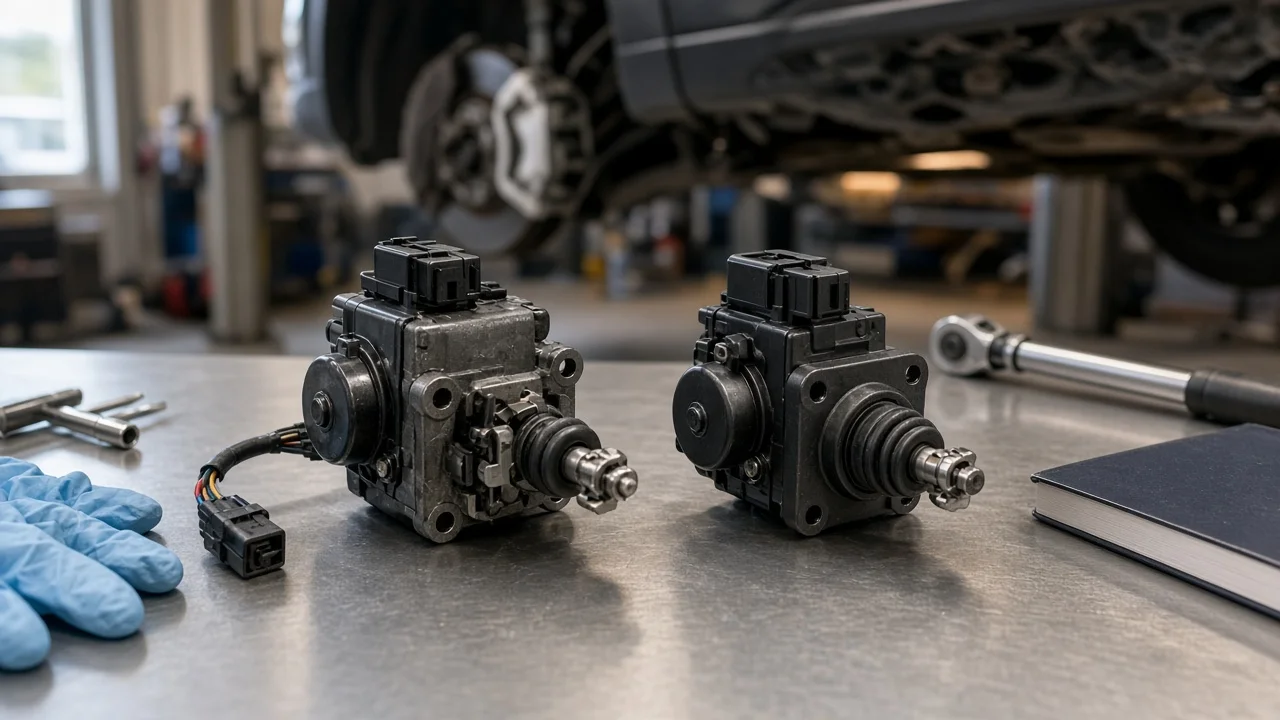
Shopping for a Mazda CX-5 parking brake actuator starts with one question: does your vehicle actually have one? Later CX-5 models use an electric parking brake with a motor unit on each rear caliper. Earlier models, including the 2016, generally use a hand lever and cables. The right part depends on the generation, the side of the vehicle and the part already fitted. This guide explains how to confirm fitment before you order and when the fault needs a professional.
Which CX-5 models use a parking brake actuator
On a CX-5 with an electric parking brake, the actuator is the motor and gear unit bolted to the back of each rear brake caliper. The driver applies and releases the brake with a switch on the center console rather than a hand lever. This design arrived with the second-generation CX-5, sold in the US from the 2017 model year. The correct replacement is the unit that matches your model year range, your market specification and the side being repaired.
If you are searching for a 2016 Mazda CX-5 parking brake actuator, look at the center console first. The 2016 is a first-generation model, and US versions use a mechanical hand lever that pulls cables connected to the rear brakes. There is no electric motor to replace. Parking brake problems on those vehicles usually involve the lever mechanism, the cables, their adjustment or the rear brake hardware, so a listing for a motorized actuator will not fit.
How the electric actuator applies the rear brakes
When you pull the switch, a control unit powers a small electric motor in each rear actuator. In motor-on-caliper designs like this, a gear reduction turns a spindle inside the caliper piston, which pushes the piston and brake pads against the brake rotors mechanically. Brake fluid pressure is not what holds the parked vehicle; the spindle does. On release, the motor reverses and backs the spindle off so the pads can retract.
Because the actuator drives the piston directly, its condition is tied to the rest of the caliper. Worn friction material means the piston must travel farther, a sticking piston or slide pins increase the load on the motor, and corrosion in the actuator housing or at its electrical connector can stop it from completing a cycle. The system monitors the motors, so these problems typically appear as a warning light and a stored fault code rather than a gradual change in feel.
What changes the correct part
Several details decide whether a listed actuator fits. Model year range matters most, because part numbers may change within a generation and later redesigns can use different hardware. Market specification can also matter, since vehicles built for other regions may carry different brake components. Side is critical: left and right units are typically mirror images with their own part numbers. Some actuators are sold as a motor unit alone, while others are supplied only as part of a complete rear caliper. The most reliable way to confirm vehicle fitment is a parts lookup by VIN, followed by a physical comparison with the part on the car, including the label number, connector shape and mounting points.
Whether you need only the actuator also depends on the failure. If the caliper piston is seized, the housing is damaged or the caliper is leaking fluid, a complete caliper is the realistic repair. If the caliper is sound and the fault is limited to the motor or its connector, replacing only the actuator can be enough where the part is available separately.
Checks to make before ordering
Start by reading the fault codes with a scan tool that can communicate with the electric parking brake system, since a basic engine code reader may not see them. Check battery condition and charging voltage, the related fuses and the actuator connectors, because low voltage or a corroded terminal can trigger parking brake warnings without any actuator failure. With the vehicle secured, have a helper apply and release the brake while you listen at each rear wheel. A motor that runs on one side but not the other points toward that side, though wiring can still be the cause.
Rear brake service on these vehicles needs extra care. The caliper piston cannot simply be pushed back with a spreader tool; the system must first be put into its maintenance mode using a scan tool or the procedure in Mazda service information, otherwise the spindle and actuator can be damaged. While the brakes are apart, measure pads and rotors against the specified wear limits, inspect the slide pins and boots, and bleed the system if a hydraulic line was opened or the caliper was replaced.
Limitations and when to get professional help
If the parking brake will not hold the vehicle, do not rely on it: park on level ground, select Park or a gear on a manual transmission, and chock the wheels. If a rear brake stays applied, the vehicle drags, pulls or smells hot after release, stop driving and have it inspected, because a dragging caliper can overheat and reduce braking performance.
Part numbers, maintenance-mode steps, torque values and wear limits are specific to each vehicle, so confirm them in Mazda service information or with a dealer parts counter using your VIN. A brake technician with a capable scan tool can determine whether the actuator, the caliper, the wiring or the control unit is at fault before you spend money on parts, which is the most direct way to avoid buying the wrong actuator.