Mazda Brake Fluid: Correct Type and Change Guidance for Mazda3 and Other Models
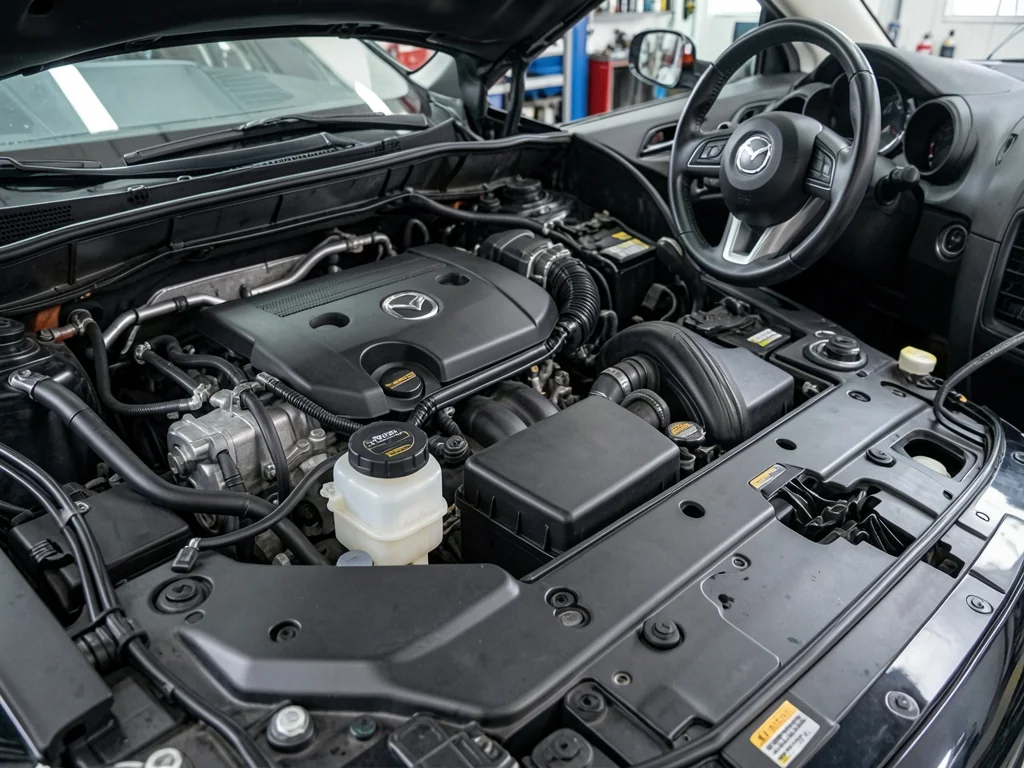
Mazda brake fluid is specified by vehicle, not by a single product that fits every model. Owners of a Mazda3 and other Mazda cars should match the brake fluid specification in the owner's manual and on the reservoir before buying a bottle or booking service. Level, brake pedal feel, warning lights, and service history then indicate whether replacement is the next step rather than a simple top-off.
Find the Brake Fluid Specification for Your Mazda
The brake fluid specification for a Mazda is listed in the owner's manual, typically in the fluids or specifications section, and is often repeated on the brake fluid reservoir cap. Those two sources should agree. Because requirements can differ by model, model year, and market, do not assume that a bottle that worked in one Mazda is automatically correct in another. Confirm the year, trim, and the market the car was built for before naming a fluid, then read the complete specification rather than a shortened grade name.
When you buy sealed fluid, compare the container labeling with the full specification printed for that vehicle, including any additional notes in the manual. A familiar DOT class on the front of a bottle is not enough if the car calls for a more complete description. If the reservoir cap is faded, missing, or unreadable, or if the cap and the manual disagree, do not guess. Use Mazda service information for that VIN or have a qualified technician confirm the correct mazda brake fluid before anything is added to the system.
Confirm the Requirements for Your Mazda3
Mazda3 owners should open the owner's manual for their exact model year and the market where the car was sold, then find the mazda3 brake fluid entry in the fluids or maintenance information. That listing is the specification the hydraulic system was designed around. The replacement schedule is a separate item, usually in the scheduled maintenance charts, and it does not change what product belongs in the reservoir. Verify both. A correct fluid used on the wrong interval, or a timely change with the wrong product, still leaves the system off the intended combination.
If the service history is unknown, you cannot tell from the reservoir alone what is currently in the lines, calipers, and master cylinder. Previous owners or shops may have used a different product, mixed fluids, or delayed a change. When you ask a shop to confirm the correct fluid, bring the VIN, model year, market, mileage, and any invoices that mention brake fluid replacement. Those details let a technician pull Mazda service information instead of guessing from a faded cap, and they also show whether the fluid now in the Mazda3 is likely original, recently serviced, or undocumented.
Check Fluid Level and Recognize Brake Warning Signs
A fluid level check is a parked, engine-off inspection with the vehicle on level ground, following the owner's manual. Look through the brake fluid reservoir at the fluid level markings rather than opening the cap first. The marks show a normal range, not a diagnosis. A low reading can accompany pad and lining wear as caliper pistons extend, or it can accompany a leak. Either way, the level by itself does not prove which condition is present, so treat it as a reason to inspect the rest of the brake system rather than as a parts verdict.
Topping up does not correct an unexplained drop, because the missing volume went somewhere: into wear travel or out through a leak. Opening the cap without a clear need also invites moisture contamination and dirt into a hygroscopic fluid. Watch brake pedal feel as well as the brake warning light. A soft or sinking pedal, reduced braking, or visible leakage at hoses, calipers, or the master cylinder means the car should be stopped safely and not driven as a test. Arrange professional inspection when braking is affected rather than adding fluid and continuing.
Determine When Mazda Brake Fluid Needs Service
Replacement timing for Mazda brake fluid comes from the maintenance schedule that applies to that vehicle, not from a universal interval shared across the brand. Follow the chart in the owner's manual or Mazda service information for the model year and market. Over time, brake fluid can absorb moisture from the air, which lowers boiling performance under heat and can contribute to internal corrosion in steel lines, cylinders, and ABS components. That moisture contamination is a reason the fluid is treated as a scheduled service item rather than a lifetime fill.
Color is a poor test. Dark or amber fluid may be aged, contaminated, or simply showing dye and heat history, and light fluid can still hold moisture. Appearance cannot confirm water content, remaining service life, or whether the product still matches the specification. Incomplete records, suspected mixing, dirty work around an open reservoir, or brake symptoms such as a spongy pedal are reasons for professional assessment. A shop can test moisture or boiling behavior and decide whether brake fluid replacement is due, rather than relying on a glance at the reservoir.
Understand What Professional Fluid Replacement Involves
Professional replacement uses the specified fresh fluid and the bleeding procedure required for that Mazda so old fluid and trapped air leave the hydraulic circuit. The work is more than pouring a bottle into the reservoir. Depending on the vehicle, the anti-lock system and related valves may need to be cycled with the correct scan tool so fluid in those passages is exchanged. Those ABS-related steps and equipment needs must be checked for the exact car; they are not identical on every Mazda3 or other Mazda model.
A fluid service is not a repair for leaks, a failing master cylinder, contaminated seals, or uneven braking. If the pedal is soft because air is entering through a leak, exchanging fluid without fixing the leak will not restore lasting brake pedal feel. Ask the shop to record the fluid specification used, the service date, mileage, inspection findings, and confirmation that post-service brake checks were performed. That paperwork becomes the history the next technician needs, and it documents that the mazda3 brake fluid in the car matches what the vehicle required at the time of service.