How to Adjust a Manual Transmission Clutch
A clutch that engages too close to the floor or too high at the top of pedal travel can make smooth starts difficult and accelerate wear. The correct approach depends on whether the vehicle uses a mechanical cable, a hydraulic release system, or a self-adjusting pressure plate. Before changing anything, confirm that the clutch is actually out of adjustment rather than failing. Air in hydraulic fluid, a stretched cable, worn linkage, or a weak pressure plate can all change engagement height. The adjustment procedure should match the transmission type and the release mechanism, because an incorrect setting can cause drag, hard shifting, or incomplete release.
Direct answer
The direct answer is that many older manual transmission clutches can be adjusted at the cable or pushrod, while most modern hydraulic systems rely on a self-adjusting master cylinder and may offer little or no manual adjustment. On a cable-operated clutch, the goal is usually to set a small amount of free play at the top of the pedal before the release bearing contacts the pressure plate. If the pedal feels too tight, too low, or begins engaging immediately off the floor, a cable adjustment can often restore usable pedal travel. The exact location of the adjuster depends on the vehicle, but it is typically near the transmission end of the cable or at the firewall.
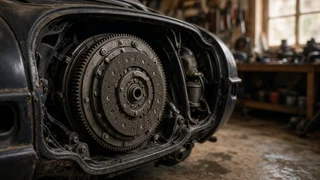
A hydraulic clutch does not use a long mechanical cable, so pedal height changes are more often caused by fluid loss, air in the system, or a worn master or slave cylinder. Some hydraulic pushrods can be adjusted for pedal height, but that does not correct pressure plate wear. If the clutch slips under load or releases only near the floor, the problem may be inside the bellhousing rather than at the pedal. Always compare clutch behavior with the service history and shift behavior; a sudden change in engagement point is not always a simple adjustment issue.
How to proceed
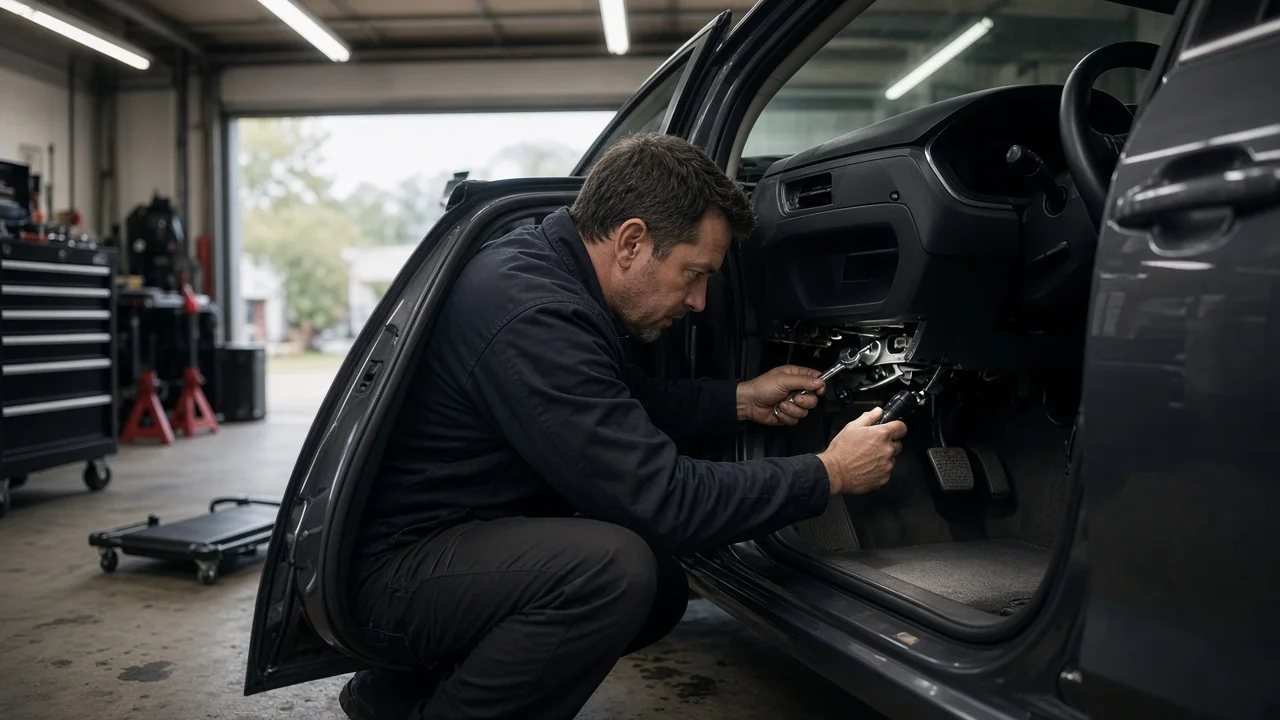
Begin by checking the clutch pedal free play with the engine off. Press the pedal lightly with your hand and measure how far it moves before resistance increases noticeably. On a cable clutch, locate the adjuster and turn it in small increments, then recheck the pedal. A commonly accepted target is roughly a half inch to one inch of free play, but the manufacturer specification should be confirmed for the exact vehicle. Make conservative changes and test after each adjustment, because removing too much free play can hold the release bearing against the pressure plate and cause it to spin constantly.
After adjusting, start the engine and verify that the transmission shifts cleanly through the gears without grinding. With the vehicle on flat ground, the clutch should begin to engage smoothly as the pedal is released. If the pedal engagement point remains inconsistent, inspect the clutch fluid level and look for leaks at the master cylinder, slave cylinder, and hydraulic line. Air in the fluid often produces a soft or low pedal that resembles misadjustment. If the mechanical adjustment is correct but the clutch still slips, drags, or shudders, further diagnosis of the release system and pressure plate is needed before replacing parts.