Can a Mass Air Flow Meter Be Rebuilt or Repaired?
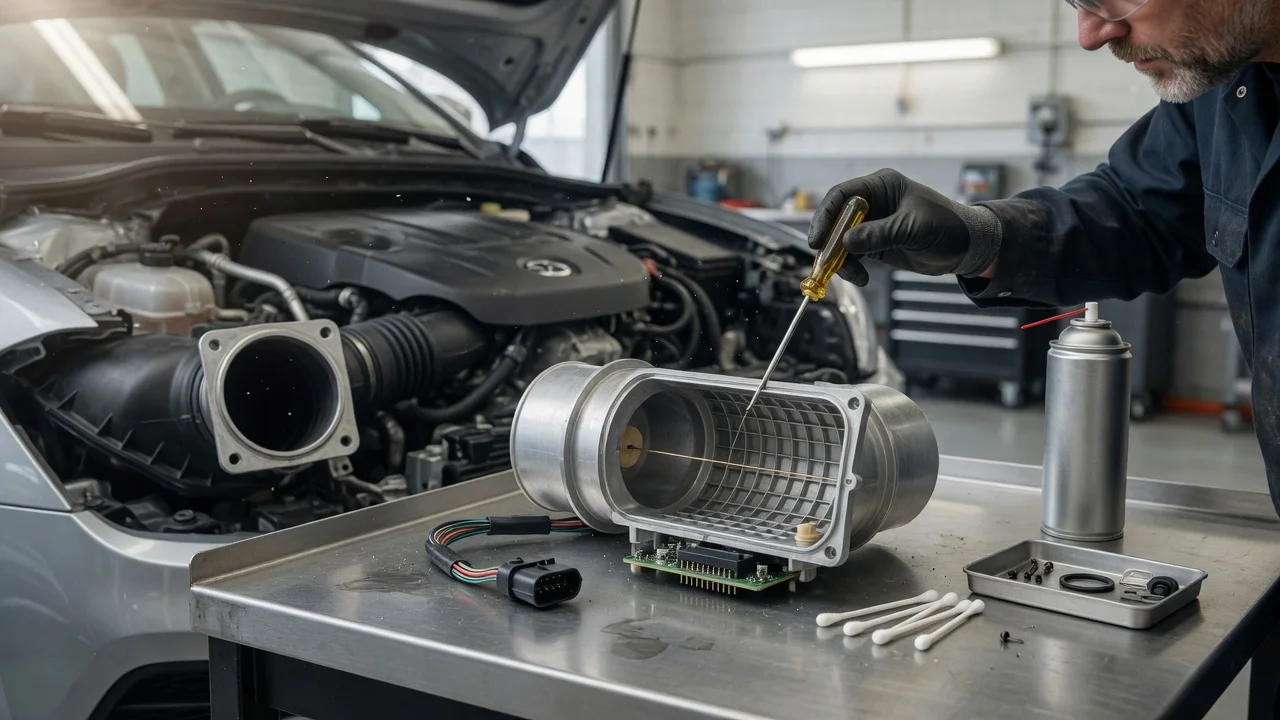
Direct Answer: Rebuilding Is Rarely Supported
In most cases, a modern mass air flow meter cannot be reliably rebuilt or overhauled. The meter is a calibrated sensing device, and rebuilding is not supported as a standard service for the majority of passenger vehicles and light trucks. The term repair usually covers two practical options: careful cleaning of the exposed sensor element, or replacing the complete meter assembly. The exact situation depends on the design, generation, and powertrain, because the meter is normally matched to the engine control system as a complete unit.
How a Mass Air Flow Meter Is Constructed
A mass air flow meter measures the amount of air entering the engine and sends a corresponding signal to the engine control module. A hot-wire or hot-film sensor element is commonly used. In a hot-wire design, current is used to keep a wire at a controlled temperature above the incoming air temperature, and the cooling effect of airflow changes the electrical signal. A hot-film design works on the same principle but uses a film-style sensing element. This element is sensitive to dirt, oil, and other contamination, which can affect the temperature measurement and produce incorrect readings.
What Repair Normally Means in Practice
Cleaning the Sensor Element
The only service that is commonly called a repair is cleaning the sensing element with a dedicated mass air flow sensor cleaner. This is not a mechanical rebuild and does not restore a sensor with a failed electronic circuit. Cleaning can help when contamination is present, but it may not correct a meter with a damaged element, an internal electrical failure, or a permanently drifted calibration.
Replacement as the Standard Repair
For a meter with symptoms that persist after cleaning, replacing the complete sensor assembly is the standard repair. Many replacement meters are supplied as a calibrated unit installed in a housing that matches the original air intake section. Some replacement parts are sold without the housing and are fitted into the existing tube, but the sensing cartridge is still normally replaced as a calibrated component rather than rebuilt internally.
Why a Rebuild Is Not Normally Offered
The main limitation is calibration. The sensor output must match the engine control unit’s expected airflow curve across a range of engine speeds and loads. Replacing an internal wire or film does not restore that curve without controlled air-flow calibration, which is not commonly performed as part of a general workshop repair. In addition, the sensor element can be damaged by touching, solvents, or compressed air, further limiting what can be serviced.
When Cleaning May Be Worth Trying
Cleaning may be appropriate when the meter is visibly contaminated with light dust, oil film, or debris. It is less likely to help with an intermittent electrical fault, a damaged connector, or an obviously damaged sensing element. The safest approach is to use only a cleaner specifically intended for mass air flow sensors, allow the element to dry completely, and inspect the intake tract for the source of contamination, such as a dirty or over-oiled air filter.
Repair Versus Rebuild for Specific Designs
Some vehicles use a combined meter and intake air temperature sensor, while others use a separate temperature sensor. In either case, the meter is treated as a service replacement component. There is no widely documented rebuild procedure that restores an original hot-wire or hot-film meter to factory accuracy outside specialized overhaul and calibration environments. For most owners, the practical decision is therefore between cleaning and replacement.
Practical Guidance
Confirm the fault by checking diagnostic codes and live data before replacing or cleaning the meter; many airflow-related symptoms can come from intake leaks, dirty air filters, or wiring faults. Use a dedicated MAF cleaner rather than brake cleaner, carburetor cleaner, or other solvents. Never touch the sensing element directly. Allow the cleaner to evaporate completely before reinstalling. If the diagnosis points to an internal electronic or sensing-element failure, expect replacement of the assembly rather than repair. After replacement, verify that the engine runs correctly and that fault codes do not return.
Limitations and Gaps
The information here does not cover every aftermarket or specialist service, and individual suppliers may describe a repaired or remanufactured meter. In such cases, the exact restoration process and calibration method should be confirmed with the supplier, because the term repaired can be used differently from a standard local workshop service.