Manual Transmission Clutch Fork
A manual transmission clutch fork translates pedal movement into the release action that lets a driver change gears smoothly. When shift behavior degrades, this forged or stamped lever is one of the first components worth evaluating. Symptoms such as difficulty engaging first gear, a soft or inconsistent pedal, or noise from the bellhousing area can point toward clutch fork wear, pivot wear, or throwout bearing trouble. Understanding how the fork interacts with the clutch release bearing, pivot ball, and slave cylinder helps narrow the diagnosis. This overview explains what the part does, why transmission type and fitment matter, how service history informs repair options, and when diagnostic codes or fluid condition provide useful supporting evidence.
Essential answer
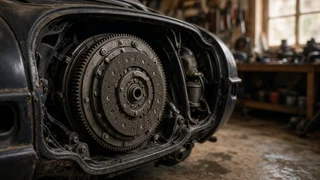
The manual transmission clutch fork is the lever mounted between the clutch release mechanism and the throwout bearing. When the driver presses the clutch pedal, hydraulic or cable force moves the fork, which slides the release bearing forward against the pressure plate diaphragm spring. That motion separates the clutch disc from the flywheel and interrupts torque flow so the transmission can shift. The fork pivots on a ball stud or pivot pin inside the bellhousing, making its alignment and freedom of movement critical to predictable clutch engagement and clean gear changes.
The part’s design and dimensions depend heavily on transmission type and vehicle fitment. Some forks are external and operated by a slave cylinder pushrod; others run through a release arm opening and are activated by an internal hydraulic release bearing. A worn pivot socket, bent fork, loose retaining clip, or cracked fork arm can change shift behavior before the clutch disc itself fails. Because specific replacement dimensions and mounting styles vary by application, identifying the correct fork for the vehicle and confirming service history helps separate clutch linkage wear from internal transmission or clutch disc problems.