Makeithappen Rear Right ABS Wheel Speed Sensor for Mitsubishi Diamante
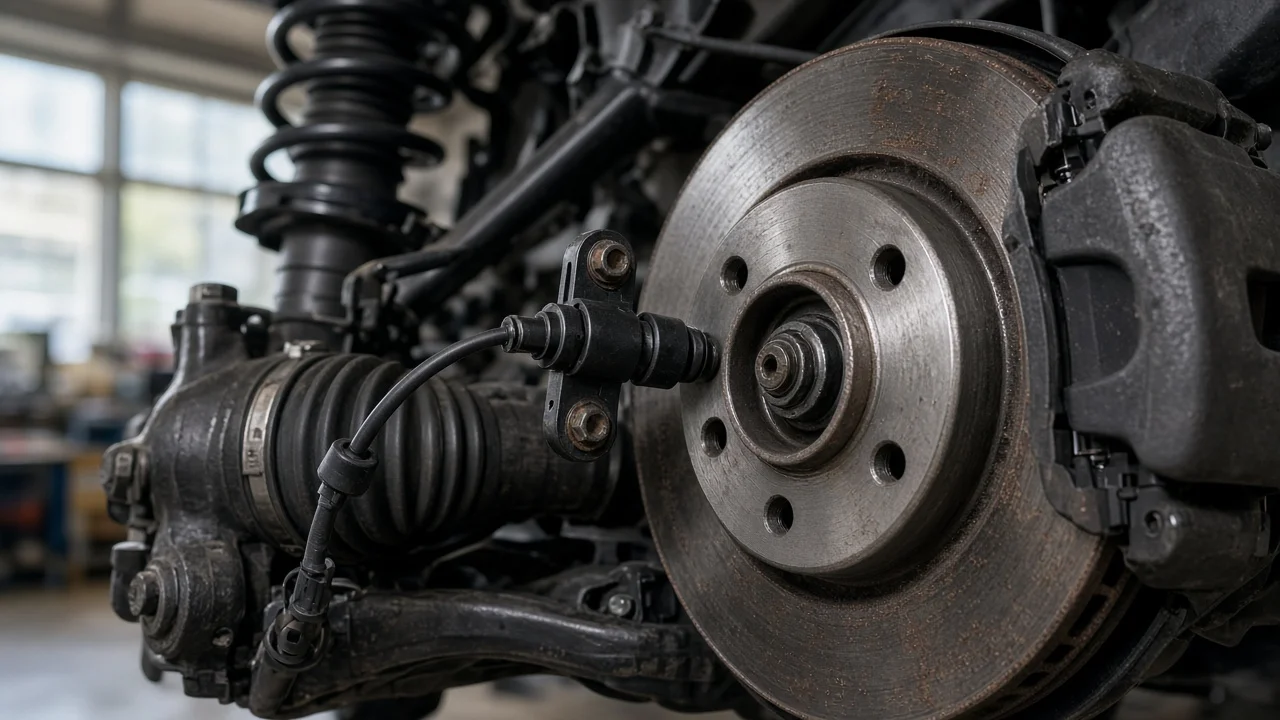
A Makeithappen rear right ABS wheel speed sensor can be a sensible replacement for a Mitsubishi Diamante, but only when it matches your car's model year, ABS equipment and the original sensor's connector and mounting. This guide explains what the sensor does, what decides whether a given part fits, how to confirm the sensor is really at fault before buying, and when the job belongs with a brake specialist.
Is the Makeithappen rear right sensor the right part?
It can be, provided three things line up. First, the listing must cover your exact Diamante: model year, body style and an ABS-equipped car, since a vehicle without factory ABS has no wheel speed sensors to replace. Second, it must be the rear right position, which on a US car is the passenger side rear wheel. Third, the physical details have to match your original sensor: connector shape, lead length, mounting tab and sensor tip. If any of these differ, the part may not install correctly or may send a signal the ABS module rejects.
Makeithappen sensors are aftermarket replacements, and the fitment information on a listing comes from the seller. Treat it as a starting point rather than proof, and compare it against the part you remove or against the original part number from your vehicle's service information. Also keep in mind that a new sensor only fixes a fault in the sensor itself. If the warning comes from damaged wiring, a corroded connector or a cracked tone ring, replacing the sensor will not clear it.
How the rear wheel speed sensor works
The sensor sits in the rear knuckle or hub area, facing a toothed ring that turns with the wheel. As each tooth passes the sensor tip, it creates a change in the magnetic field, and the sensor turns that into an electrical signal whose frequency rises with wheel speed. The ABS module compares the signals from all wheels. When one wheel slows much faster than the others during hard braking, the module recognizes the start of a lockup and briefly modulates hydraulic pressure to that wheel so the tire keeps grip. A clean signal depends on the sensor, its wiring, the tone ring and the small air gap between the sensor tip and the ring.
When the module sees a missing, erratic or implausible signal from the rear right wheel, it usually stores a fault code, lights the ABS warning lamp and switches off anti-lock control. Ordinary braking through the brake pads, brake rotors, calipers and brake fluid continues to work, but the wheels can lock under hard braking, especially on wet or slippery roads. That is why an ABS light deserves prompt attention even when the pedal feels normal.
What changes the answer for your Diamante
Vehicle fitment is the main variable. The Diamante was sold across more than one generation, and sensor design, connectors and lead routing can differ between generations and even between model years or body styles within one. Rear left and rear right sensors are often different parts because the leads run to different points on the body, so a sensor listed for the opposite side is not a safe substitute even if the tip looks identical.
Before ordering, look at how your rear sensor is built. On many cars it is a separate bolt-in sensor with its own lead, while on others the sensing element is part of the hub bearing assembly, in which case a standalone sensor will not apply. Check the connector at the body end, the number and position of clips and grommets along the lead, the shape of the mounting tab and the length of the sensor tip. These details decide whether the part seats at the correct air gap and plugs into the existing harness without modification.
Operating conditions also matter. On older cars driven in areas that use road salt, the sensor body often corrodes into its bore, and rust can build up on the tone ring or under the sensor tip. That can make removal difficult and can cause signal faults that look like a failed sensor. A car that has had recent rear brake or suspension work may simply have a pinched lead or an unplugged connector.
What you can check and do yourself
Start with diagnosis rather than parts. Read the ABS fault codes with a scan tool that supports your car's ABS system; older models may use a different code retrieval method described in the service information. A code pointing to the rear right sensor circuit narrows the search, but it does not prove the sensor is bad. Inspect the lead from the sensor to its connector for chafing, melted insulation or broken clips, and check the connector for corrosion or bent terminals.
If the wiring looks sound, test the sensor itself. Depending on the sensor type, the service information gives a resistance value, an expected output while the wheel is turned, or both. Compare your readings with those specifications, and use the rear left sensor as a reference if it is working. A reading far outside specification, or no output at all, supports replacing the sensor. With the wheel off, also look at the tone ring for missing teeth, cracks or heavy rust buildup.
Installation is usually straightforward when the old sensor comes out cleanly. Support the car securely on stands, remove the wheel, disconnect the lead, remove the mounting bolt and work the sensor free without levering against the tone ring. Clean the bore so the new sensor seats fully, tighten the bolt to the specified torque and route the lead through every original clip, away from moving suspension parts. While the area is open, check the brake pads and rotors against their wear limits and look for caliper or brake line leaks. Clear the codes, then test drive to confirm the ABS light stays off.
Limitations and when to get professional help
This article cannot confirm that a particular Makeithappen listing fits your car, and it does not replace the specifications for your vehicle. Resistance values, output figures, torque settings and diagnostic procedures vary by model year and system, so take them from your vehicle-specific service information. If you cannot confirm the part against your original sensor or part number, resolve that before installation.
Stop driving and have the car inspected by a brake professional if the red brake warning light comes on, the pedal feels soft or sinks, the car pulls or grinds under braking, or brake fluid is leaking. Professional diagnosis is also the next step when the ABS light returns after a new sensor, when the tone ring or hub is damaged, when a sensor is seized so badly that the knuckle may be damaged, or when codes point to the ABS module or hydraulic unit rather than a single wheel.