M90 Supercharger Bypass Valve: Identification and Checks
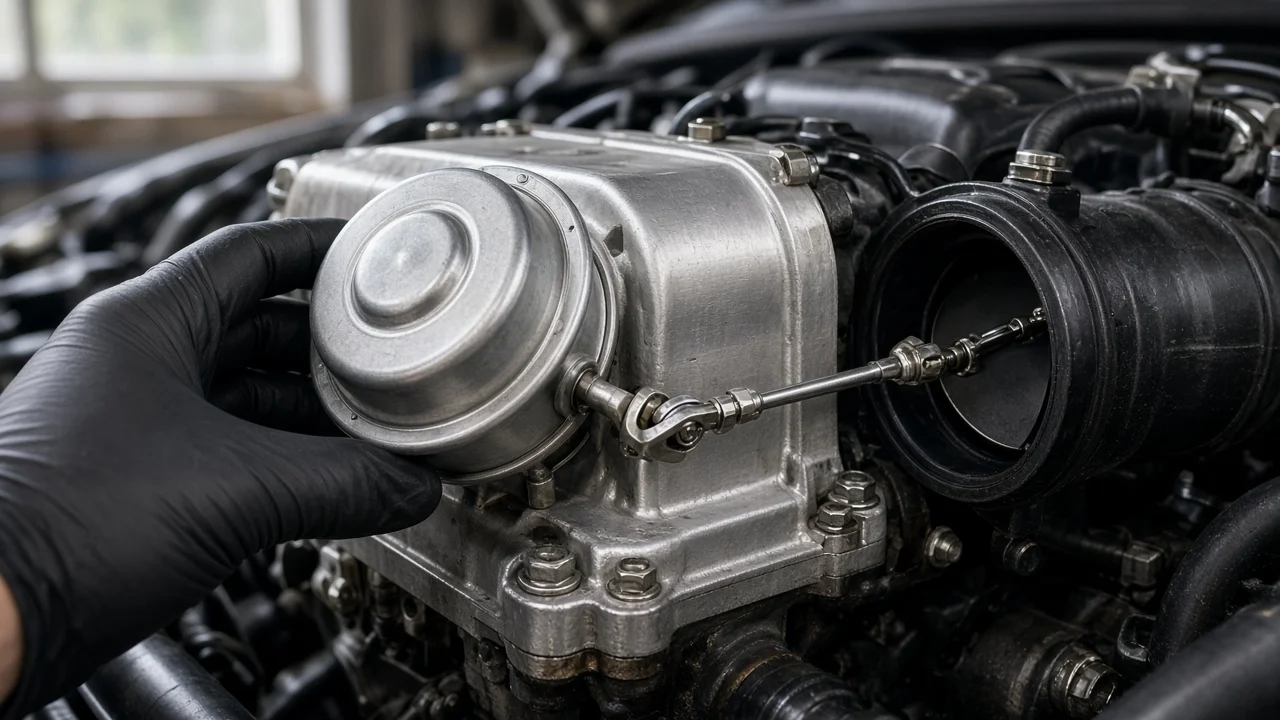
The bypass valve on an Eaton M90 supercharger lets air recirculate around the rotors when boost is not needed, such as at idle and light cruise, and closes when you ask for power. When it sticks, leaks or loses its vacuum signal, the engine can feel flat, idle poorly or behave inconsistently. This guide explains how to recognize the symptoms, sort out competing causes and check the valve in a logical order before buying parts.
Establish the symptoms
Start by writing down exactly when the problem appears. Note whether it shows up at cold start, at warm idle, during steady cruise or only under hard acceleration. A bypass fault usually ties itself to a specific load condition, so the timing matters more than a general complaint that the car feels slow. Record whether the check engine light is on and save any stored codes before anyone clears them, along with freeze-frame data if your scan tool shows it.
Associated signs help narrow things down. Listen for a hiss near the supercharger inlet or throttle body, which can point to a vacuum leak at the actuator or its hose. Pay attention to a weaker pull than usual at wide-open throttle, a change in supercharger noise, surging at idle or an idle that hunts up and down. Finally, list recent changes: intake or plenum work, a pulley swap, a new air filter housing, spark plug service that required removing parts near the supercharger, or any repair where vacuum lines may have been disturbed. Recent work near the blower is one of the most common reasons a previously healthy bypass system starts misbehaving.
Distinguish plausible causes
A bypass valve stuck open lets boost escape back to the inlet, so the engine loses power mainly under load while idle and cruise may feel normal. If low power appears only when you would expect boost, and the idle is smooth, that pattern supports an open or partially open valve. The same symptom can also come from a slipping supercharger belt, a restricted air filter or intake, a weak fuel supply, or a boost leak at the intercooler or plenum joints, so a power complaint alone does not prove the bypass is at fault.
A torn actuator diaphragm or cracked vacuum hose creates an unmetered air leak. That tends to show up as a rough or high idle, lean-related codes or positive fuel trims that improve as engine speed rises. Because many other vacuum leaks produce the same picture, a lean condition supports the bypass only if the leak can be traced to its actuator or hose. A valve stuck closed behaves differently: the supercharger keeps working against a closed throttle at idle and cruise, which can bring extra intake heat, more noise and sometimes surging, while full-throttle power may stay strong.
Mechanical binding is the third possibility. The butterfly plate, its shaft or the linkage between the actuator and the plate can stick from carbon, oil residue or wear, so the valve moves slowly or only partway. Intermittent symptoms that change with temperature support binding more than a hard failure. Keep in mind that M90 units are used on more than one engine family, and actuator design, hose routing and mounting differ between them, so match every observation to your exact vehicle configuration.
Checks in a useful order
Begin with safe observations that need no special tools, done with the engine off and cool. Locate the bypass actuator and trace its vacuum hose to its source. Look for cracks, a hose that has slipped off, brittle rubber at the bends, oil soaking or a fitting broken during earlier work. Check that the actuator rod is attached to the valve lever and that nothing is bent or disconnected. Inspect the supercharger belt for glazing, cracks and correct routing, and confirm the air filter and inlet ducting are not restricted or loose.
Next come tests that need tools. A hand vacuum pump connected to the actuator shows whether the diaphragm holds vacuum and whether the rod moves smoothly through its travel and returns when vacuum is released. A smoke machine can locate leaks around the actuator and hose that are too small to hear. A scan tool reading short-term and long-term fuel trims at idle and at higher engine speed helps confirm whether a leak is present. Use the values in the manufacturer specifications for your engine rather than numbers from forums, because acceptable vacuum, travel and trim ranges depend on the application.
Some steps are better left to a qualified technician: road testing with a boost gauge or data logging under load, removing the throttle body or inlet to inspect the bypass plate directly, and any disassembly of the supercharger itself. Driving at wide-open throttle to reproduce a symptom must be done legally and safely, ideally with a second person watching instruments.
Interpret the findings
A cracked or disconnected hose explains a vacuum leak and can also prevent the valve from opening at idle, but it does not prove the actuator is healthy. Replace or reconnect the hose, then recheck idle quality and fuel trims. If the actuator fails to hold vacuum on the hand pump, the diaphragm is leaking and the actuator is the confirmed fault. If it holds vacuum but the rod moves stiffly or does not return, the problem may be in the plate, shaft or linkage rather than the diaphragm, and the valve body needs inspection before parts are ordered.
If the actuator holds vacuum, moves freely and the hose is sound, the bypass is less likely to be the cause, and attention should move to belt condition, boost leaks, intake restriction, fuel delivery or ignition. Normal readings at idle do not rule out a fault that only appears when hot or under load, so a logged road test may still be needed. Before replacing anything, confirm that the observed failure matches the original symptom pattern, and check the service history to see whether the same part was replaced recently, which can point to a routing error or an underlying problem.
Urgency and next action
A bypass fault by itself is usually a drivability problem rather than an immediate safety hazard, but some signs mean you should stop driving and arrange inspection. These include a flashing check engine light, severe misfires, a burning smell, loud new noises from the supercharger, a shredded or slipping belt, or warning lights for overheating or charging. A large vacuum leak can also lean out the mixture under load, so avoid hard acceleration until the cause is known. No safe remaining mileage can be promised for a car with an undiagnosed fault.
When booking a repair, give the shop the engine and model year, the exact conditions in which symptoms occur, stored codes and freeze-frame data, fuel trim readings if you took them, and the results of your hose and actuator checks. Mention any recent work near the supercharger and share the service history. Ask the technician to confirm the failed component before replacement and to follow the maintenance schedule and operating conditions guidance for your vehicle rather than a generic interval.