LT4 Supercharger Bypass Valve: Identification and Checks
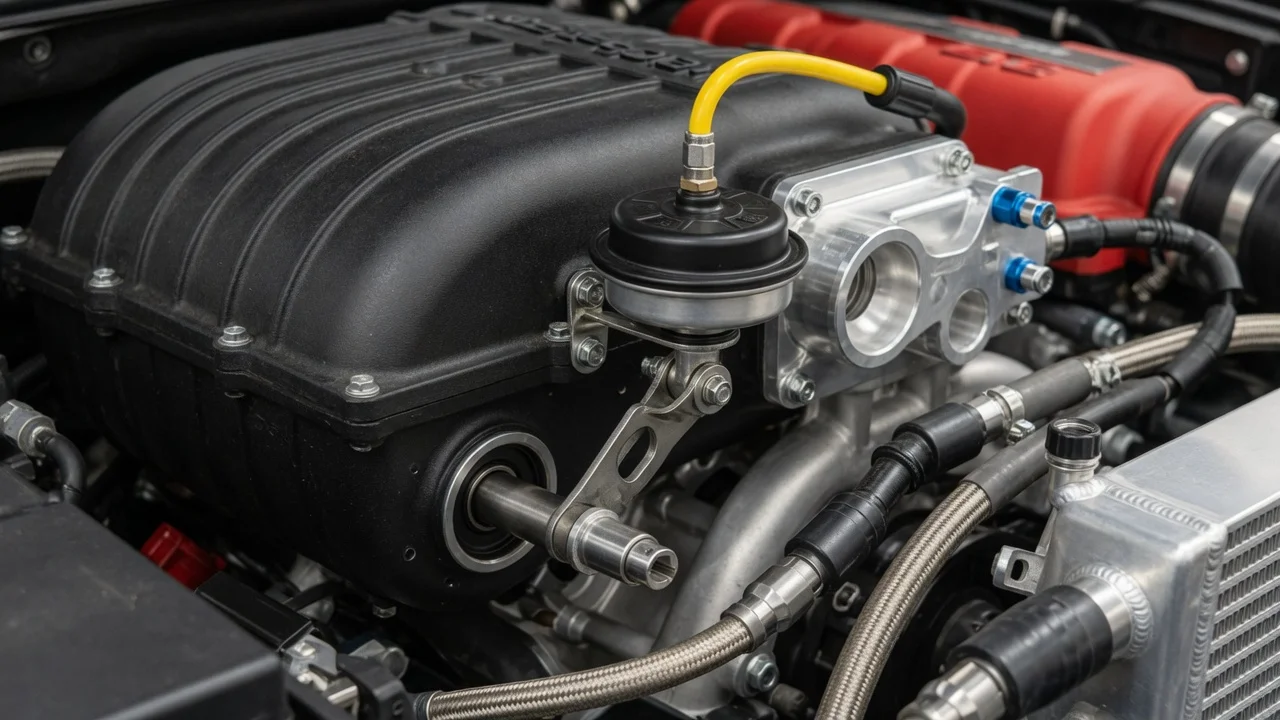
The bypass valve on an LT4 supercharger lets intake air recirculate around the rotors when boost is not needed. It closes under load so the supercharger can build pressure. When the valve sticks, leaks or loses its actuator signal, the symptoms can look like several other boost and air-metering problems. This guide covers how to describe the fault, which causes compete with the valve, which checks to run in what order, and how to read the results before buying parts.
Establish the symptoms
Start by writing down exactly when the problem appears. Note whether it happens at idle, at light-throttle cruise, during the transition into boost or at wide-open throttle. Also note whether it changes with engine temperature, intake air temperature or hot weather. A bypass valve that stays open tends to show up under load as weak acceleration or less boost than the car used to make. A valve that stays closed or responds slowly is more likely to cause trouble at part throttle, such as surging, unexpected boost, a hotter intake charge or poorer fuel economy. A leaking actuator or control line can also affect idle quality.
Record the associated signs and recent changes as well. Useful details include any check-engine light, stored trouble codes and freeze-frame data, new noises from the supercharger area, whistling or hissing, and whether the change came on suddenly or gradually. Recent work matters too. A pulley swap, a calibration change, intake or intercooler service, or any job that disturbed the supercharger lid or nearby hoses can explain a new symptom. Note your vehicle configuration, including model, model year, transmission and modifications, and keep the service history alongside these notes.
Distinguish plausible causes
The valve itself can bind from carbon or oil residue, its shaft or blade can wear, or its linkage can come apart. The actuator that moves it can fail internally. The control path can also be interrupted by a split or disconnected line, a damaged connector or a control fault, depending on how the actuator is operated on your vehicle. Three observations support the valve as the cause: symptoms differ between part throttle and full throttle in a consistent way, the actuator does not move when it should, or the linkage is visibly loose or detached.
Several other faults produce similar complaints. Boost leaks at couplers, the throttle body, the intercooler cores or the supercharger lid seals reduce boost much like an open bypass does. The LT4 uses an air-to-water charge cooling system. A weak intercooler pump, low coolant in that circuit or a restricted heat exchanger raises intake temperature, and the engine control may then reduce timing, which feels like lost boost. A faulty manifold pressure or intake air temperature sensor, fuel delivery limits, knock-related timing retard and calibration problems after a tune also belong on the list.
Some observations weaken the bypass valve theory. If idle and part throttle feel normal and power drops only after repeated hard runs or in hot weather, heat soak or the charge cooling circuit is more likely. If a smoke test finds a leak, repair it before judging the valve. If trouble codes point to a specific sensor circuit, check that circuit before suspecting a mechanical component.
Checks in a useful order
Begin with checks that need no tools and carry little risk. With the engine off and cool, use the service information for your vehicle to locate the bypass actuator and valve on the supercharger assembly. Inspect the line or electrical connector feeding the actuator, the linkage between the actuator and the valve shaft, and the surrounding couplers and clamps. Look for cracked or collapsed hoses, a disconnected link, oil residue around joints and signs of previous tampering. Check the charge cooling reservoir level as described in the owner's manual, then listen for hissing with the engine idling.
Next, read stored and pending trouble codes with a scan tool and save the freeze-frame data. If the tool shows live data, compare manifold pressure and intake air temperatures at idle and at steady cruise. Where the tool offers a bypass valve command or position parameter, record that too. Collect data under load only on a dynamometer or through a technician in a controlled setting, never by experimenting on public roads.
Tests that need tools and specifications come after that. If your vehicle's actuator is vacuum-operated, a hand vacuum pump can show whether it holds vacuum and moves the linkage through its full travel without sticking. If it is electrically controlled, its circuit and command are tested with a capable scan tool and wiring diagrams. A smoke test of the intake and boost path, inspection of the valve blade, and any work that requires removing intake or supercharger components are jobs for a qualified technician working from manufacturer specifications.
Interpret the findings
An actuator that holds vacuum or responds to its command and moves the linkage smoothly shows that the actuator and link are working. It does not prove that the valve blade seals or rotates freely inside its bore. A torn diaphragm, a broken link or no movement when commanded is direct evidence against the actuator assembly. Even then, rule out a missing control signal before replacing it.
Data results need care. Lower boost than expected on a stock vehicle points toward an open bypass path or a leak, but only after the sensor readings have been checked for plausibility. One simple check is to compare manifold pressure with barometric pressure with the engine off. High intake temperatures with normal boost shift attention to the charge cooling system. On a modified car, expected boost depends on the pulley, the calibration and the operating conditions, so compare readings against that setup rather than stock behavior.
Before ordering parts, confirm that the finding explains every recorded symptom. If you found and repaired a leak, retest before concluding the valve is also faulty. If nothing abnormal turned up but the symptom remains, the next step is a structured diagnosis rather than replacing the valve or actuator on suspicion. Base replacement on diagnosis rather than an assumed interval, and consult the maintenance schedule for your specific vehicle.
Urgency and next action
Stop driving and arrange an inspection if any of these appear: a flashing check-engine light, knocking or pinging under load, abnormally rising temperature readings, a fuel smell, smoke, or grinding, rattling or sudden new noise from the supercharger. A bypass valve fault on its own mostly shows up as a change in drivability and performance. These other signs can indicate conditions that damage the engine or catalytic converters, so avoid hard driving until the cause is known.
Give the shop or dealer the following: • the VIN, model year, mileage and transmission; • a list of modifications, including pulley and calibration changes; • recent service history; • trouble codes with freeze-frame data; • your notes on when the symptom occurs; Saved data logs and photographs of damaged hoses or linkage also help. Ask for a diagnosis that covers the complete boost and charge cooling path. Before authorizing parts replacement, check whether any service bulletins or warranty coverage apply to your vehicle.