LT4 Engine Problems: What Owners and Buyers Should Know
The short answer
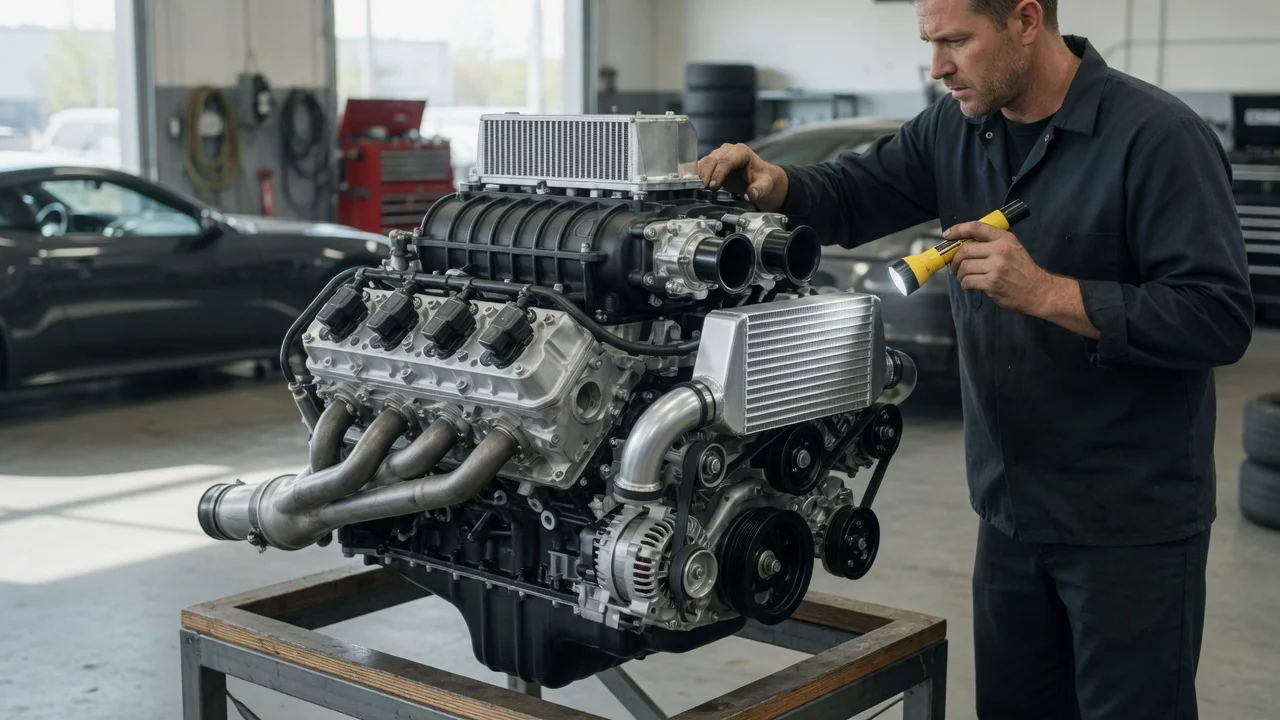
The LT4 is General Motors' supercharged 6.2-litre V8 from the fifth-generation (Gen V) small-block family. It is not widely regarded as a fragile engine. The concerns raised most often are heat management under sustained hard use, especially in early Corvette Z06 track driving; intake-valve deposits typical of direct-injection engines; possible wear in the cylinder-deactivation hardware; and higher risk once boost or tuning is increased beyond factory settings. How much any of these matters depends on the vehicle, model year, cooling hardware and how the car is driven.
This article does not draw on any supplied failure-rate data, recall lists or service bulletins for the engine. It cannot say how common any problem is, and it does not rank the issues by frequency. Treat it as a guide to which areas deserve attention, not as a reliability statistic.
Which engine this covers
The LT4 name has been used twice by GM. This article covers the modern supercharged Gen V LT4. An earlier, unrelated LT4 was a naturally aspirated 5.7-litre V8 offered in the 1996 Corvette. Its issues are not addressed here. The C8 Corvette Z06 uses the LT6, a different flat-plane-crank engine, so reports about that car do not apply to the LT4 either.
The supercharged LT4 combines direct fuel injection with an Eaton R1740 TVS positive-displacement supercharger and an air-to-liquid intercooler. Factory output varies by application. The figures below are commonly published ratings and may differ by market or model year.
Vehicle | Approximate model years | Published rating; Chevrolet Corvette Z06 (C7) | 2015–2019 | 650 hp, 650 lb-ft; Chevrolet Camaro ZL1 | 2017–2024 | 650 hp, 650 lb-ft; Cadillac CTS-V | 2016–2019 | 640 hp, 630 lb-ft; Cadillac CT5-V Blackwing | 2022 onward | 668 hp, 659 lb-ft; Cadillac Escalade-V | 2023 onward | 682 hp, 653 lb-ft
Heat management and reduced power on track
The best-known LT4 complaint involves heat during sustained high-load driving, most visibly in early C7 Corvette Z06 models used on track. Owners and media reported that coolant, oil or intake-air temperatures could climb high enough that the engine computer cut power to protect the engine, sometimes within a few laps. The packaging is part of the explanation. A supercharger sitting in the valley of the engine, with an intercooler beneath a low hood, leaves limited room for heat to escape.
In the United States, a class-action lawsuit was filed over overheating claims on Z06 cars, and GM made running changes to cooling-related hardware in later production. This article cannot confirm the details of those changes, which model years they cover, or how the litigation ended. If a specific car's cooling configuration matters to you, confirm it through its build records or a GM dealer.
In normal road driving, protective power reduction is not generally reported as a problem. The concern centres on repeated full-throttle use with little chance to cool down. Track and drag-strip use, hot weather and added boost all make it more likely.
Direct-injection intake-valve deposits
The LT4 sprays fuel directly into the cylinders rather than into the intake ports. Port injection lets fuel wash over the back of the intake valves. Without it, oil vapour from the crankcase ventilation system can bake onto the valves over time. This carbon buildup is a known characteristic of direct-injection engines in general. As it builds, it can affect airflow, idle quality and drivability.
Whether the LT4 suffers more than other direct-injection engines is not established here. Some owners fit an aftermarket oil catch can to reduce oil vapour reaching the intake. Opinions differ on how much that helps, and it is not a factory requirement.
Cylinder deactivation hardware
Like other Gen V small-blocks, the LT4 uses GM's Active Fuel Management cylinder deactivation in at least some applications. The system shuts down half the cylinders under light load to save fuel. It relies on special collapsible hydraulic lifters. Lifter failures linked to cylinder deactivation are a documented concern across GM's Gen V V8s, especially truck engines. This article has no evidence on how often they occur in the LT4 specifically. A persistent ticking from the valvetrain, a misfire code tied to a particular cylinder, or rough running in four-cylinder mode would warrant professional inspection rather than assumption.
Transmission issues that can be mistaken for engine trouble
Many automatic LT4 cars use GM's 8L90 eight-speed transmission. That gearbox has been the subject of widely reported torque-converter shudder complaints, which GM addressed through a service procedure involving a revised transmission fluid. Shudder at steady cruising speeds is often a transmission matter rather than an engine fault. The applicable bulletin and affected model years should be confirmed with a dealer. Ten-speed automatics used in some later LT4 vehicles are a separate design and are not covered by this point.
Risks that rise with modification
The LT4 is popular with tuners because a smaller supercharger pulley and a recalibration can add substantial power. Higher boost raises cylinder pressure, intake-air temperature and load on the fuel system, including the high-pressure pump that feeds the direct injectors. Running lean, detonation (uncontrolled combustion that hammers the pistons), and heat-related power reduction all become more likely when power is raised without matching upgrades to fuelling and cooling. Modified engines may also face warranty disputes. Treat any claimed safe power level as specific to that particular build and tune, not as an engine-wide rule.
Practical points for owners and buyers
Confirm the exact vehicle, model year and engine, since cooling hardware and calibration differ between the Corvette, Camaro and Cadillac applications. Ask whether the car has been tracked, tuned or fitted with a smaller supercharger pulley, and request records of any work. Check service history for regular oil changes using the oil grade GM specifies for that vehicle. Have a dealer check for open recalls and applicable service bulletins on the specific VIN. On a test drive, note any valvetrain ticking, rough idle, misfire warnings, power reduction under load or shudder at steady speed, and have a qualified technician investigate before buying. Treat a stored fault code as a starting point for diagnosis, not as proof that a particular part has failed.
Gaps in the available evidence
No independent failure-rate data, warranty-claim figures, recall records or manufacturer service bulletins were available for this article. The issues described reflect commonly reported concerns and general engineering characteristics of supercharged direct-injection engines, not measured reliability results. For a purchase or repair decision, a VIN-specific dealer history check and an inspection by a technician familiar with GM performance V8s will tell you far more about one car than any general summary.