LS1 Coolant Temperature Sensor Resistance Test: A Practical Guide
What the LS1 coolant temperature sensor does
The LS1 coolant temperature sensor (often abbreviated CTS) is a negative temperature coefficient thermistor. As engine coolant warms up, the sensor's internal resistance decreases. The powertrain control module supplies a reference voltage through a pull-up circuit and reads the changing voltage drop across the thermistor, then converts that signal into a temperature value used for fueling, ignition timing, idle speed, and cooling fan strategy.
Typical resistance values
Documented GM two-wire coolant temperature sensor data is often presented as a table. The following values are commonly cited for the LS1-style sensor and similar GM engine management sensors; exact specifications can vary by model year and calibration, so the table is best used as a diagnostic baseline rather than an absolute pass/fail standard.
Temperature | Approximate resistance; 14°F (-10°C) | 9,000 to 10,000 ohms; 32°F (0°C) | 5,700 to 6,000 ohms; 50°F (10°C) | 3,700 to 3,900 ohms; 68°F (20°C) | 2,400 to 2,600 ohms; 86°F (30°C) | 1,600 to 1,800 ohms; 104°F (40°C) | 1,100 to 1,300 ohms; 140°F (60°C) | 560 to 640 ohms; 176°F (80°C) | 300 to 350 ohms; 212°F (100°C) | 160 to 200 ohms
How to test the sensor
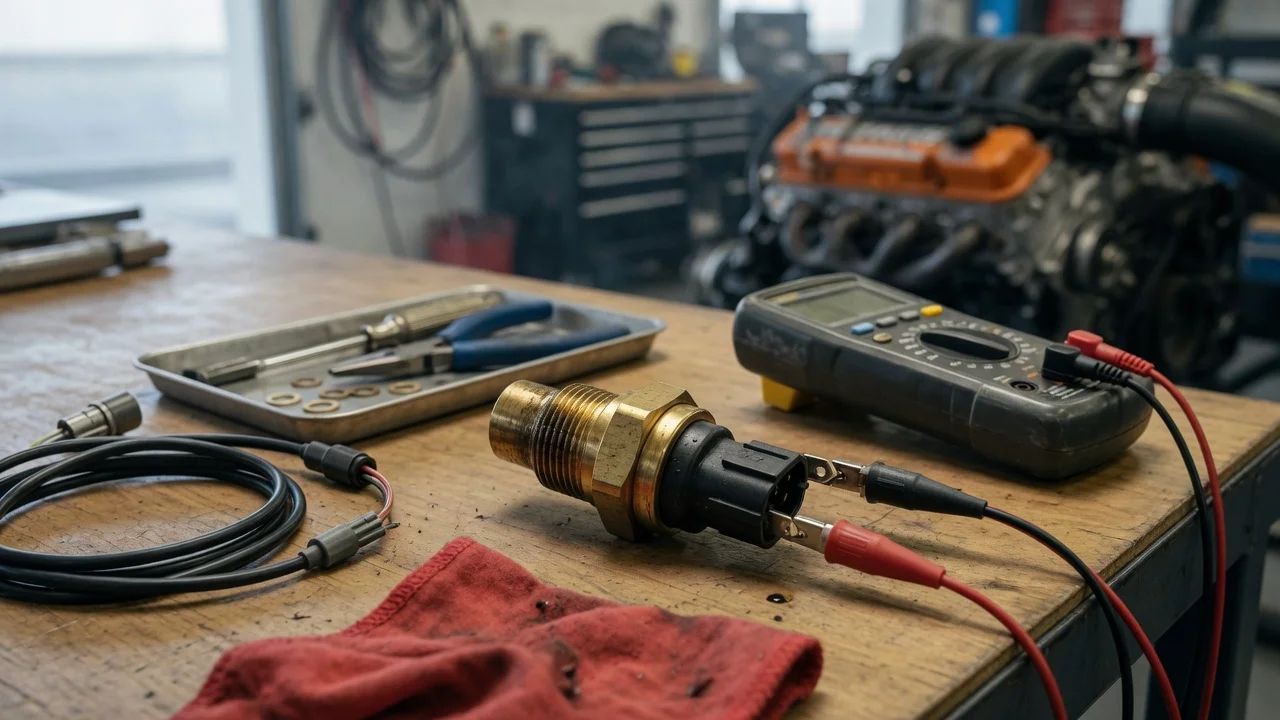
Disconnect the sensor connector and set a digital multimeter to the ohms scale. Measure across the two sensor terminals. At room temperature with the engine fully cooled, a healthy sensor commonly reads in the low thousands of ohms. A reading that is open, shorted to ground, or far outside the expected temperature curve suggests a failed sensor.
For a more complete test, remove the sensor and suspend the probe end in water while monitoring resistance and a thermometer. Heat the water gradually and confirm that resistance falls smoothly as temperature rises. Sudden jumps, erratic readings, or a value that stays fixed indicate a bad thermistor. This bench method tests the sensor itself and avoids relying on the vehicle's gauge or scan tool display.
Sensor location on the LS1
On the LS1, the primary coolant temperature sensor used by the powertrain control module is typically located in the driver-side cylinder head, near the number one exhaust port. Many vehicles also have a separate gauge sender, so do not assume the connector by the thermostat housing is the sensor the engine computer uses. Confirm the correct component by tracing the wiring or checking the applicable service information for the specific vehicle application.
Symptoms of a failing CTS
A faulty coolant temperature sensor can cause hard cold starts, rich or lean running, poor idle control, elevated fuel consumption, or cooling fans that run excessively. Because the sensor influences cold-start enrichment, a sensor that reads colder than actual temperature may cause persistent overfueling, while a sensor reading hotter than actual temperature may lean the mixture more than intended.
Interpreting results with a scan tool
After an overnight cold soak, a scan tool should display coolant temperature close to ambient or intake air temperature. During warmup, the value should climb steadily without dropping or freezing. If the scan tool reading is plausible but resistance testing shows the sensor is out of range, inspect the connector, wiring, and reference circuit before replacing the sensor, since an open or shorted harness can mimic a thermistor failure.
Qualification and gaps
Resistance curves for LS1 sensors are not identical across every 1997-2004 application, and aftermarket sensors may not follow the original equipment curve exactly. Where precise diagnosis is required, use the manufacturer's chart for the specific year and calibration. The values above are supported general reference values rather than measurements from a specific test vehicle.