LS Oil Pressure Sensor Adapter: Adding a Gauge to LS1 and Later Engines
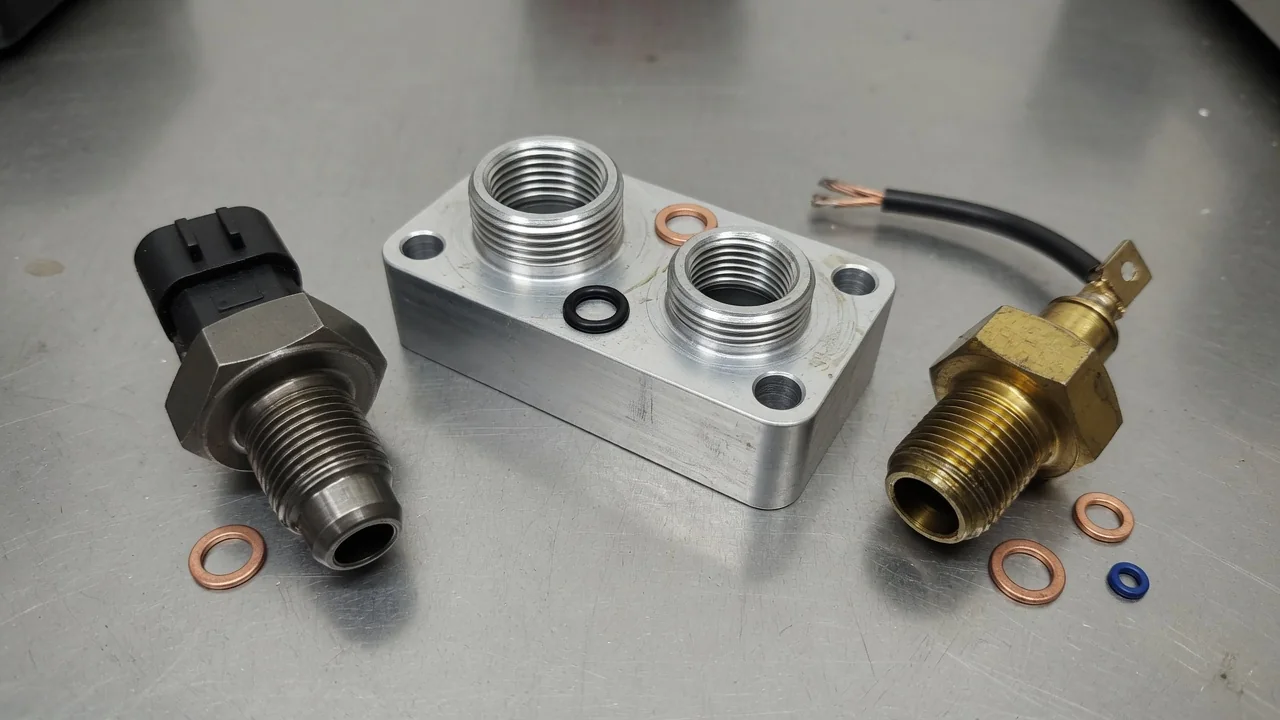
An LS oil pressure sensor adapter is a mechanical fitting used when an LS1 or later engine needs an aftermarket oil pressure gauge while the factory oil pressure sender stays connected. LS-swap and C5 Corvette owners typically use an LS oil pressure adapter to add a second pressure connection, not to change how the oil pressure signal is generated. Fitment starts with the engine, installed port, factory sensor, and intended gauge.
Define the Gauge Setup Before Choosing an LS Adapter
A dual-port adapter is the usual way to keep the factory oil pressure sender on an LS engine while adding a mechanical takeoff for an aftermarket gauge. One outlet receives the factory sensor so the original oil pressure signal can continue to the instrument cluster or engine controller. The other outlet supplies oil pressure to a gauge line or an aftermarket gauge sender. That arrangement is a plumbing decision. The adapter itself does not convert voltages, rescale a sender, or make two different gauges share one electrical circuit.
Treat the engine family, the hardware already in the oil pressure port, the factory oil pressure sender, and the intended gauge as four separate fitment inputs. An LS1 oil pressure sensor adapter that matches one combination may not match a later LS block, a relocated sender, or a previously installed fitting. Record whether you need a mechanical gauge line, an electrical aftermarket gauge sender, or both. Confirm that the oil pressure sensor adapter only provides a mechanical connection. Gauge compatibility still depends on the sender range, wiring, and the instrument itself.
Verify LS1 Port Threads and Sealing Requirements
Before installing any LS oil pressure sensor adapter, verify the threads actually present on the engine and on the factory sensor. LS1 and later engines are often swapped, restamped, or previously fitted with aftermarket hardware, so catalog descriptions for a stock engine may not describe the port in front of you. Use application-specific documentation for that engine, sensor, and any bushing already installed. Male and female threads, thread diameter and pitch, and whether the connection is straight or uses tapered pipe threads must be identified independently rather than assumed from another LS installation.
Each connection has a specified sealing method that must be followed rather than improvised. A straight-thread oil port may rely on a sealing washer or an O-ring, while tapered pipe threads may call for an approved thread sealant and no washer. Mixing those methods can leak or damage the port. A fitting that starts into a hole does not prove matching diameter, pitch, or thread form. If the threads cannot be identified with certainty, stop and have a qualified technician inspect the port before any LS oil pressure adapter is assembled.
Match the Adapter Outlets to the Gauge and Factory Sensor
Write down the inlet and each outlet on the oil pressure sensor adapter, including thread type, size, and sealing method, then match those notes to the factory sensor and to the aftermarket gauge sender or line. Dual-port adapters are not interchangeable just because they occupy the same engine port. An electrical gauge still needs a sender whose oil pressure signal matches that gauge's requirements. Keeping the factory oil pressure sender in place preserves the original circuit; it does not make an unrelated aftermarket instrument read correctly from that same sender.
Confirm that the adapter, hose, and fittings are intended for engine oil service under the temperatures and pressures of the application. Fuel, coolant, or generic air fittings are not a substitute. When the aftermarket gauge instructions require sender grounding, follow those instructions rather than assuming the engine block will complete the circuit through painted or anodized hardware. Sealing choices must also follow the same documentation. A sealing washer, O-ring, or thread sealant used on the wrong thread form can isolate a ground path or allow oil to escape at the connection.
Account for C5 Corvette Sensor Access and Clearance
A C5 Corvette oil pressure sensor sits in a tight bay where accessory brackets, exhaust, and wiring already compete for space. Verify the model year, the installed engine, the sensor connector, and nearby hardware before selecting an LS oil pressure sensor adapter. Added adapter height and the bulk of a second sender can push the assembly into a cover, harness, or heat source. Connector engagement and wiring slack also change when the factory sensor is raised or rotated. Clearance that looks adequate with the engine off can disappear once the engine is running and components expand.
Adding a gauge connection is not a diagnostic step for an existing oil pressure warning or an erratic cluster display on a C5 Corvette. An adapter does not prove whether the factory sensor, wiring, gauge, or actual oil pressure is at fault. If access restrictions prevent reliable identification of the port threads or inspection of the finished joints, have the work assessed professionally. A C5 Corvette oil pressure sensor that cannot be seen, supported, or fully seated after the adapter is installed is not a completed installation, even if a gauge needle moves.
Plan Adapter Placement and Sender Support
Map the space required for the adapter, both senders, electrical connectors, and later service access before any parts are installed. Stacked fittings that hang a heavy aftermarket gauge sender off the factory port concentrate leverage on a small pressure connection. Vibration and engine movement then work that joint, which can loosen threads or crack a fitting. Remote sender mounting reduces that cantilever when the second sender is supported independently. The factory oil pressure sender still needs a secure, leak-free seat on its own adapter outlet rather than being used as a brace for extra hardware.
A supported remote sender arrangement still has to be built from oil-rated hose, fittings, and mounting hardware, then located where heat and abrasion will not damage the line. Secure the sender body so its weight is not carried by the hose. Leave clearance for engine rock on its mounts, and route wiring and hoses away from belts, the exhaust, steering linkage, and the cooling fan. Recheck that path with the engine at full travel in its mounts. An LS oil pressure adapter only remains useful if both the on-engine connection and any remote line stay protected in service.
Check for Leaks and Interpret Readings Safely
After assembly, inspect with the engine off and cool. Look for oil residue at every joint, loose electrical connectors, and contact between the adapter stack and surrounding parts. Follow the application-specific assembly and tightening instructions for that LS oil pressure sensor adapter. Do not chase damaged threads with improvised repair, force a fitting that will not start square, or apply generic torque figures from an unrelated fastener. If a connection will not assemble as documented, the hardware is the wrong match or the port needs professional attention before oil pressure is applied.
An implausible gauge reading can come from the aftermarket gauge sender, wiring, gauge configuration, a restricted or leaking pressure connection, or actual engine oil pressure. The display alone cannot identify which of those is involved. If a low-pressure warning appears, pressure drops suddenly, oil is leaking, or the engine makes abnormal noise, shut the engine off safely and do not continue driving on the gauge reading. Have oil pressure confirmed with professional testing before further operation. An LS oil pressure adapter is only a connection; it does not certify that the lubrication system is healthy.