Low Tire Pressure: Causes, Risks, How Low Is Too Low and Whether to Drive
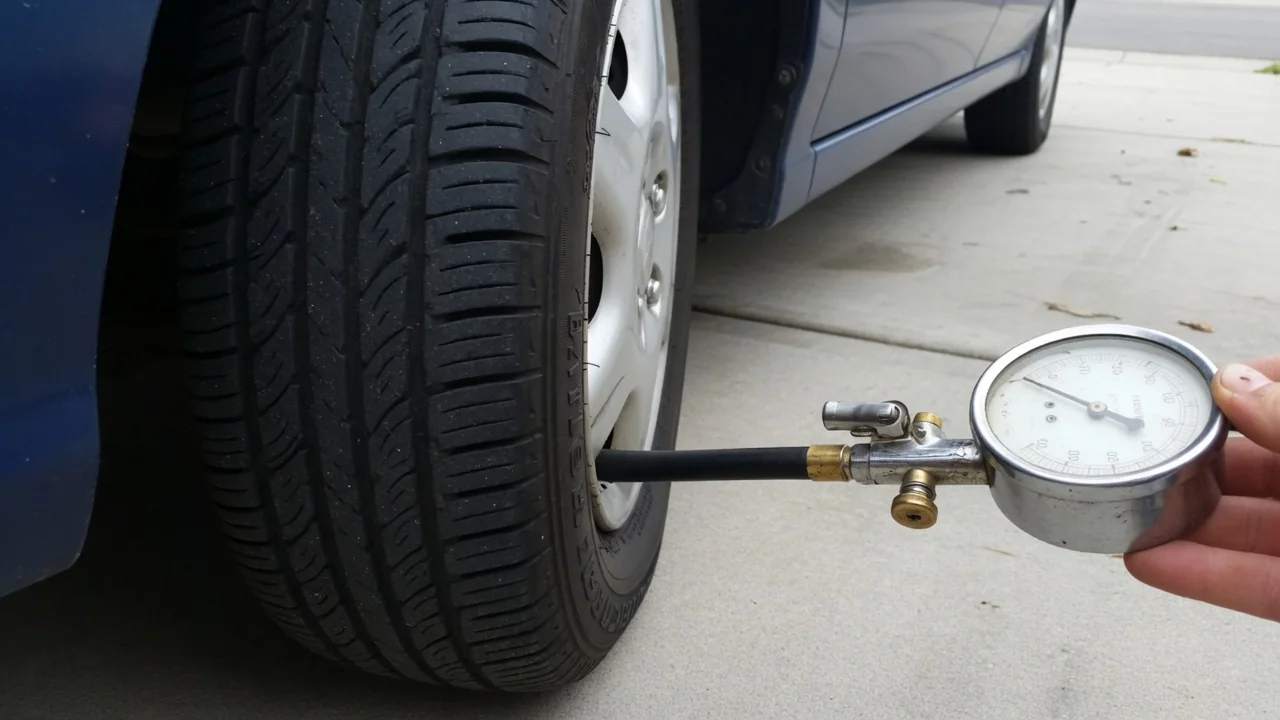
A low air pressure tire is easy to overlook until it changes how the car steers, stops, or wears its tread. Underinflation can come from slow seepage, temperature swings, or a real leak. The right response depends on how much pressure is missing and whether the tire is damaged. Here is how to confirm the problem, judge the risk, and decide what to do next.
Confirm Low Tire Pressure With a Gauge and the Vehicle Placard
Underinflation means a tire holds less air than the vehicle manufacturer specifies for its approved tire setup and intended load, measured cold. You can find that target on the tire placard, usually on the driver's door jamb, and in the owner's manual. Either may list different pressures for the front and rear axles or for heavier loads. The number molded into the tire sidewall is different. It is the maximum pressure the tire can safely contain, not the pressure your vehicle needs for proper handling, ride, and load support.
Checking requires a reliable tire pressure gauge because a radial tire can look nearly normal while missing a meaningful share of its air. Park on level ground away from traffic, remove each valve cap, press the gauge squarely onto the stem, and compare every reading with the placard. Cold readings are best taken before driving or after the car has sat for several hours. Driving warms a tire and raises its reading, so letting air out to match the cold specification leaves the tire underinflated once it cools.
Why Tires Lose Air or Keep Becoming Underinflated
Every tire loses some air over time because pressurized air slowly passes through the rubber, so pressure drifts downward even without damage. Temperature also matters. Air pressure falls as the outside temperature drops, which is why many drivers first notice low readings on cold fall mornings. Beyond that natural loss, air can escape through a tread puncture from a nail or screw, a worn or damaged valve stem or core, a bead seal weakened by corrosion or debris, or a cracked or bent wheel.
Patterns offer clues but not conclusions. When all four tires read similarly low after a cold snap or several weeks without a check, temperature and normal seepage are likely explanations. When one tire keeps dropping faster than the others, a localized leak becomes more likely, although slow leaks can affect more than one tire at once. Adding air restores pressure for a while but does nothing about the cause. A tire that keeps losing pressure needs a professional leak inspection to find where the air is escaping.
How Underinflation Affects Handling, Heat, and Tire Wear
Air pressure is what lets a tire carry the vehicle's weight. When pressure is too low, the sidewalls and tread flex more with every rotation, and that constant bending builds up heat inside the tire. Sustained heat can weaken the internal structure and the bond between the rubber and its reinforcing cords. Over time this can lead to tread separation or sudden failure, especially at highway speeds, in hot weather, or under heavy loads. The damage can develop inside the tire before anything shows on the outside.
A softer tire also changes how the car behaves. Steering can feel slower or vaguer, the car may lean or wander more in corners, and braking can feel less stable as the tread deforms under load. Rolling resistance goes up, which can hurt fuel economy. Over time, underinflation tends to wear down both outer shoulders of the tread, though alignment problems, hard cornering, and suspension issues can leave similar marks. Lowering pressure on purpose for a softer ride on ordinary roads gives up the load capacity and handling margin the specification is meant to provide.
How Low Is Too Low to Drive?
No single PSI marks the line between safe and unsafe for every vehicle. The correct pressure depends on the vehicle, its tire size and type, and how heavily it is loaded. How risky a low reading is depends on how far and how quickly the pressure has fallen and on the tire's condition. Any reading below the placard's cold pressure should be corrected. However, a gauge reading cannot tell you whether the tire has already been damaged by running soft.
Some conditions rule out further driving whatever the gauge says. These include a tire that looks collapsed or flat, a tire losing air quickly or audibly, a bulge or cut in the sidewall, exposed cords, and a sudden vibration, pull, or heavy steering. Any of these means the tire should not carry the car any farther. If a tire has been driven flat or badly underinflated, reinflating it proves little, because the internal damage behind later failures may not show on the surface. A tire professional should remove it from the wheel and inspect it.
Whether to Drive and How Far You Can Reasonably Go
No general rule says how many miles you can safely drive on a low tire or how fast. The answer depends on whether the tire is holding its remaining pressure, whether it is damaged, how much weight the vehicle is carrying, and any guidance that applies to that specific tire. The better approach is to fix the pressure before you leave. Inflate the tire to specification, check it again a little later to confirm it is holding, and look over the tread and sidewalls for damage before relying on it.
If a tire starts losing pressure while you are driving, or the car begins pulling, vibrating, or feeling unstable, ease off the accelerator gradually instead of braking hard. Keep the steering steady and avoid abrupt lane changes. Signal and move to a safe spot well away from traffic. If the tire cannot be safely inflated, will not hold air, or shows damage, call roadside assistance or switch to the spare as the owner's manual directs. Run-flat tires may allow limited driving, but only within the manufacturer's stated limits.
What to Do After Finding a Low Tire
Once you are safely parked, write down each tire's reading so you can compare them later and see which tire is losing air. In good light, check the tread and sidewalls for nails, screws, glass, cuts, or bulges, and check each valve stem for cracks or a missing cap. If something is stuck in the tread, leave it there. Pulling it out can turn a slow leak into a fast one, and a technician will want to see exactly where it went in.
If the tire looks sound, inflate it to the placard pressure with a reliable compressor or service-station air hose, following the equipment instructions, and confirm the result with your own gauge. Check again the next morning while the tires are cold. If the pressure has dropped again, the tire needs a leak inspection. A tire professional should decide whether a puncture can be repaired, since damage near the shoulder or in the sidewall usually cannot. They should also check suspected bead, wheel, or valve leaks and any tire that was driven while badly underinflated.