Lost Your Motorcycle Key? How to Get a Replacement When You Have No Spare
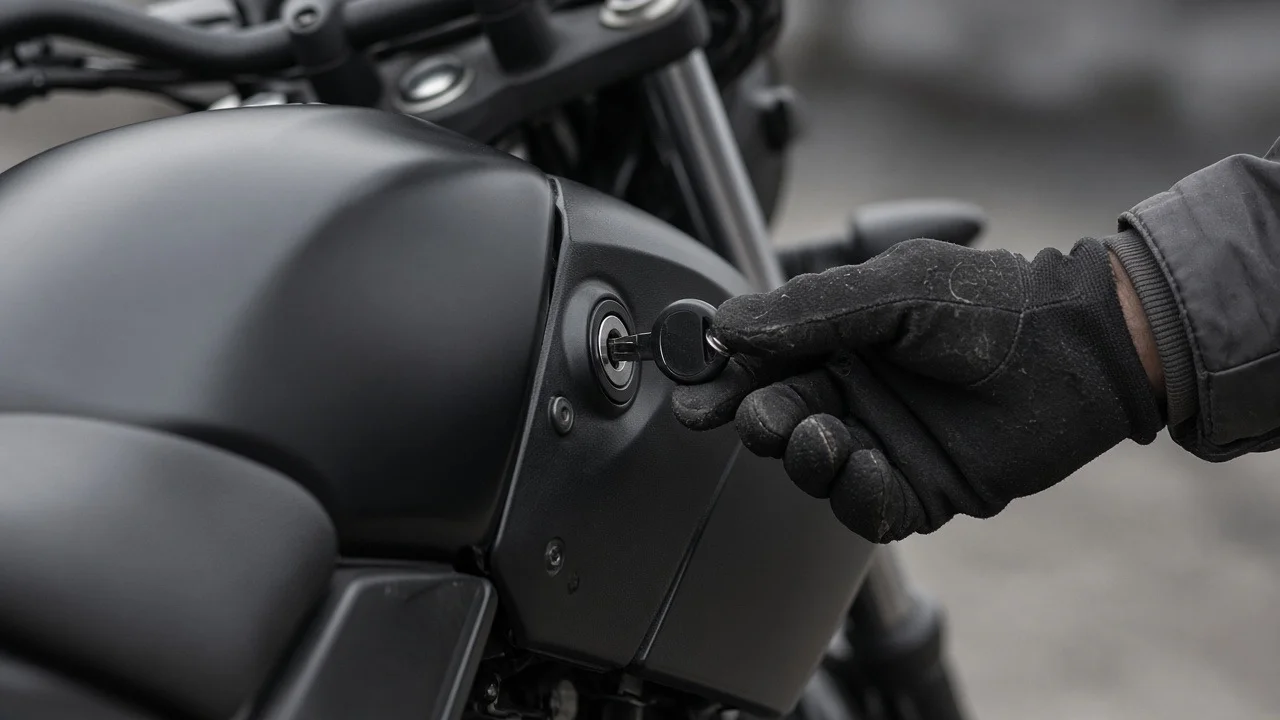
Losing a motorcycle key is usually fixable without replacing the whole ignition. In most cases a dealer or a locksmith who works on motorcycles can cut a new key, either from the bike's key code or by decoding the lock itself. How easy and how costly it is depends mainly on one thing: whether the key is a plain mechanical blade or contains a transponder chip that talks to an immobilizer. Plain keys are usually simple to replace. Chipped and smart keys can involve electronic programming, and losing every registered key on some immobilizer-equipped bikes makes the job harder.
The Short Answer
Confirm the key is truly lost: check jacket pockets, the helmet, saddlebags, the seat area and the place you last parked. Gather proof of ownership: the title or registration plus a government-issued photo ID that matches it. Find out what kind of key your bike uses: plain metal, transponder (chipped) or keyless smart fob. Look for the key code: it may be on a small tag that came with the original keys, in the owner's paperwork, or obtainable through a dealer using the VIN on some brands. Choose a provider: a franchised dealer for your brand, or a locksmith experienced with motorcycles. If the bike has an immobilizer, confirm the provider can program the new key, not just cut the blade. Once you have a working key, order a spare so this doesn't become an emergency again.
First, Identify What Kind of Key You Had
The type of key determines who can make the replacement and how involved the process is. If you no longer have the key to look at, the owner's manual, the dealer or a quick description of the bike's year and model usually settles it.
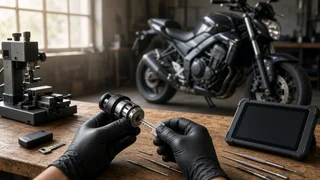
Mechanical keys: a metal blade cut to match the lock pins, with no electronics. These are common on older motorcycles and many smaller or budget models. A new one can be cut from a key code or by decoding a lock on the bike.
Transponder keys: the key head contains a small chip, and the motorcycle's immobilizer checks for a registered chip before allowing the engine to run. A correctly cut blade will turn the ignition, but the engine won't start unless the chip has been programmed to that bike. Many major manufacturers have used such systems on various models, though whether a given bike has one depends on the brand, model, model year and sometimes the market it was sold in.
Smart or keyless fobs: found on some newer motorcycles and scooters, these let you start the bike while the fob is nearby. Many still hide a mechanical emergency blade for the seat or fuel cap. Replacing a smart fob almost always requires programming with brand-specific or specialized equipment.
Proof of Ownership You'll Need
Reputable dealers and locksmiths won't make a key for a vehicle without evidence that it's yours, because a working key is essentially access to the motorcycle. Expect to show the title or current registration and a photo ID with a name that matches. Requirements vary by business and state, so ask when you call.
If the bike is financed, the lender may hold the title; your registration and loan paperwork usually serve instead. If you recently bought the bike and the title transfer isn't complete, bring the bill of sale and any temporary registration. When documents are missing entirely, replacing the title or registration through your state's motor vehicle agency may need to come first.
Finding the Key Code
A key code is an alphanumeric code that tells a key-cutting machine exactly how to cut the blade. Having it is the quickest route to a mechanical copy.
Key tag: many new motorcycles shipped with a small metal or plastic tag on the key ring bearing the code. Owners often keep it with the paperwork. Purchase paperwork: some dealers record the key code on sales documents or in the owner's manual. Dealer lookup: for some brands, a franchised dealer can retrieve the code from the VIN after verifying ownership. Not every manufacturer offers this, and older records may not be available. Lock markings: on some bikes, a code is stamped on the ignition cylinder, fuel cap lock or seat lock, sometimes visible only after removing a part. Practices differ widely between makes.
If no code can be found, a locksmith can often decode a lock directly, frequently from an easier-to-reach lock such as the seat, fuel cap or helmet lock if it shares the ignition key pattern. On many motorcycles these locks are keyed alike, but not on all of them.
Your Replacement Options Compared
Option | Best suited to | What to expect; Franchised dealer | Bikes still supported by the brand, transponder and smart keys | Brand-specific programming tools and key blanks; may require ordering parts and bringing the bike in; Motorcycle-capable locksmith | Mechanical keys, many transponder keys, bikes that can't easily be moved | Often mobile; can decode locks without a code; programming ability varies by shop and brand; Ignition or lock set replacement | Locks that can't be decoded, damaged cylinders, or immobilizer systems that can't be reset | More parts and labor; may leave other locks on a different key unless the full set is replaced
Prices vary by region, brand, key type and whether the bike needs transporting, so get quotes from more than one provider and ask what's included: the key blank, cutting, programming, any service call fee and labor.
When Every Key Is Lost on an Immobilizer Bike
This is the scenario where costs and complexity can rise most. On some immobilizer systems, adding a new key requires an already-registered key, sometimes a specific master key, to authorize the programming. If no registered key remains, the dealer may need special software, a reset procedure, or in some cases replacement of the immobilizer module, ECU or ignition assembly as a matched set. How a particular bike handles an all-keys-lost situation depends on the manufacturer and system generation, so ask the dealer or locksmith specifically about all-keys-lost programming for your exact year and model before committing.
Some locksmiths with motorcycle diagnostic equipment can handle all-keys-lost jobs on certain brands without replacing modules, which can make them worth calling even if the dealer's first answer is a parts replacement.
Getting the Motorcycle to the Key Maker
A locksmith may be able to come to you, which avoids moving a bike that won't start. If you need dealer service, the motorcycle typically has to be transported. Many bikes have a steering lock engaged when parked, making them difficult to roll, so a tow service with a motorcycle-appropriate trailer or wheel lift is the safer choice. Avoid forcing the ignition, drilling locks or bypassing wiring yourself: it can damage the switch or immobilizer and turn a key replacement into a larger repair.
Locks Beyond the Ignition
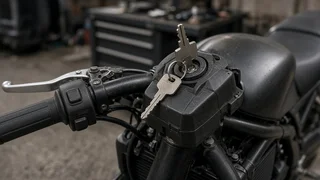
Motorcycles often use one key for the ignition, steering lock, fuel cap, seat, helmet lock and sometimes factory luggage. If you replace only the ignition cylinder, you may end up carrying separate keys for the other locks. When replacement rather than duplication is necessary, ask whether a matched lock set is available or whether a locksmith can rekey the remaining locks to the new key.
If the Keys Might Have Been Stolen
If you suspect someone else has your key, especially along with something that identifies the bike or your address, treat it as a security issue. A copied mechanical key, or a still-registered transponder key, could start the motorcycle. Ask the dealer or locksmith whether the lost key can be deleted from the immobilizer's memory, or whether the locks should be rekeyed or replaced. In the meantime, a disc lock, chain lock or secure parking adds protection.
Preventing a Repeat
Get at least one spare key made as soon as you have a working key, and store it somewhere separate from the bike. On immobilizer bikes, keep any master key or registration key in a safe place at home rather than using it daily. Record the key code and keep it with the title, not with the keys. Consider a key tracker or a secure, zipped pocket while riding.
Bottom Line
A lost motorcycle key with no spare is usually solved by having a new key cut from the key code or a decoded lock, then programmed if the bike uses a transponder or smart fob. Bring proof of ownership, identify the key type, and compare a dealer with a motorcycle-capable locksmith. Replacing the ignition is generally a last resort, most likely when locks can't be decoded or an immobilizer system can't be reset without a registered key.