Lost Camper or RV Keys: How to Get Replacements and Back on the Road
Lost camper keys are usually a solvable problem, but how easy it is depends on which keys are missing and what kind of RV you own. A towable camper, such as a travel trailer, fifth wheel, or pop-up, normally uses only mechanical keys for the entry door and storage compartments, so a locksmith or a replacement lock set can often fix the problem quickly. A motorhome adds a second, more involved layer: the chassis ignition key. On many newer motorhomes that key contains an immobilizer chip and may be paired with a remote transmitter, so a replacement must be cut and then electronically programmed to the vehicle, which typically requires proof of ownership.
The short answer
If you have lost keys to an RV, first identify each lock the missing keys operated. Entry door and compartment keys can usually be replaced by a locksmith who can cut a key from a lock code or decode the lock, or you can replace or rekey the lock cylinders yourself. A motorhome ignition key, especially a transponder key, usually needs a dealer for the chassis brand or an automotive locksmith with the right programming equipment. Expect to show your title or registration and a photo ID before anyone cuts or programs an ignition key. If the keys were lost somewhere they could be tied to your camper, rekeying or replacing the locks is the more secure choice than simply cutting copies.
Which keys an RV typically uses
Most RVs carry several different keys, and losing a key ring often means losing all of them at once. Knowing what each one does helps you decide who to call.
Key | Found on | What replacement usually involves; Entry door key | Towables and motorhomes | Mechanical key; cut from a code, decoded from the lock, or solved by replacing or rekeying the door lock; Deadbolt key | Many entry doors | Often separate from the door handle lock; same options as the entry door key; Compartment and baggage keys | Exterior storage doors on most RVs | Mechanical key; many compartment locks use common key codes, and cylinders are generally inexpensive to replace; Chassis ignition key | Motorhomes (Class A, B, C) | Cut to the chassis lock; on many newer chassis, also programmed to the immobilizer; Remote transmitter or key fob | Many motorhome chassis and some RV entry systems | Programmed to the vehicle or entry system; may be integrated with the ignition key; Accessory keys | Fuel doors, generator access, hitch or coupler locks, spare tire locks | Usually mechanical; sometimes easier to replace the lock than to source a key
First steps after losing the keys
Check for a spare: many owners keep a set in a tow vehicle, at home, or in a hidden lockbox outside the RV. Retrace your route and ask the campground office, fuel station, or store where you last had them, since lost keys are often turned in. If you are locked out, call your roadside assistance provider; many plans include lockout service, though coverage for cutting or programming a new key varies by plan. Gather your documents: title or registration, photo ID, and the vehicle identification number (VIN). Look for key codes: some lock faces, original key tags, purchase paperwork, or owner packets list the code needed to cut a new key. Note the chassis manufacturer and model year if you own a motorhome, because that determines who can supply and program the ignition key.
Replacing door and compartment keys
RV entry and storage locks are mechanical, meaning the key works purely by matching the pin or wafer pattern inside the cylinder, with no electronics involved. That gives you three practical routes.
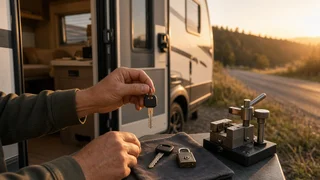
Cut by code: if you can find the key code stamped on the lock face or recorded in your paperwork, a locksmith or RV parts supplier may be able to cut a key from it. Decode or impression the lock: a locksmith can often work out the key from the lock itself, which is useful when no code is available. Replace or rekey the cylinders: compartment locks in particular are usually simple to swap, and entry door lock sets can be replaced as a unit. Rekeying changes the internal pins so old keys no longer work.
A security caveat applies to compartment locks: many RVs leave the factory with locks keyed to a small number of widely used codes, so a generic key may open storage doors on many other campers. If you are replacing those locks anyway, upgrading to unique-keyed or keyed-alike replacement cylinders improves security. Some owners also choose a keypad or keyless entry door lock, which removes the dependence on a physical door key entirely, though such systems still usually include a mechanical backup key.
Replacing a motorhome ignition key
The ignition key on a motorhome comes from the chassis maker rather than the RV builder. Class A motorhomes often sit on dedicated commercial or motorhome chassis, while Class B and Class C units are commonly built on van or truck platforms. That means the replacement process follows the chassis brand, not the name on the coach.
An immobilizer is an anti-theft system that only allows the engine to run when it detects a correctly coded chip in the key. If your chassis has one, a newly cut key may turn the ignition but will not start the engine until it has gone through key programming, the process of registering the new key's chip with the vehicle's computer. Whether a given motorhome uses an immobilizer depends on the chassis, model year, and market, so check your owner's documentation or ask the dealer or locksmith using your VIN.
Chassis dealer: a dealer for the chassis brand can typically look up the key by VIN, cut it, and program it. Motorhomes may need to be towed or driven to a service bay large enough for them, which is worth confirming in advance. Automotive locksmith: many locksmiths cut and program transponder keys and remotes on site, which can avoid towing. Confirm that they support your chassis and model year before they travel. All keys lost versus one key lost: some vehicles can add a key more easily when a working key is present; if every key is gone, programming may be more involved and, on some vehicles, may require dealer-level equipment.
Why proof of ownership is required
Dealers and reputable locksmiths ask for proof of ownership before cutting a VIN-based or programmed key because that key can start and move the vehicle. Typically this means a title or current registration in your name plus a matching photo ID. If the RV is financed, registered to a business, or owned by someone else, expect to provide additional paperwork or have the registered owner present. Keeping copies of these documents somewhere other than inside the RV makes a lockout far easier to resolve.
Rekey or just copy?
Cutting new copies is reasonable when the keys were clearly lost somewhere unconnected to the camper, such as on a hike far from your site. Rekeying or replacing locks makes more sense when the keys were lost at or near the campsite, carried a tag identifying the RV, or may have been stolen. For a motorhome with an immobilizer, a dealer or locksmith can often remove lost keys from the vehicle's memory during programming so they will no longer start the engine; ask for this if the originals may turn up in the wrong hands.
Preventing the next lockout
Keep a full spare set off the RV, plus a second set in the tow vehicle or a secure lockbox. Record key codes, the VIN, and lock brand details in a safe place along with photos of each key. Label keys discreetly by function rather than with your RV's name or campsite number. Consider keyed-alike replacement locks so one key covers the entry door and compartments. Review your roadside assistance plan to understand what it covers for lockouts and key replacement.