LMM Duramax Glow Plug Control Module Selection Guide
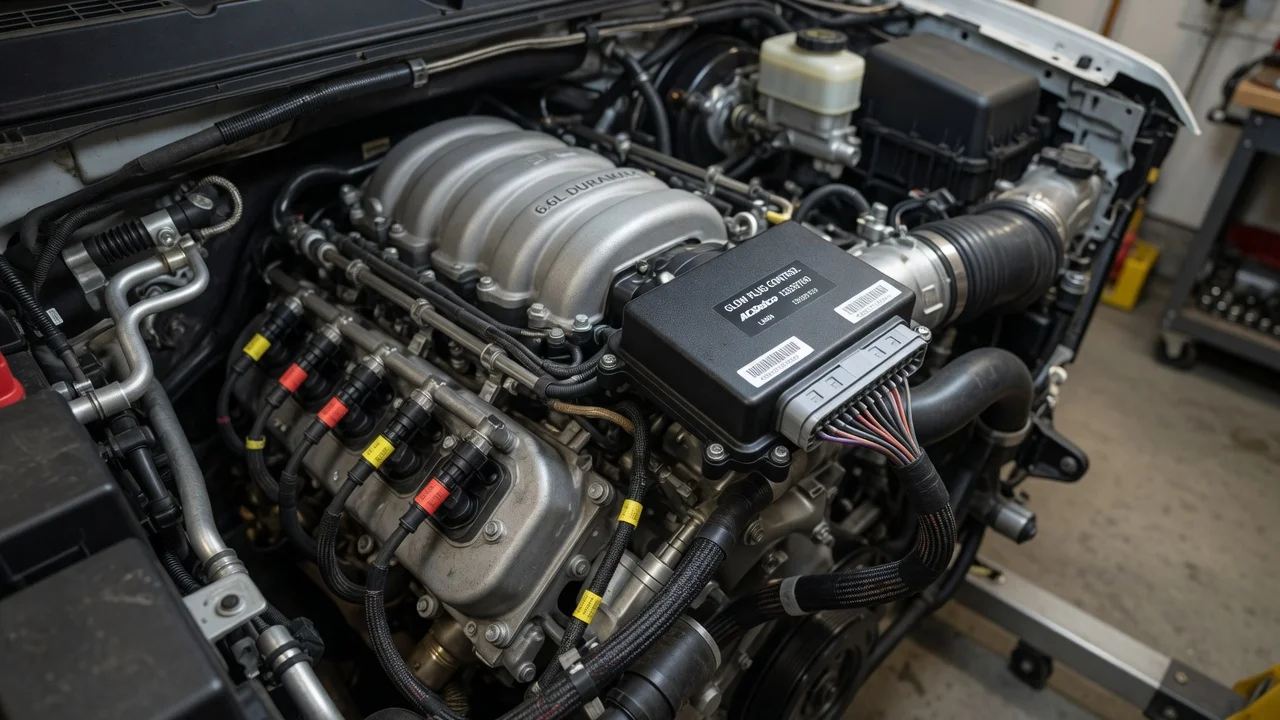
On an LMM Duramax, the glow plug control module decides when and how long the eight glow plugs heat before and after a cold start. When it fails, the truck may crank longer, idle rough, blow white smoke and set glow plug codes. This guide explains how to confirm the module is really at fault, match the correct part to your engine, and compare replacement options without paying for features you do not need.
Define the job the product must do
The module takes commands from the engine control module, switches power to each glow plug and monitors every circuit, reporting faults back so they appear as diagnostic codes. It handles pre-glow for starting and after-glow, which keeps combustion stable and reduces white smoke until the engine warms. How much you depend on it varies with climate and use. In a warm region, a failing module may show up only as a stored code and a slightly longer crank. In a northern winter, a daily driver or tow rig without a plugged-in block heater may not start reliably at all. That difference should shape how urgently you replace the unit and how much you spend.
Confirm the diagnosis before you buy. Codes P0671 through P0678 identify individual glow plug circuits. A single-cylinder code more often points to that glow plug or its lead, while several circuit codes at once, a module control code, or a lost-communication code shifts suspicion toward the module, its power feed or its ground. Check glow plug resistance and module supply and ground with a meter, following the service procedure for your truck. Also rule out fuel-side causes of cold hard starts. The CP3 high-pressure fuel pump draws fuel through the fuel filter, so a restricted or waxed filter, or air entering at the filter head, can starve it. On a scan tool, compare desired and actual rail pressure during cranking, and review injector balance rates, which serve the role fuel trim plays on a gasoline engine. In cold weather, gelled number 2 diesel can mimic an ignition-assist problem.
Treat the high-pressure side with respect. The rail and injection lines run at tens of thousands of psi with the engine running. Never loosen a high-pressure line to bleed the system or to look for leaks, and never feel for a leak by hand. A leak check should be visual, with the engine off and pressure allowed to bleed down as the service procedure describes. Anti-gel and cetane additives can help prevent winter fuel problems, but they do not repair a failed module, glow plug or injector.
Check compatibility
Start with the engine configuration. The LMM is the 6.6-liter V8 Duramax used from the 2007.5 to 2010 model years. A 2008 Duramax in a Silverado or Sierra HD is an LMM, but 2007 production was split between LBZ and LMM, so check rather than assume. The RPO label in the glove box lists the engine code. Do not treat LLY, LBZ or LML controllers as interchangeable just because the displacement matches. Connectors, mounting and communication with the engine computer can differ between generations.
The most reliable match is the OE part number, either from the label on your current module or from a parts counter lookup by VIN. Cross-check that number against any aftermarket or remanufactured listing. Inspect the vehicle harness connector for corrosion, broken locks or heat damage, because a new module will not fix a bad pigtail. Ask whether the unit is plug-and-play or needs any scan tool setup, and confirm with the seller if the listing is unclear. Finally, make sure the glow plugs are the type specified for the LMM, because the module is designed around their electrical characteristics.
Features that affect the choice
You will usually choose between a new GM or ACDelco module, a new aftermarket unit, or a remanufactured core exchange. The OE route costs more but removes most fitment doubt. Aftermarket and remanufactured units can save money if the seller documents the OE number they replace and states that individual cylinder fault reporting works with factory diagnostics. If that reporting is missing or unreliable, future glow plug faults become much harder to pin down.
Separate evidence from labels. Words like heavy duty, upgraded or performance mean little without specifics. Useful evidence includes the exact part number cross-reference, a clear warranty term, a stated core charge and return condition, a sealed connector interface, and a description of how a remanufactured unit was tested. Read the return policy closely, since many sellers refuse returns on installed electrical parts.
Limitations and ownership costs
A new module cannot repair open or shorted glow plugs, damaged plug leads, a corroded harness, weak batteries, or fuel delivery problems. The LMM uses two batteries, and slow cranking from a weak one can look like a glow plug issue on a cold morning. If one or more glow plugs have failed, budget for replacing them as well. Access to several plugs is tight, and a plug seized in the head can turn a simple job into a costly one, so plan the work or get a shop quote before you start.
Beyond the purchase price, account for any core deposit, a replacement pigtail if the connector is damaged, and dielectric grease for the connections. After installation, clear the codes, then confirm with a scan tool that no glow plug circuit faults return over several cold starts. Using a block heater in severe cold reduces strain on the whole starting system, but it is a supplement, not a substitute for a working module.
Build a practical shortlist
Before you order, run through this checklist. Is the engine confirmed as LMM from the RPO label or a VIN lookup? Do the glow plug resistance readings and module supply and ground checks support a module fault? Have fuel-side causes been ruled out with a visual leak check, rail pressure readings during cranking, and a filter condition check? Does the listing name the OE part number it replaces, and does it state that per-cylinder diagnostics work?
Then compare the remaining candidates on warranty length, core and return terms, connector condition requirements, and total cost including any glow plugs you need. Keep two or three options that pass every point, then decide on price and availability. That approach gives you a module that fits, reports faults correctly, and fixes the problem you actually diagnosed.