LLY Duramax Glow Plug Control Module: How to Choose the Right Replacement
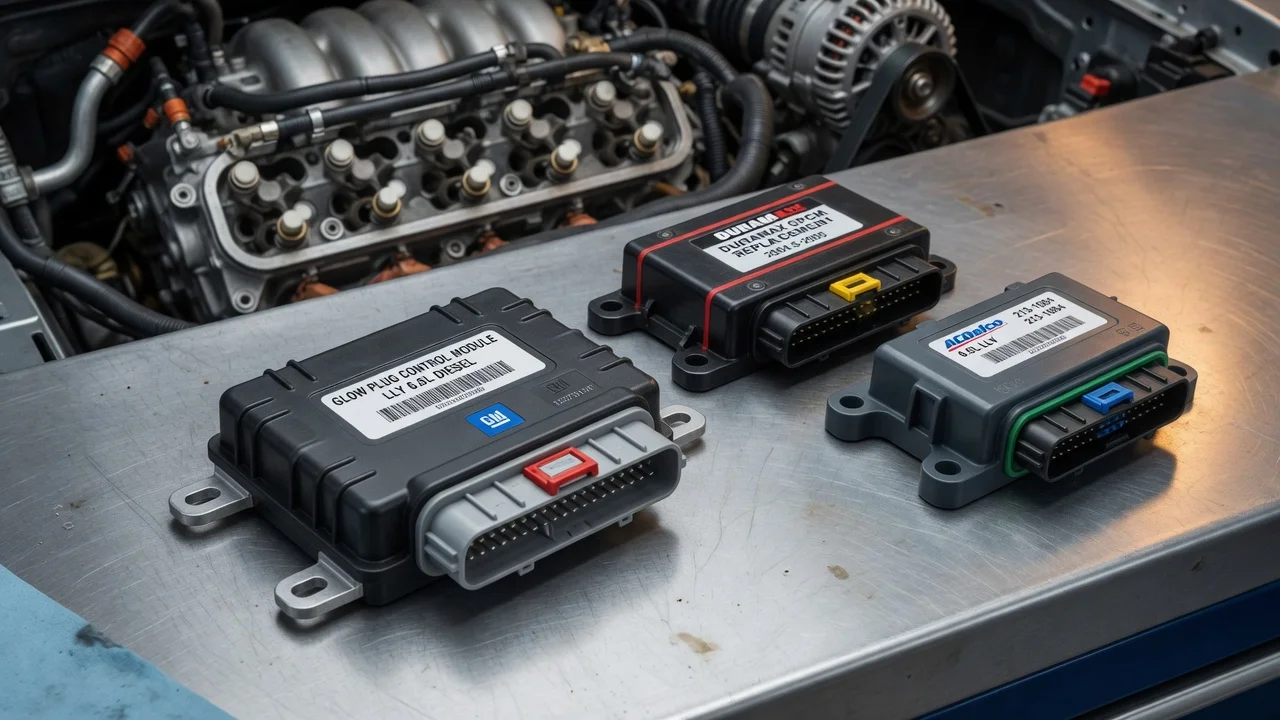
A failing glow plug control module on a 2005 Duramax usually shows up as long cranking on cold mornings, rough running and white smoke right after startup, or a glow plug code that keeps coming back. Before you buy a replacement, confirm that the module is actually at fault and that the unit you choose matches the LLY engine and its wiring. This guide covers what the part does, how to check fitment, which features matter, and what a new module cannot fix.
Define the job the module must do
The LLY is the 6.6-liter V8 turbodiesel used in 2004.5 to 2005 Chevrolet Silverado and GMC Sierra heavy-duty pickups. A diesel ignites fuel with compression heat alone, so in cold weather each of the eight glow plugs preheats its cylinder to help the engine fire. The engine control module decides when and how long to glow, based mainly on coolant temperature. The glow plug control module switches the heavy current to the plugs and reports circuit faults back to the engine computer. If your truck starts normally in warm weather but struggles below freezing, or keeps setting glow plug circuit codes, the module and the plugs are both reasonable suspects.
Your use of the truck affects how much you should spend. A daily driver in a northern climate that sits outside without a block heater depends on the glow system far more than a truck plugged in overnight or kept in a mild region. Also consider your practical limits: whether you will do the work yourself, whether the truck has to be back in service the same day, and whether you need full fault reporting restored or only reliable cold starts.
Confirm the module is the failed part
Codes such as P0380, or cylinder-specific codes in the P0671 to P0678 range, point to the glow system, but they do not separate a bad module from an open glow plug or a damaged harness. With the batteries disconnected, measure each plug's resistance with an ohmmeter and compare the readings across all eight cylinders. Inspect the harness for chafing and corrosion. Check both batteries and their cable ends as well. The glow system draws a lot of current, and weak batteries or poor connections can look exactly like a glow fault.
Hard cold starts can also come from the fuel side. Common causes include a restricted fuel filter, air leaking in around the filter housing, water in the fuel, gelled fuel, low rail pressure from the fuel pump, or injectors returning too much fuel. A scan tool that shows desired and actual fuel pressure during cranking helps separate these from glow problems. The Duramax does not use gasoline-style fuel trim, but injector balance rates give a comparable view of how each injector is behaving. An injector return-flow leak check should follow the published procedure. Common-rail pressure is extremely high, so never loosen high-pressure lines with the engine running or soon after shutdown, and never feel for leaks by hand. Anti-gel additives can help prevent winter gelling, but they are not a repair for an electrical fault or a worn injector.
Check compatibility
First confirm the engine. The RPO code LLY appears on the Service Parts Identification label in the glove box, and the eighth character of the VIN identifies the engine. Duramax generations such as LB7, LLY, LBZ and LMM do not all share modules, connectors or mounting, so a listing that only says it fits a 6.6 Duramax is not enough. Compare the part number printed on your old module with the candidate's stated original-equipment cross-reference. Photograph the old unit's connectors and check connector count, shape and pin layout, mounting holes and bracket design, and whether the glow plug feed harness is included or must be reused.
The electrical interface matters as much as the physical fit. The replacement must accept the engine computer's glow command and return the diagnostic signal the computer expects. A unit that powers the plugs but reports incorrectly can leave a warning light on, or hide a future plug failure until the truck refuses to start on a cold morning. Ask the seller whether the part is listed by VIN or engine code for a 2005 Chevy Duramax, not just by year and model.
Features that affect the choice
You will usually choose between a new original-equipment module, a new aftermarket module and a remanufactured unit. Original equipment gives the closest match in connectors, mounting and diagnostic behavior, and it usually costs the most. New aftermarket units cost less, but construction and diagnostic compatibility vary between suppliers. A remanufactured module can be good value, but its quality depends on the rebuilder's testing and on which internal components were actually replaced.
Treat labels such as heavy duty, OE quality, upgraded or plug and play as claims, not evidence. More useful evidence includes an exact original-equipment cross-reference number, written fitment for the LLY engine, a description of the housing and connector sealing, warranty length and terms in writing, a clear return policy for electrical parts, and a statement that full circuit diagnostics are supported. When reading owner feedback, give the most weight to reports from the same truck that describe cold-weather starts and durability over more than one winter.
Limitations and ownership costs
The module only switches power. It will not fix failed glow plugs, corroded terminals, a chafed harness, tired batteries or any of the fuel problems described above. If testing shows a failed plug, budget for plugs as well. Some owners replace the full set at once because the plugs age together. Removing glow plugs can take time, and a plug that has seized in the cylinder head can turn a simple job into a much larger repair, so factor that risk into your plans.
Installation is mostly straightforward. Disconnect both batteries before unplugging the old module, clean the connector terminals, transfer or replace the mounting hardware, and follow the part maker's guidance on connector grease. Afterward, clear the codes and confirm on a true cold start that glow is commanded and no codes return. There are no regular consumables, but many sellers will not accept returns on electrical parts once installed, so confirm fitment before you open the package. Using a block heater in winter reduces how hard the glow system has to work.
Build a practical shortlist
Before comparing listings, record the engine code, the old module's part number and photos of its connectors. Then check each candidate against the same points: listed fitment for the LLY engine or by VIN, a matching original-equipment cross-reference, identical connectors and mounting, support for diagnostic reporting, whether a harness is included, sealing details, written warranty terms, return conditions for electrical parts and total price including any plugs you need.
If the truck sits outside through hard winters or you depend on accurate fault reporting, favor the exact original-equipment cross-reference even at a higher price. If the truck is older, works in a mild climate and the budget is tight, a remanufactured or aftermarket unit with documented fitment and a solid written warranty is a reasonable choice. In either case, buy plugs only after resistance testing shows you need them, and confirm the fuel system is healthy, so the new module is solving the problem you actually have.