Lincoln Town Car Front and Rear Suspension: Layout, Components and Wear Signs
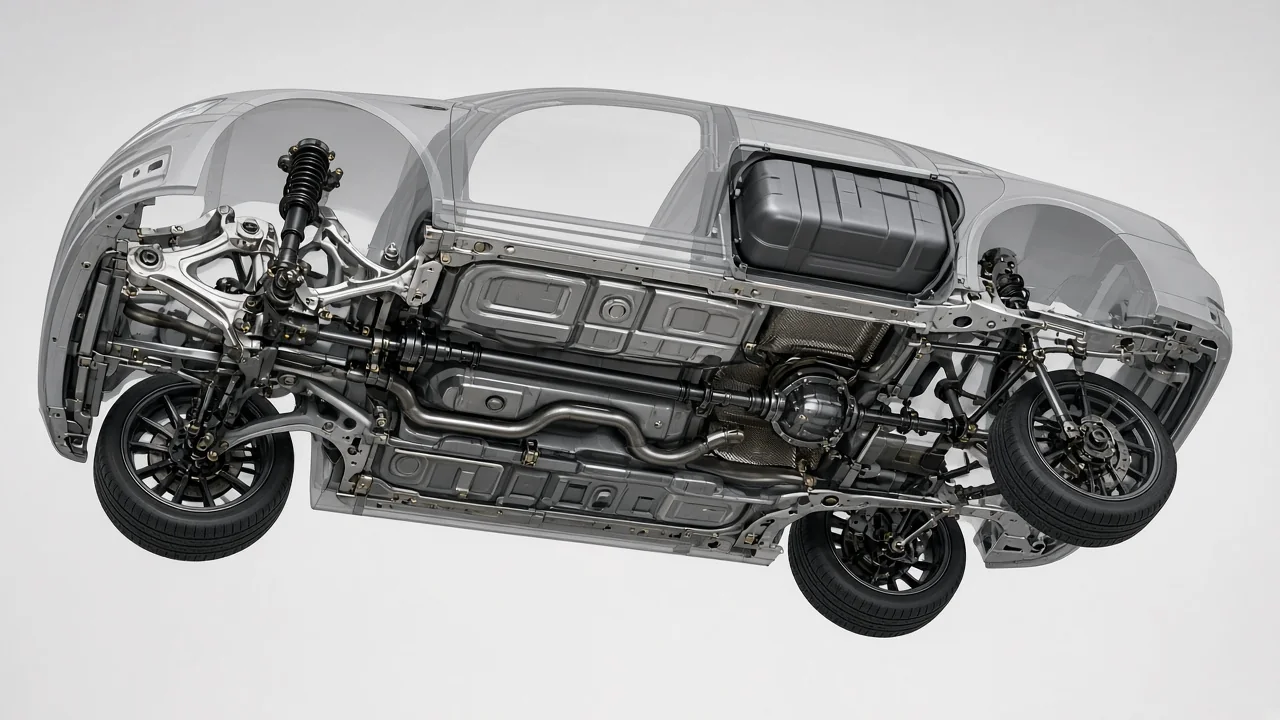
Owners of the 1997 Lincoln Town Car often search for front suspension guidance after noticing a clunk over bumps or uneven tire wear. The Town Car's body-on-frame design uses a conventional coil-spring front end, not the rear air suspension found on many examples. Understanding the control arms, ball joints, and sway bar links helps diagnose noise and handling issues. This article explains the front and rear conventional suspension layout, how it changed across generations, and which wear signs point to specific components.
How the Lincoln Town Car Front Suspension Is Laid Out
The Lincoln Town Car uses a short-and-long-arm front suspension: an upper control arm and a lower control arm connect the frame to each front wheel's steering knuckle. The upper arm is shorter and controls camber change as the wheel moves up and down, while the lower arm carries the coil spring and absorbs most road impacts. Bushings at the inner ends of these arms isolate vibration and allow controlled movement, but they wear with age and mileage.
Ball joints sit at the outer ends of both control arms, where they attach to the steering knuckle. The lower ball joint is load-carrying and wears faster, while the upper serves as a follower. Coil springs support the vehicle's weight and set ride height. Tubular shock absorbers damp spring oscillations. A sway bar connects the left and right lower control arms through end links, reducing body lean in corners. The steering linkage—typically a pitman arm, idler arm, center link, and tie rods—attaches to the knuckles, but specifics vary by year.
Front Suspension on the 1997 Town Car and How Generations Differ
The 1997 Town Car belongs to the second generation of the Panther platform, built from 1990 through 1997. A 1998 redesign altered the front suspension geometry and some component shapes, so illustrations from 2000 or 2003 models can mislead someone working on a 1997. Control arms, spindle angles, and sway bar routing changed, meaning parts are not interchangeable even if they look similar in online catalog photos.
A 1997 owner will find upper and lower control arms with rubber bushings, upper and lower ball joints bolted or pressed to the arms, a coil spring seated on the lower arm, a conventional twin-tube shock absorber mounted through the spring, and a sway bar with vertical end links. The steering knuckle bolts to the ball joints and carries the wheel hub. To confirm components, check the VIN and the certification label on the driver's door jamb for the build date, and consult factory service information for the specific model year.
Reading a 2000 Lincoln Town Car Front Suspension Diagram
A 2000 Lincoln Town Car front suspension diagram typically labels the upper and lower control arms, ball joints, coil spring, shock absorber, sway bar, sway bar end links, control arm bushings, and steering knuckle. The diagram may show an exploded view with the front of the vehicle facing left or right, so use the labeled left-hand and right-hand notes to orient it. Matching the diagram to the car means standing in front and noting which side is the driver's side.
Aftermarket catalog illustrations are often generic and may combine parts from multiple years or show a similar Ford model. A part that fits a 2000 may not fit a 2003, and a diagram for a 2000 may omit a small bracket or show a different bushing style. To verify what the diagram shows, cross-reference a factory service manual for the exact model year or use a dealer parts lookup by VIN. That confirms the correct part shapes and mounting points before buying components.
What Changed in the 2003 and Later Town Car Front Suspension
For 2003, Ford updated the Panther platform with a revised front frame section, redesigned suspension arms, and altered steering geometry. These changes mean that front suspension parts from a 1998–2002 Town Car generally should not be assumed to interchange with the 2003 and later models. The lower control arm mounting points and bushing diameters changed, and the ball joint taper may differ, so physical fitment is not guaranteed.
An owner can confirm which front design their car has by checking the model year on the VIN label and comparing the part's visual shape to factory parts diagrams. The 2003 update also changed how the suspension aligns and how the components wear—for example, the updated geometry may place different loads on the lower ball joints. Before purchasing, verify the part number against a dealer catalog for the exact VIN, since even mid-year production changes can matter.
2000 Lincoln Town Car Rear Suspension Components
The 2000 Town Car rear suspension uses a solid rear axle located by upper and lower control arms. The lower arms run forward from the axle to the frame and handle acceleration and braking forces, while the upper arms angle inward and control axle wind-up. Rubber bushings at all arm ends isolate road harshness but crack and loosen over time, allowing axle movement that produces clunks on throttle tip-in or hard braking.
Lateral location of the rear axle depends on model year and trim. Some Town Cars use a Watts linkage—a central pivot with two horizontal links to the axle and frame—which keeps the axle centered during suspension travel. Other models may use a Panhard rod or a different arrangement. Many Town Cars also came with rear air springs instead of coil springs; to tell which, look at the spring area behind the rear wheels. Coil springs are obvious steel coils, while air springs look like rubber cylinders. This article covers only the conventional coil-spring and linkage parts. Rear shocks damp axle motion, and a rear sway bar, if equipped, reduces body roll.
Common Wear Symptoms by Component
Clunking over bumps is often traced to sway bar end links, whose ball-and-socket joints develop play and knock against the bar or control arm. A deeper, heavier clunk from the front may indicate worn ball joints or control arm bushings. Ball joint wear allows the knuckle to move vertically, producing a pop when loading or unloading the suspension. Bushings that have split or softened let the control arm shift, causing a thump and imprecise steering.
Wandering on the highway or a loose steering feel can come from worn inner or outer tie rod ends, but also from ball joints or control arm bushings. Uneven or cupped tire wear, especially feathering on the edges, points to alignment changes from suspension wear. If the alignment angles won't hold after adjustment, a ball joint or bushing is likely worn. At the rear, clunking during acceleration or braking suggests control arm bushing wear. Body sway in corners may indicate a failed sway bar link, and sagging ride height on a coil-spring car usually means a weak spring. However, symptoms overlap between parts, so a single noise cannot prove which component has failed.
Safe Visual Checks and When a Professional Inspection Is Needed
With the car parked on level ground and the wheels straight, you can safely check several items. Look for torn or cracked ball joint boots—if the boot is split, grease escapes and the joint wears quickly. Inspect control arm bushings for visible cracks, splitting, or rubber that has pulled away from the metal sleeve. Check shock absorbers for oil leaking down the body. Walk around and compare side-to-side ride height; a noticeable lean may indicate a weak spring or other damage.
Do not attempt to check ball joint play by prying on suspension parts while the vehicle is on the ground. Proper ball joint inspection requires lifting the vehicle and unloading the suspension, which needs a hoist and training in safe lifting practices. Never attempt to compress or remove a coil spring without a professional spring compressor; the stored energy can cause serious injury. After replacing any suspension part, have a professional perform an alignment check. Also seek an inspection if steering or braking feel changes, because suspension wear can affect both.