Lincoln Town Car Air Suspension to Coil Spring Conversion: What to Know
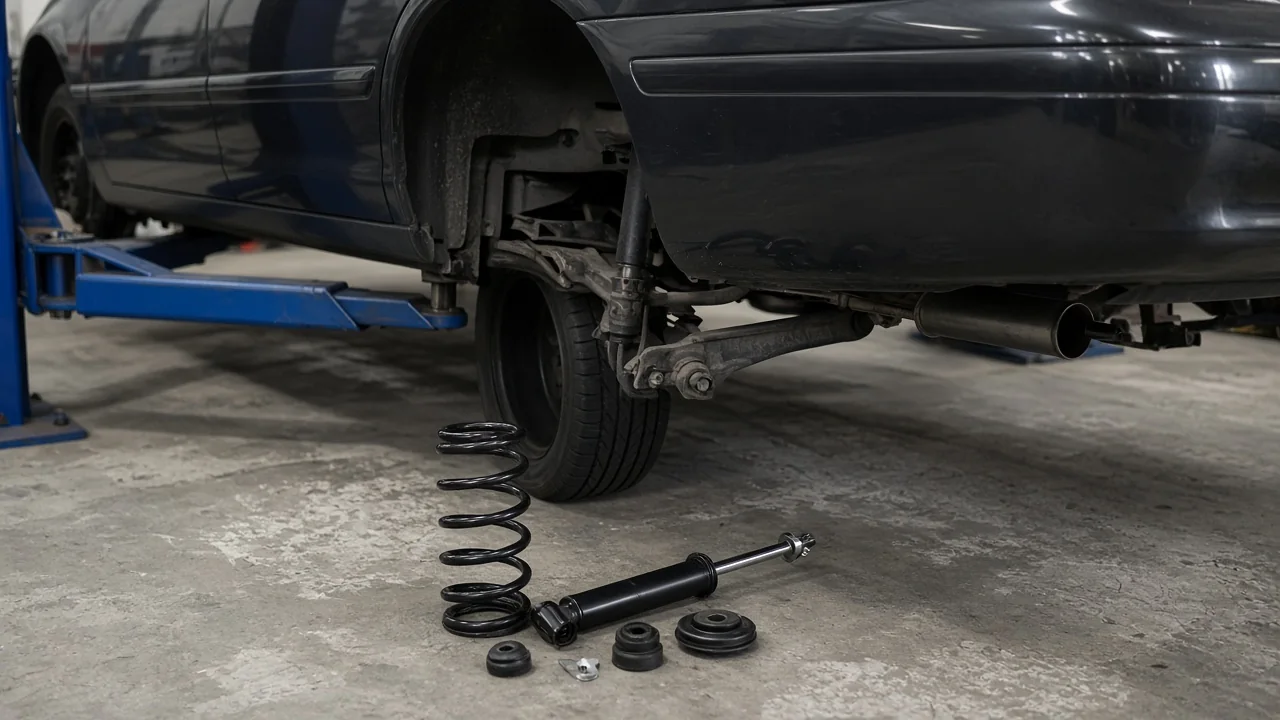
A 2004 Lincoln Town Car rear suspension conversion kit replaces the factory air springs with conventional coil springs. Owners often consider this when the rear end sags after parking, the compressor runs excessively, or the instrument panel displays a suspension warning. These symptoms can stem from air leaks, a weak compressor, a faulty ride height sensor, or wiring problems. Converting removes the self-leveling air ride system, trading automatic load compensation for a simpler, fixed-height spring setup that many Panther platform owners find easier to maintain.
Why Town Car Owners Consider Replacing Air Suspension With Coil Springs
The Town Car’s rear air suspension uses air springs in place of steel coils, filled by an electric compressor and regulated by a ride height sensor and control module. This system automatically adjusts air pressure to keep the rear level, whether the car is empty or carrying passengers and luggage. Over time, age and environmental exposure can degrade the rubber air bladders, causing tiny cracks that leak. When the compressor must run longer to compensate, it may overheat or wear out, leading owners to diagnose the problem.
A sagging rear, especially after the car has been parked overnight, often points to leaking air springs that cannot hold pressure. However, the same symptom can come from a failing compressor that no longer builds enough pressure, a bent or disconnected ride height sensor giving false readings, or damaged wiring and connectors. Because several components can cause identical behavior, a proper diagnostic check matters before deciding on a coil spring conversion. The air suspension control module may also store fault codes that a scan tool can read to narrow down the source. Converting is one valid repair path, but it is not automatically the only solution, and a complete air system repair can restore factory self-leveling if that is preferred.
What a Typical Air-to-Coil Conversion Kit Includes
A typical air-to-coil conversion kit for these years includes a pair of coil springs matched to the rear axle weight, along with spring seats or rubber isolators that sit at the top or bottom of the spring. Hardware such as bolts or brackets may be supplied. Most kits also contain an electronic component—sometimes a simple module or resistor—that plugs into the air suspension wiring to prevent a warning light after the air springs and compressor are disconnected. Kit contents vary by manufacturer, so checking the included parts list matters.
Some kits include new shock absorbers, while others do not; a few manufacturers recommend replacing the shocks at the same time because original damping rates may not suit the new spring design. Comparing the kit’s listed contents to the parts currently on the car helps avoid surprises. For example, if the car has an unusual trim or a previously modified suspension, the stock mounting points may differ. Reading the kit documentation before purchase confirms whether shocks, isolators, or additional wiring connectors must be sourced separately.
Confirming Fitment for 2001, 2003, 2004, 2005 and 2006 Town Cars
Conversion kits are commonly marketed by model-year ranges, such as 2001–2006 or similar, but that does not automatically mean every kit fits every trim. Wheelbase length matters: standard Town Cars differ from long-wheelbase livery or limousine versions, which may have heavier rear bodies and different spring rates. Before ordering, confirm the exact year, trim level, and wheelbase with the kit maker. A 2003 Town Car and a 2004 Town Car may share many parts, but changes in air suspension wiring or module behavior can occur between model years, so relying on a broad range without checking can cause installation problems.
Physically inspecting the existing rear suspension is a reliable way to confirm fitment. Look at the upper spring seats, lower control arm mounts, and whether the car still has air springs or already has coils from a previous change. Salvage or rebuilt cars may not have original components. Even within the same model year, axle ratios or towing packages can affect rear weight, though most conversions use a standard-rate spring. When in doubt, contacting the kit supplier with the vehicle identification number or photos of the current suspension helps ensure the correct spring seats and isolators are supplied.
Rear Suspension Conversions: What Changes at the Back of the Car
On a 2004 Lincoln Town Car, the air springs are located at the rear axle only; the front suspension uses conventional coil springs from the factory. The rear conversion therefore focuses on the rear axle area. The air springs, which look like rubber cylinders or bellows, sit between the axle and the frame. When they are removed, coil springs take that position, often with adapters or plates that fit into the original mounting pockets. Confirming the car’s own setup is still wise because some Town Cars may have been converted before or may have service replacement parts installed.
Once coil springs are installed, the rear ride height becomes fixed. The system no longer adds or releases air to compensate for load, so the car remains at the same stance whether empty or fully loaded. The height sensor, which was once connected to the rear suspension arm, is typically unplugged or removed according to the kit instructions. The compressor and air lines are often left in place but electrically isolated or disconnected. Because ride height and alignment geometry change slightly after spring replacement, a qualified shop should check the rear camber, toe, and thrust angle to prevent uneven tire wear or handling differences.
How Ride Comfort, Handling and Load Carrying Change After Converting
Compared to a properly functioning air ride suspension, coil springs often produce a firmer or more traditional rear ride feel. The air springs originally provided a progressive rate that absorbed small bumps softly while firming under load. Steel coil springs can be tuned to similar rates, but most conversion kits use a spring designed for general use, so the rear may feel slightly stiffer over sharp impacts or smoother on gentle roads depending on the spring rate. These changes are typical but not guaranteed; shock condition and tire pressure also influence perception.
The main functional loss is automatic load leveling. With air springs, adding weight in the trunk or back seat triggered the compressor to raise the rear back to normal height. Coil springs cannot do that, so the rear may sit lower with heavy loads. For owners who rarely carry heavy loads or tow, this difference may be acceptable. For those who regularly carry passengers or luggage, the rear sag under load can affect headlight aim and suspension travel. The upsides include eliminating the compressor, air lines, solenoids, and height sensor as failure points, and a fixed ride height that never depends on an electric pump.
How Conversion Kits Handle the Suspension Warning Light
When the air suspension components are disconnected, the control module no longer receives the expected signals from the height sensor or compressor. This typically triggers a suspension warning message on the instrument cluster or illuminates a warning lamp. Conversion kits handle this in several ways. Some include a small electronic module that connects to the factory wiring and mimics the signals the air suspension module expects. Others use a simple resistor wired into the sensor circuit to create a fixed voltage. A few kits provide instructions for disabling the warning through a scan tool configuration change, though that is less common on this platform.
If a warning light stays on after the conversion, it may not be caused by the removed air system. The air suspension module can store separate fault codes for wiring shorts, sensor out-of-range readings, or communication errors. A scan tool capable of reading chassis or suspension codes should be used to see what the module is reporting. The kit maker’s documented method must be followed exactly; improvising wiring bypasses can damage the control module or mask unrelated problems. A persistent warning should be diagnosed, not ignored, because it can also indicate a failing ride height sensor circuit that might affect other body control functions.
Safety Limits and When to Use a Professional Installer
Suspension work on these cars involves compressed coil springs, which store large amounts of potential energy even when the car is sitting on its wheels. The air system may also retain residual pressure if the compressor recently ran. Proper vehicle support, spring compressors where required, and de-energizing the air suspension system according to service information are essential. Because the rear suspension holds the axle in place, jack stands and wheel chocks are mandatory. This article does not provide step-by-step removal or installation instructions; the kit documentation and a professional repair manual should be followed, and a qualified technician can safely perform the work.
After installation, the car should be inspected for even ride height side-to-side, proper wheel alignment, fastener torque, and correct operation of the warning indicator. If the car leans to one side, makes clunking or rattling noises over bumps, pulls during braking or acceleration, or shows a warning light that returns repeatedly, professional attention is needed. These signs may indicate an incorrectly seated spring, a damaged isolator, loose hardware, or an unresolved electrical fault. A suspension failure can affect vehicle control, so resolving these symptoms promptly is important for safe operation.