Lincoln Town Car Air Suspension: Operation, Faults, and Repair Options
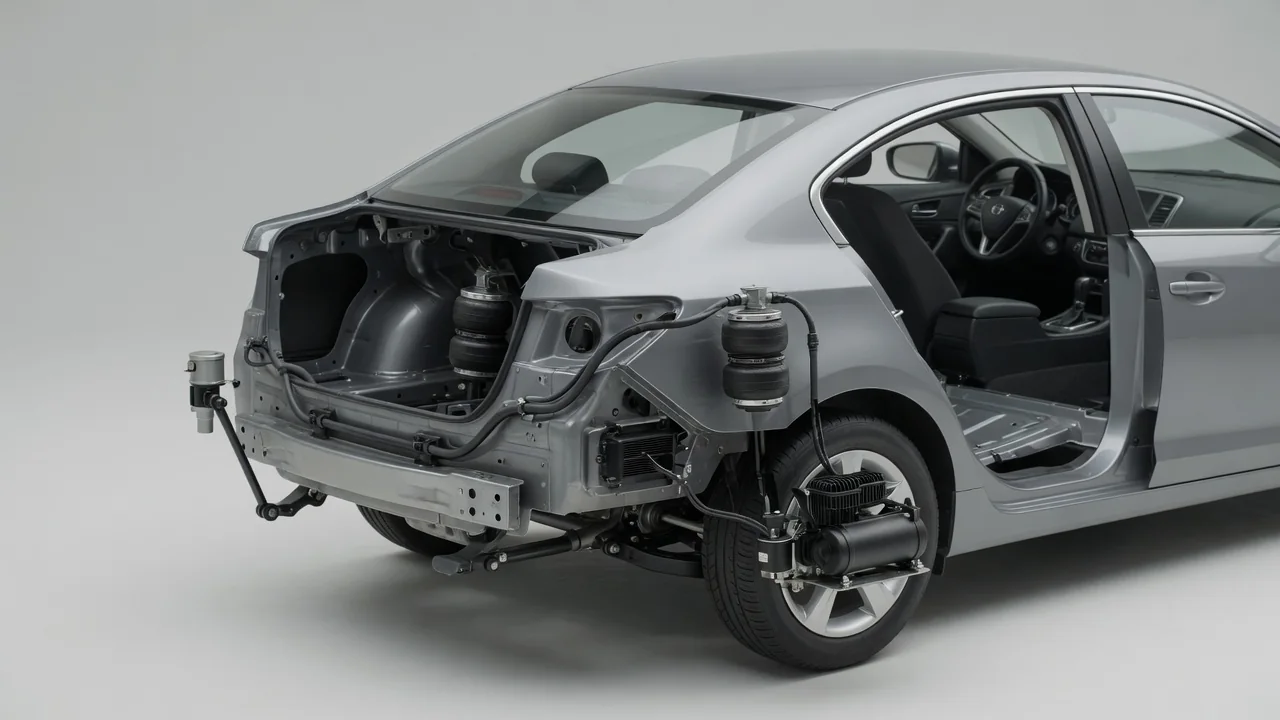
Air suspension on a Lincoln Town Car from 1995 through 2007 is a rear air-ride system that supports the body and levels it as passenger and cargo loads change. When that system leaks, sags, or warns, owners typically need repair, component replacement, or a conversion decision rather than a generic parts swap. Understanding operation, diagrams, year-specific equipment, symptoms, and diagnosis keeps the conversation with a shop focused on verified faults.
How the Town Car’s Rear Air Suspension Maintains Ride Height
The rear air suspension on a Lincoln Town Car uses air springs, often called air bags, at the rear axle to support the body instead of conventional coil springs. Automatic load leveling adds or vents air as passenger and cargo weight changes so the rear ride height stays closer to the intended stance. Air bag suspension on a Lincoln Town Car is therefore a load-responsive rear system: more air when the trunk or rear seats are loaded, less when the car is light. That leveling is what owners usually mean by air ride on these cars.
An air compressor supplies pressure through air lines and fittings to the rear air springs, while valves and, on many cars, air spring solenoids control fill and vent. A ride-height sensor reports rear position so the control module can command leveling. Hardware is not identical across every model year, so valves, sensors, and module logic can differ. Shock absorbers still control bounce and rebound; air springs carry weight. A bouncing complaint alone does not prove an air-system fault. Ordinary leveling may run the compressor after loading or unloading without a fixed run time or a promised ride feel.
Reading an Air Suspension Diagram
A Lincoln Town Car air suspension diagram is a schematic of how the air supply, rear air springs, valves, ride-height sensor, and electrical controls relate. Pneumatic paths show how compressed air reaches each bag through lines, fittings, and valves. Electrical paths show how the compressor, solenoids, sensor, and module communicate. Both matter during diagnosis: a leak lives on the air side, while a failed command, open circuit, or sensor fault lives on the electrical side. Mixing those paths is a common reason a visual inspection misses the actual problem.
That drawing does not locate parts on a particular chassis, give connector pinouts, or prove how lines are routed under a 1997, 2000, or 2004 Town Car. Air suspension for a Lincoln Town Car still requires the model-year service information before anyone interprets wiring, identifies a component, or plans professional testing. A 97 car and a 2006 car can share the same idea of rear air ride while using different connectors, valve blocks, and module addresses. Treat a public diagram as orientation only, then match it to the vehicle in front of you.
Confirming the System on a 1995–2007 Town Car
Before ordering parts or interpreting a sag, confirm the model year, VIN, installed suspension equipment, and any documented modifications. Air suspension on Lincoln Town Cars from 1995 through 2007 is a related rear air-ride family, not a single interchangeable assembly. A 1996 or 1998 Town Car, a 1999 or 2001 example, and a 2002 or 2003 car can all use rear air springs while differing in compressor, valves, wiring, and module. The VIN and build data, not a year label alone, decide what bags, compressor, and controls belong on that car.
A previous coil-spring conversion can leave conventional springs in place, unused air hardware still on the car, or a modified warning strategy, so symptoms and parts lists will not match a factory air-ride car. Use the applicable owner's manual to understand the suspension switch and any suspension warning light messages for that year, including a 2000, 2004, 2006, or 2007 Town Car. Lifting the body, disabling the system, or depressurizing air springs belongs with qualified service personnel. Owners should not crawl under a loaded, pressurized rear end to experiment with valves or bags.
What Sagging, Frequent Compressor Activity, and Warnings Can Mean
Rear-end sag on a Town Car can come from deteriorated rear air springs, leaking air lines and fittings, valve or solenoid trouble, compressor problems, or a ride-height sensor and electrical fault. Lincoln Town Car air suspension bags that crack, dry, or leak at the roll will not hold pressure, but a fitting leak can produce the same low stance. One low rear corner, both corners sitting low, or height loss while parked cannot independently identify the failed part. Leak diagnosis has to separate a bag, a line, a valve, and a control issue before anyone replaces hardware.
From outside the vehicle on level ground, note stance, current load, any suspension warning light, audible compressor activity, and when the symptom appears after parking, after loading, or while driving. Frequent compressor activity can accompany an air leak as the system tries to restore height; silence can have electrical or control causes. Neither observation proves the compressor has failed. If severe sagging, tire contact with the body, or unstable handling appears, stop using the car and arrange professional help. Do not crawl underneath or disconnect pressurized air lines, fittings, or bags.
Getting a Diagnosis Before Authorizing Air Suspension Repairs
Lincoln Town Car air suspension repair should start with professional diagnosis using the applicable service information, scan equipment that can talk to the suspension controls, electrical checks, leak testing, and height-control evaluation. A stored code is evidence to interpret, not proof a bag, compressor, or solenoid has failed. Manufacturer-dependent codes require confirmation for that exact vehicle and module, including a 2000, 2003, or 2007 Town Car whose software and wiring may differ from a 1997 or 1999 car. Guessing from a generic code definition is how good compressors get replaced while a leak remains.
The shop should establish the source of air loss and assess compressor operation before proposing component replacement. A useful estimate names the identified fault, supporting test results, specified parts, labor, related damage such as a worn shock or damaged line, and warranty terms. After repairs, verification should include leak checks, correct automatic load leveling, warning-system operation, and any vehicle-specific calibration the module requires. Replacing air springs or a compressor without that path often repeats the original sag because the leak or control fault was never found.
Planning Air-System Replacement or a Coil-Spring Conversion
When an estimate mentions a Lincoln Town Car air suspension kit, the word kit does not establish contents. Ask whether the quote covers individual rear air springs, extra components such as lines, fittings, solenoids, a compressor, and a sensor, or a complete coil-spring conversion. To replace the air ride suspension, require verified fitment, an itemized list, and correction of underlying leaks or control faults. New bags over a leaking fitting or stuck valve simply repeat the failure. Air-system replacement only makes sense after the leak path and control behavior are known.
A coil-spring conversion removes automatic load leveling, so the rear no longer self-adjusts for passenger and cargo. Confirm geometry, load suitability, damping, and how the warning system will be handled so a light does not stay on after the air hardware is gone. For 2007 Lincoln Town Car air suspension replacement, verify that car's VIN and installed equipment rather than assuming a kit matches. Budget, vehicle condition, carrying needs, remaining warranty, and inspection should set the work scope without relying on a generic price.