Lincoln Town Car Air Suspension: Compressor, Fuse, Switch and Warning Light Guide
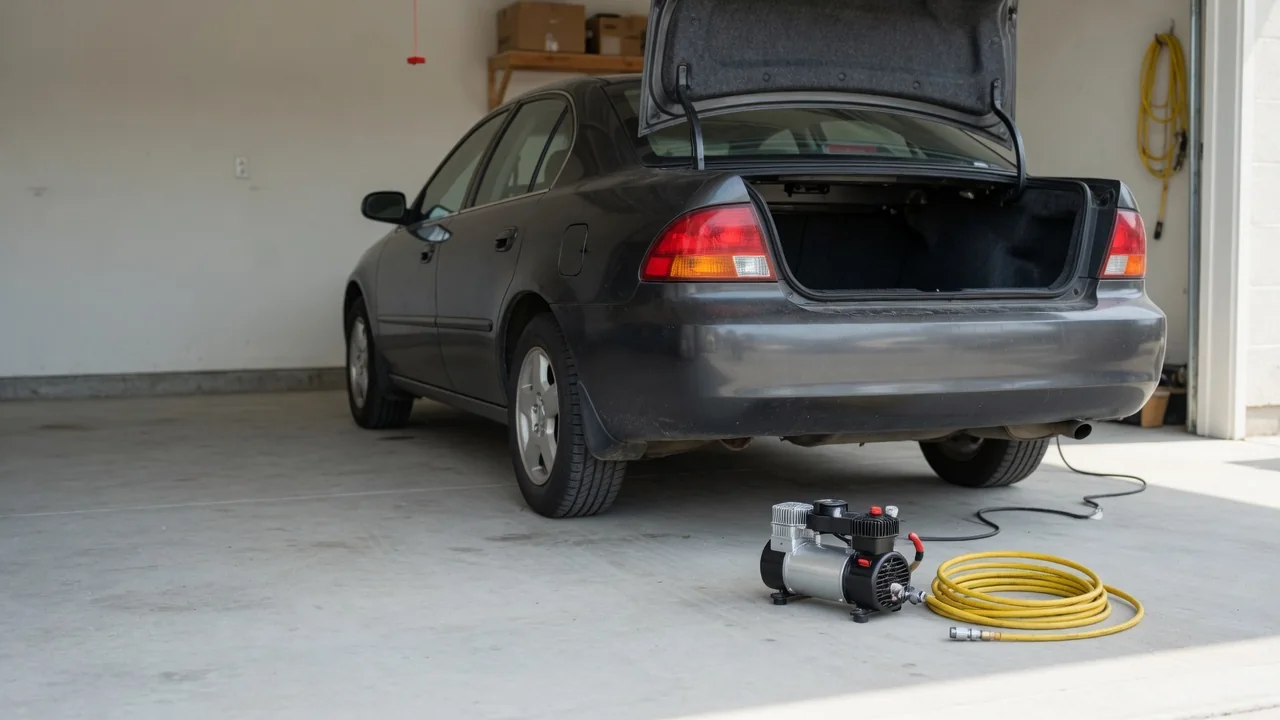
A Lincoln Town Car air suspension should keep the rear level whether you are carrying passengers, luggage, or driving empty. When the check air suspension warning appears or the tail sags, the problem often involves the air suspension compressor, a fuse, the trunk shut-off switch, or the rear height sensor. This guide explains how those parts work together, where to find key components on different model years, why the light comes on, and what resetting the system after service really means.
What the Town Car Air Suspension Compressor Does and Signs It Is Struggling
The Town Car air suspension uses an electric air suspension compressor to pressurize the rear air springs, often called air bags. A height sensor mounted near the rear axle reports ride height to the air suspension control module. When the module sees the rear sitting low, it grounds the compressor relay, the compressor runs, and air flows through lines to the air springs until the target height is reached. If the car is loaded, the system adds air; when unloaded, vent solenoids release pressure to lower it.
A weak compressor often gives clear clues. The rear may sag after the car sits overnight, then rise slowly after startup. You might hear the compressor run for a long time, cycle on and off every few minutes, or sound louder than normal—a worn piston or leaking check valve can cause that. Sometimes the compressor does not run at all, leaving the rear collapsed. Remember that air leaks in the springs or lines can mimic a compressor failure, because the compressor runs constantly trying to overcome the leak. A shop can pressure-test the system before you replace parts.
Where to Find the Air Suspension Compressor on Your Town Car
The compressor location depends on the Town Car generation. On many 1997 models it sits near the front left frame rail area, while later cars such as 2000, 2003, 2004, 2005, and 2006 often mount it behind the front bumper or under the front left wheel well area. Because mounting changed between model years, always verify by VIN before buying a replacement, and check the owner's manual or a service manual for your specific year. Listening for the compressor when the ignition is on and the trunk switch engaged can help you find it.
To locate the compressor safely with the engine off and the key out, follow the air lines from the rear air springs forward and trace the wiring harness. Do not remove body panels or climb under the car without proper support. Before raising the vehicle on a jack or lift, turn off the air suspension switch in the trunk to avoid unintended leveling. Never open pressurized fittings or disconnect air lines at home—shops have procedures to release pressure from the system. Also support the car on jack stands at rated lift points before working beneath it.
Why the Check Air Suspension Light Comes On
The check air suspension light means the control module has detected a fault or could not reach the target rear ride height within a set time. That could be due to a ride height sensor giving a bad signal, an air line leak, a compressor that cannot build pressure, a blown fuse, a bad relay, or the system being switched off in the trunk. Sometimes the light comes on only after the compressor has run for an extended period without the rear rising enough, pointing to a leak rather than a dead compressor.
If the light is on, you can still drive carefully in many cases, but watch for the rear sitting very low, tires rubbing on bumps, poor handling, or headlights aimed too high. Limit driving until the system is inspected. At home, confirm the trunk switch is on, see if the rear sits evenly on level ground after a cold start, and listen for the compressor running briefly when you turn the key on. If the module has stored fault codes, have a shop with a capable scan tool read them and confirm meanings against Ford or Lincoln service information for that vehicle instead of relying on a generic list.
The Air Suspension Shut-Off Switch in the Trunk
The air suspension shut-off switch is there for safety when the car is raised, towed, or having a tire changed. With the switch off, the module will not run the compressor or vent air, preventing the system from making height changes while the suspension is unloaded. That helps avoid pinched air lines, damaged height sensors, or unstable movement on a lift. The switch is usually located in the trunk, often on the left side or behind a trim panel, but the exact spot varies by model year—the owner's manual shows it for your car.
If someone turns the switch off or cargo bumps it, the check air suspension light can come on and the rear may sag because the system cannot level itself. After jacking or tire service, always turn the switch back on once all four wheels are on the ground. Close the trunk and doors, start the car, and watch for the light to go out and the rear to rise to normal height within a minute or two. If the light stays on, the system has detected another fault beyond the switch position.
Checking the Air Suspension Fuse and Relay
The air suspension compressor and control module are protected by fuses and switched through a relay. A blown fuse or failed relay can stop the compressor cold, even when the compressor, air springs, and wiring are fine. On a 2007 Town Car, the air suspension fuse location is usually in the under-hood fuse box, but positions differ by year; some cars also have a fuse in the interior panel. Always check the fuse box cover label or the owner's manual for the exact slot and rating before buying parts.
With the ignition off, you can pull the fuse and look for a broken element, or use a test light to check both terminals while powered. If the fuse is good, swapping in an identical relay may tell you whether the relay is faulty. Never install a fuse with a higher amperage rating—that can overload the wiring. If a new fuse blows again immediately or after the compressor runs, there is likely a short circuit or the compressor motor is drawing too much current. That calls for professional electrical diagnosis rather than repeated fuse replacement.
Rear Height Sensor Role and Symptoms
The rear height sensor is a small arm-and-linkage device that tells the control module how high the rear of the car sits. As the axle moves, the sensor rotates and changes its internal signal, allowing the module to decide when to add or vent air. If the sensor gives a false reading—because the linkage broke, the sensor wore out, or the wiring is damaged—the system may overinflate the rear, leave it sagging, or set the warning light. A bad sensor often looks like a compressor or leak problem.
On a 2003 Town Car or similar year, you can safely look at the sensor with the car on ramps or safely jack-stood at rated points. Check for a disconnected or broken metal link, cracked wiring insulation, or corroded connectors under the rear. Do not remove the sensor or pry on the linkage at home. Confirming a height sensor fault usually requires reading live data from the suspension module while moving the sensor arm, or electrical testing by a technician. Always confirm the correct sensor for your model year before ordering a replacement.
Resetting the Air Suspension After Service or Repairs
Resetting the air suspension usually means clearing stored fault codes from the control module and letting the car bring itself back to normal ride height after repairs are complete or the trunk switch is turned back on. For a basic owner-level check, park on level ground, make sure the doors and trunk are closed, confirm the air suspension switch is on, and verify the fuses are good. Start the engine and watch whether the compressor runs and the rear rises. If the light goes out and the car levels normally, the system has cleared its active fault.
After replacing a height sensor, compressor, or other major part on some model years including a 2004, a scan tool may be needed to clear stored codes and perform height calibration. If you skip that step, the light may stay on even though the new part works. Always check the Ford or Lincoln service information for your vehicle before assuming a simple switch cycle will finish the job. And if the warning light returns soon after a reset, the original fault is still present—leak, wiring problem, or a failed component—and the car needs proper diagnosis.