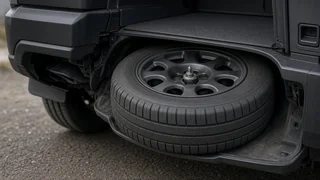
Lexus RX 350 Spare Tire Pressure

A Lexus RX 350 spare tire is not simply a smaller version of the four road tires. It carries a much higher inflation pressure because its reduced air volume, compact construction, and temporary-use design must support vehicle weight safely over a short distance. Understanding that specific spare tire pressure matters differently than the regular tire placard values helps prevent underinflation, poor ground clearance, and possible damage to the drivetrain. This overview explains how to interpret the pressure marking, why the value differs from standard settings, and what practical limitations apply to the temporary spare.
Essential answer
The essential answer is that a Lexus RX 350 spare tire typically requires inflation pressure above the figures used for the primary tires, often around 60 psi, but the authoritative value is printed on the spare itself or on the tire information label. Since the recommended pressure for normal road tires on this vehicle is usually lower, a driver who applies the standard placard number to the compact spare would leave it underinflated. Underinflation on a temporary spare increases sidewall flex and heat buildup, reducing the safety margin during an already limited-use situation.
The compact spare is a temporary mobility device, not a full-service tire. Its narrow tread, lightweight carcass, and smaller air chamber mean the tire size, load index, and inflation pressure are engineered as a matched set for short-distance use. A temporary spare carries a higher load relative to its small volume, so higher pressure is required to maintain its load capacity. Checking the pressure when the spare is cold, before it has been driven, gives the most useful reading because heat generated while rolling raises the internal pressure and can mask a slow leak or low starting value.