Lexus Exhaust Leak: How to Locate the Source
Before you start
You can locate many exhaust leaks without special equipment, but the work is done on the vehicle rather than through a digital tool. Treat this as a hands-on inspection. A cold engine is easier to work around, but some leak sounds only appear under load, so you may need a helper to raise the engine speed briefly. Work on a level surface, set the parking brake, and let the exhaust cool before touching any component.
Exhaust gas is dangerous in an enclosed space. Perform the inspection outdoors or in a well-ventilated area, and avoid breathing fumes directly. If you lift the vehicle, use proper jack stands or a suitable lift. Do not rely on a jack alone.
Step-by-step instructions
Start with the engine running at idle. Walk around the Lexus and listen for a rhythmic ticking, puffing, or raspy sound that changes with engine speed. A leak near the manifold often produces a sharper tick, while a leak farther back may sound like a low rumble or fluttering noise.
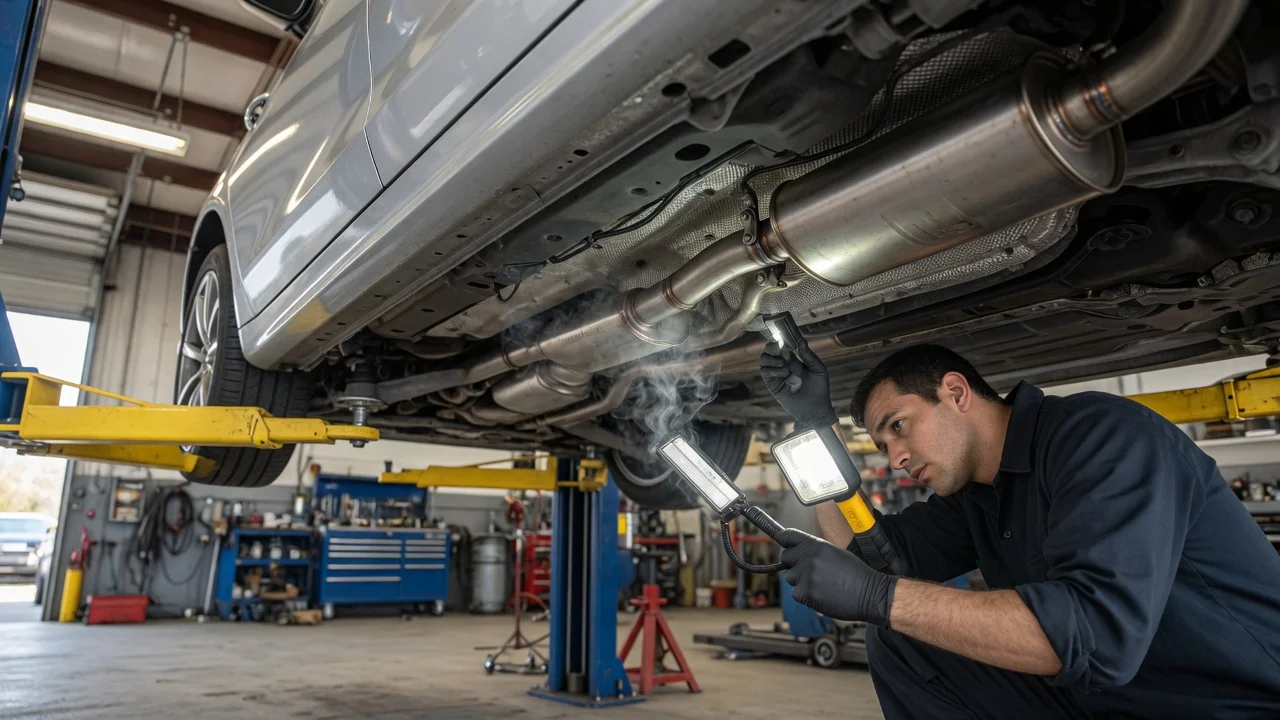
Set the parking brake and keep the transmission in Park, or in Neutral with the parking brake applied. Open the hood and listen near the exhaust manifold and front pipe without touching hot or moving parts. Have a helper briefly raise and release the engine speed in short bursts while you listen for a sound that becomes louder or more defined. Inspect visible exhaust joints, flanges and gaskets for black soot, rust trails or white staining. If the underside is accessible, check the catalytic converter connections, flexible coupling and muffler seams. Use your hand near suspected joints to feel for pulses of escaping gas without contacting the hot pipe.
A common lookup method is to temporarily block the tailpipe with a heavy cloth or gloved hand while someone checks for a louder hiss at the leak point. Do this only for a few seconds, keep away from the escaping gas, and release the blockage immediately. This can help make a small leak more obvious but is not a substitute for a close visual inspection.
Check the output
A suspected leak is confirmed when the location matches more than one sign: a visible soot mark, a felt or heard pulse, and a change in noise at that spot. Pay attention to whether the noise is coming from the flange, the gasket, a cracked pipe, or a rusted seam. The repair is different for each case, so identifying the exact source is more useful than simply knowing that a leak exists.
Do not confuse normal exhaust movement or heat-shield vibration with a leak. A loose heat shield can create a metallic rattle that changes with engine speed, so confirm escaping gas at the point you choose.
Common problems and next steps
If no leak is visible while the engine is cold, warm the exhaust and inspect again because thin cracks can open as the metal expands. A Lexus exhaust leak repair may involve replacing a gasket, tightening or replacing a flange, patching a small pipe hole, or replacing a rusted section. Temporary sealants or wraps are not a lasting repair for structural cracks or failed gaskets.
If the leak is near the exhaust manifold or catalytic converter, avoid driving for long periods before repair. Escaping gas near the engine bay can enter the cabin and should be addressed promptly. If you cannot safely access the suspected area, have a workshop perform a smoke test or lift inspection.