Choosing Transmission Cooler Lines for an LBZ Duramax
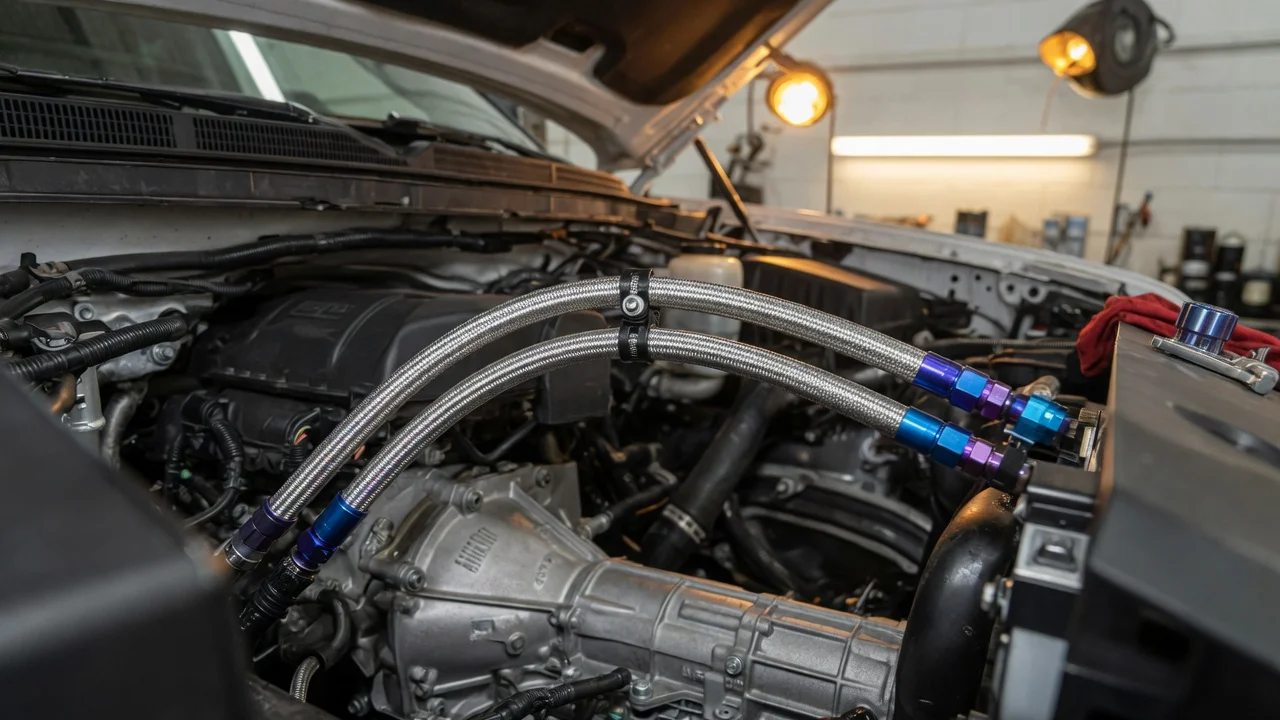
Transmission cooler lines on an LBZ Duramax carry hot fluid from the Allison automatic to the cooler at the front of the truck and back again. When a line weeps at a fitting or a hose has aged, matching a product photo is not enough to choose a replacement. This guide covers how to define the job, confirm fitment, weigh construction features and estimate ownership costs, so you can narrow down cooler lines that suit your truck and how you use it.
Define the job the product must do
Start with why you are shopping. A seeping joint on a daily driver usually calls for a dependable direct-fit replacement. A truck that tows heavy trailers, works in hot climates or runs modified power levels puts more heat into the fluid, and the owner may reasonably prefer lines with stronger construction details. Decide which of these situations describes your truck before comparing products.
Before buying anything, confirm that the lines are actually the problem. Fluid found on a cooler line can come from above or ahead of it, such as the cooler itself, a fitting at the transmission, the pan gasket, the fill tube seal, or even engine oil carried back by airflow. Clean the area, drive the truck, and trace the wetness to its highest point. Residue on a hose is a symptom, not proof that the hose or its crimp has failed.
Also note your practical constraints: whether you will do the work in a driveway or pay a shop, your budget, how long you plan to keep the truck, and local conditions. In regions that use road salt, steel tube sections, brackets and fittings can corrode, which affects both the choice of part and how difficult removal will be.
Check compatibility
The LBZ was used in 2006 and 2007 Chevrolet Silverado and GMC Sierra heavy-duty pickups in the earlier body style, paired with the six-speed Allison 1000 transmission. Confirm the engine by looking for the LBZ RPO code on the service parts label, usually found in the glove box, rather than by model year alone. Later 2007 trucks in the newer body style use the LMM engine, and lines for LMM, LLY or LB7 trucks may not route or connect the same way, even when a listing groups several Duramax years together.
Within the LBZ range, check the details that decide interchange: two-wheel or four-wheel drive, pickup or cab and chassis, and whether the product covers the supply line, the return line or both. Compare the end connections at the transmission and at the cooler, including whether they use quick-connect fittings or threaded fittings, and whether retaining clips and seals are included. Looking up the original part numbers for your VIN through a dealer parts counter or OE catalog gives you a reference to match listings against.
Service history matters here too. If a previous owner already replaced or repaired the lines, the truck may carry non-original hoses, adapters or brackets. Inspect what is installed now and compare the routing, bends and bracket locations with the product photos before ordering.
Features that affect the choice
OE-style assemblies combine steel tube sections with rubber hose joined by crimped ferrules. Their main advantage is fitment: they follow the original routing, mount to the factory brackets and connect without adapters. The crimped joints are also where age and heat cycling tend to show up, so look at how a replacement is built at those points rather than assuming every OE-style copy is equivalent.
Upgraded alternatives include lines with revised crimps or hose material and braided stainless hoses with AN fittings. Braided setups allow flexible routing, but they usually require adapter fittings at both ends, take more labor to install, and need careful routing so the braid does not rub against wiring, other lines or the frame. A braided cover can also make a slow seep harder to spot during inspection.
Treat labels such as heavy-duty, bulletproof or lifetime as marketing until the listing backs them up. Useful evidence includes the stated hose type, pressure and temperature ratings, confirmation that the hose is compatible with automatic transmission fluid, fitting materials, and a clear statement of which connectors are included. If a warranty is offered, read what it actually covers and how a claim works.
Limitations and ownership costs
The purchase price is only part of the cost. The lines run along the frame toward the front of the truck, and access near the radiator and cooler can be tight, so expect extra time if components have to be moved or corroded fittings resist removal. Quick-connect fittings may require a proper disconnect tool, and seals or clips should be replaced rather than reused if they are damaged. Plan for the fluid lost during the job and refill with the fluid specification listed in your owner's manual, then check the level using the procedure the manual describes for your transmission.
New cooler lines fix a leak or damaged line; they do not repair the transmission. If the truck was driven low on fluid, watch shift behavior after the refill and check for stored diagnostic codes. Slipping, flare, harsh shifts or high transmission temperature readings that persist need their own diagnosis, since a line replacement cannot resolve internal wear, a restricted cooler or an unrelated electrical fault. If the fluid looks contaminated, address the cooler and the cause before trusting new lines.
Ongoing maintenance is simple but worth doing: inspect the lines, fittings and brackets during oil changes, look for fresh wetness or chafing, and make sure no hose is rubbing against a sharp edge or sitting close to exhaust heat.
Build a practical shortlist
Run each candidate through the same checks. Is the engine confirmed as LBZ from the parts label? Does the listing name your drivetrain and body configuration? Do the end connections match what is on your truck, and are clips and seals included or available? Does the seller state hose construction, ratings and fluid compatibility instead of relying on slogans? What is the total cost once fluid, tools and labor are added? Are the warranty and return terms clear if the part does not fit?
Consider all repair options before settling on a full replacement. Some hydraulic or transmission shops can replace a damaged hose section and re-crimp it to the original steel tubes, which may cost less when the steel sections are sound. When tubes are corroded, kinked or previously patched, a complete assembly is usually the cleaner choice. Once two or three products pass the checklist, choose based on how hard the truck works and how long you plan to keep it.